
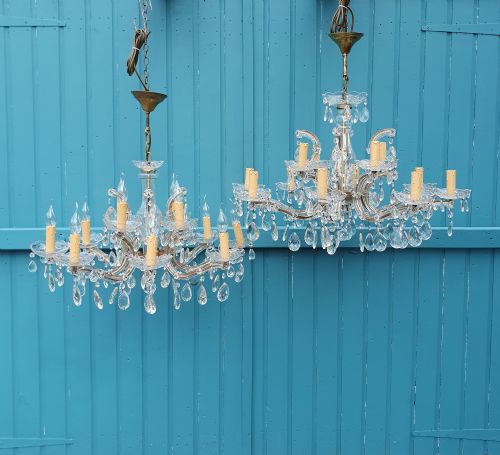
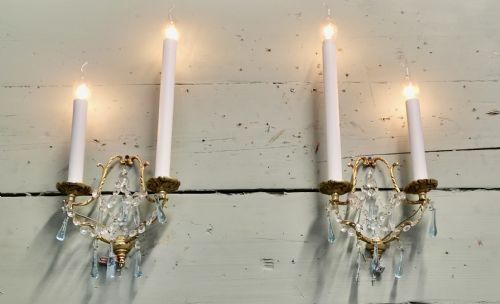


Pair Crystal Pendant Lights
These pair crystal pendant lights bring sparkling illumination and undeniable elegance to any room.
Pair Crystal Pendant Lights
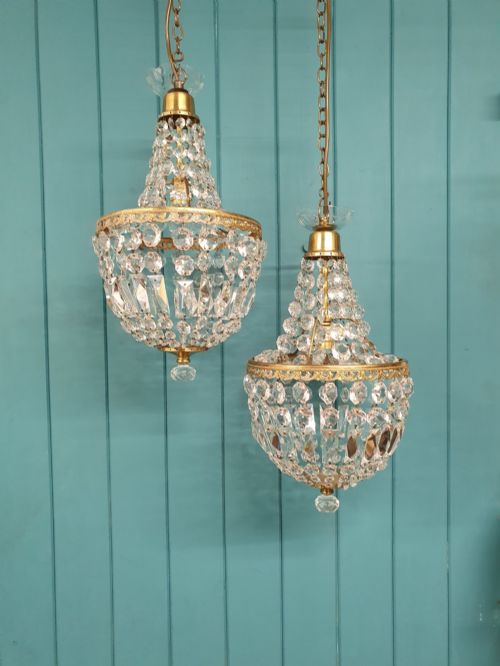
When you search for pair crystal pendant lights, you encounter coordinating hanging fixtures designed to distribute illumination through cut glass and crystal components. The selection on this page draws primarily from early twentieth century and Edwardian periods, alongside nineteenth century examples.
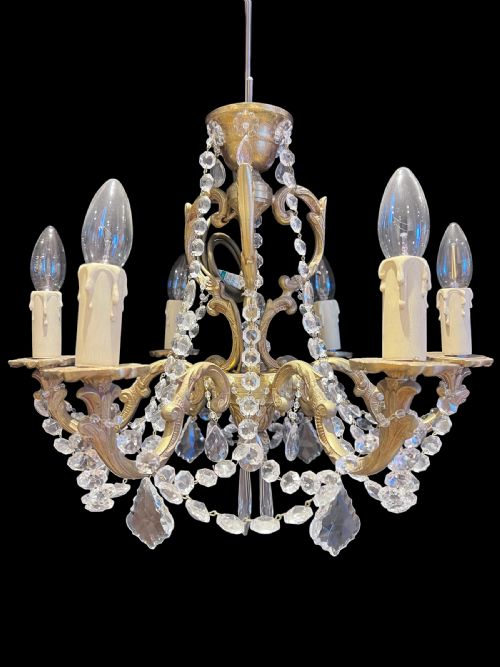
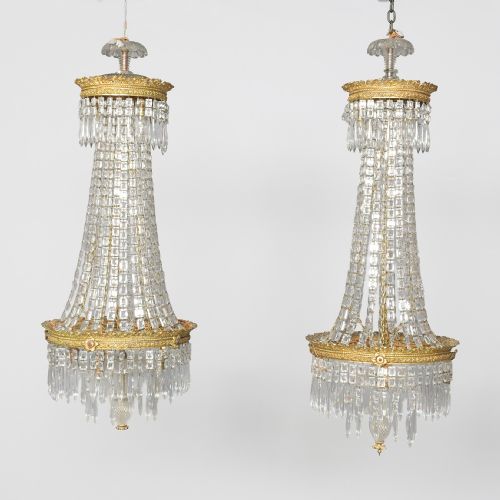
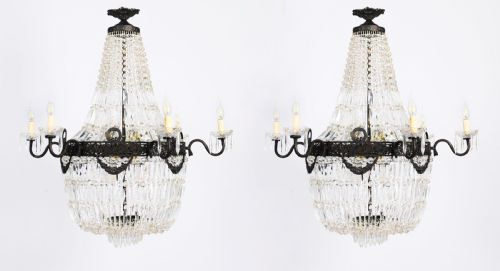
Most pieces combine metal frames with glass drops, featuring forms ranging from modest spike and bag designs to large ballroom tent chandeliers and French birdcage configurations. Styles span French Chateau, Empire, Rococo, Florentine, Louis Revival, and Art Deco, offering matching illumination for symmetrical interior schemes.
How they were made
The structural framework of these fixtures relies on cast or worked metals such as brass, bronze, and gilded bronze, which provide the necessary rigidity to support heavy glass arrangements. Artisans secured numerous individual crystal and cut crystal elements to these metal armatures using wire or pins.
Lighting components incorporated glass and crystal glass drops shaped into beads, spikes, tent formations, and waterfalls to refract light effectively. Metal frames often received decorative surface treatments, including gilding or polishing, to complement the brilliance of the hanging glass.
Some tiny spike chandeliers measure a mere six inches, proving that monumental ballroom sparkle fits into surprisingly modest spaces.
What varies in quality
The calibre of these fixtures depends heavily on the purity and precision cutting of the crystal components, which dictate how brilliantly the light refracts across a room. Heavier metal casting in the brass and bronze frames also signals superior construction.
Complexity of design separates standard examples from exceptional pieces, with intricate tent and waterfall arrangements or extensive multi-light configurations requiring greater craftsmanship. The integration of gilded bronze and detailed finials further elevates the standing of a fixture.
The Pair Crystal Pendant Lights Glossary
- Tent chandelier
- A lighting fixture featuring a dense upper canopy of beads or crystals gathered in a tent-like shape above the main body. This configuration directs light downward through cascading drops.
- Birdcage chandelier
- A metal frame formed in curved vertical ribs resembling a traditional birdcage, enclosed or draped with crystal garlands. This style gained particular favour in French design traditions.
- Spike chandelier
- A compact hanging light characterised by central vertical elements or spikes adorned with glass drops. These smaller fixtures often suit hallways or restricted spaces.
- Gilded bronze
- A bronze metal base treated with a fine layer of gold leaf or gilt. This technique adds a warm metallic sheen that complements transparent crystal elements.
- Bag chandelier
- A fixture shaped with a flattened or rounded lower basket containing clustered crystal drops. The design contains the illumination within a contained glass silhouette.
Pair Crystal Pendant Lights: Frequently Asked Questions
Where should I hang pair crystal pendant lights?
These fixtures suit symmetrical spaces such as flanking a grand entrance hall, hanging over a large dining table, or providing balanced illumination in a high-ceilinged drawing room.
Because they arrive in matched pairs, they work effectively when positioned to create visual harmony across two focal points in a room.
How do I identify Edwardian crystal lights?
Edwardian examples often display refined metalwork combined with bright crystal drops, reflecting the lighter aesthetic of the early twentieth century compared to heavier Victorian predecessors.
Look for specific proportions in spike and bag configurations that align with the decorative tastes prevalent around the turn of the twentieth century.
What maintenance do crystal lights require?
Routine care involves careful dusting of the metal frame and individual crystal drops using a soft cloth or specialised cleaning spray designed for glass components.
Ensuring the brass or bronze armature remains stable helps support the weight of the hanging crystal elements over decades of use.
How do French styles differ?
French designs in this category frequently incorporate gilded bronze frames, intricate birdcage silhouettes, and elaborate tent and waterfall crystal arrangements.
These pieces lean towards styles like Rococo and Empire, offering decorative presence distinct from simpler Edwardian or British forms.