



Pair Chinese Armchair Chairs
These pair chinese armchair chairs bring distinctive seating into a room, shaped by centuries of traditional woodworking and classic oriental design.
Pair Chinese Armchair Chairs
When buyers search for pair chinese armchair chairs, they encounter matched sets spanning the nineteenth and early twentieth centuries, often rooted in the Qing Dynasty style.
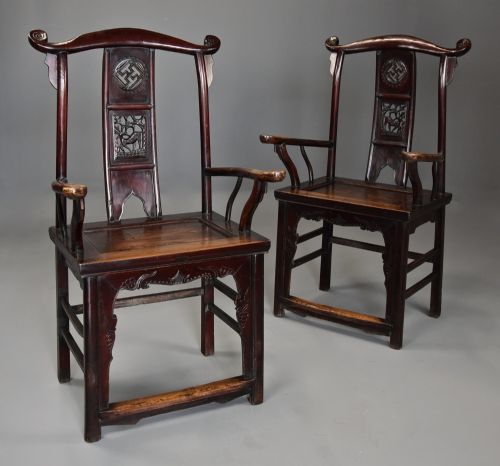
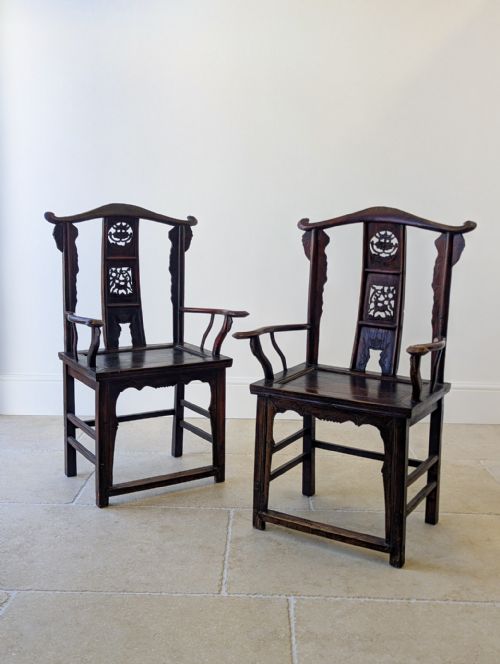
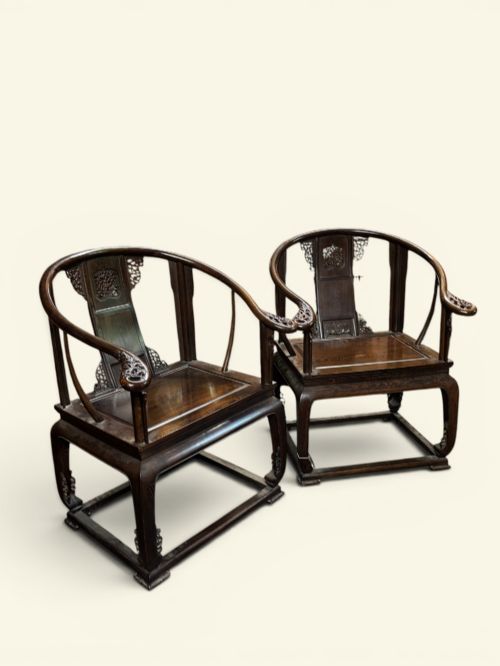
The selections range from robust scholars chairs with yoke backs to elaborate throne chairs and horseshoe shapes, reflecting traditional domestic and official seating.
Many examples utilise native timbers and traditional joinery, appearing in forms from simple elm frames to heavily carved hardwood and lacquered surfaces.
How they were made
Craftsmen utilised dense hardwoods like hongmu and rosewood alongside resilient elm, constructing frames with intricate mortise and tenon joinery that required no metal fasteners.
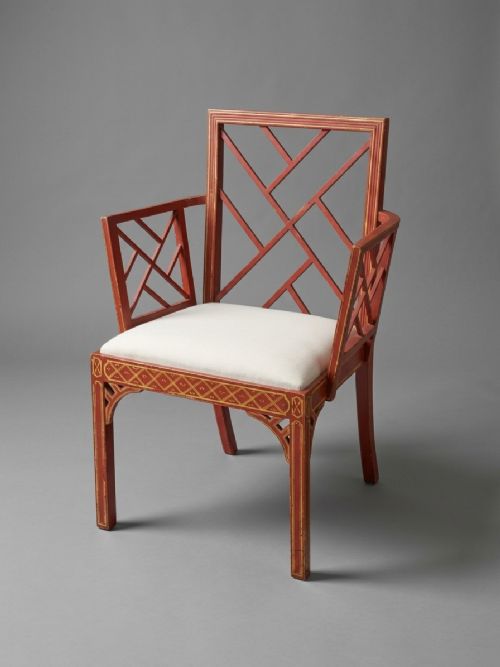
Surface treatments included red lacquer finishes, natural wax patinas, and occasional brass inlay or cane panels set into the seats.
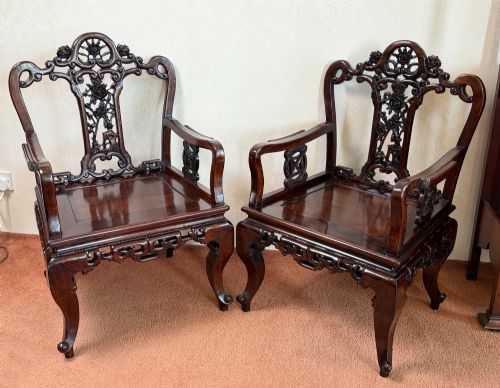
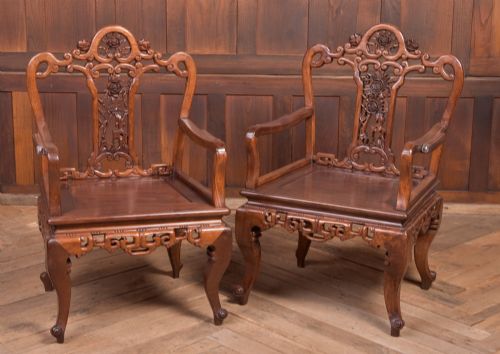
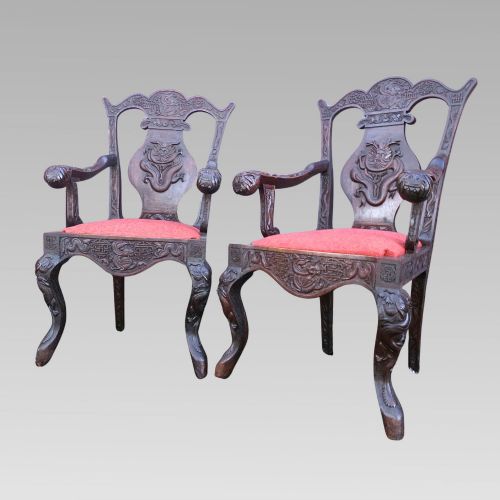
Carvers applied detailed relief work depicting dragons and traditional motifs directly into the timber.
Pair Chinese Armchair Chairs Retail Price Guide 2026
Typical asking prices for pair chinese armchair chairs among the pieces listed under this phrase on Sellingantiques today, from the lower quarter to the upper quarter. They describe what is for sale here now, not the wider market.
Several chairs feature carved dragons peering out from the arm supports, keeping a silent watch over the room.
What varies in quality
Quality rests in the crispness of the hand carving and the selection of the timber, where dense hardwoods and well-figured elm command greater appreciation.
The integrity of the traditional joinery and the survival of original lacquer or surface patina distinguish finer examples from later alterations.
The Pair Chinese Armchair Chairs Glossary
- Yoke-back
- A chair design featuring a crestrail shaped like an ox yoke, often curving upward at the ends to support the sitter comfortably.
- Horseshoe-back
- A continuous semicircular rail forming the arms and backrest, curved to envelop the occupant.
- Hongmu
- A traditional Chinese term for dense hardwoods, prized for heavy weight and deep colour.
- Lacquer
- A durable resin finish applied in multiple layers to seal and decorate wooden surfaces, frequently seen in red.
- Patina
- The surface sheen and colour developed by wood and lacquer over decades of handling and age.
Pair Chinese Armchair Chairs: Frequently Asked Questions
How do I place pair chinese armchair chairs in a modern room?
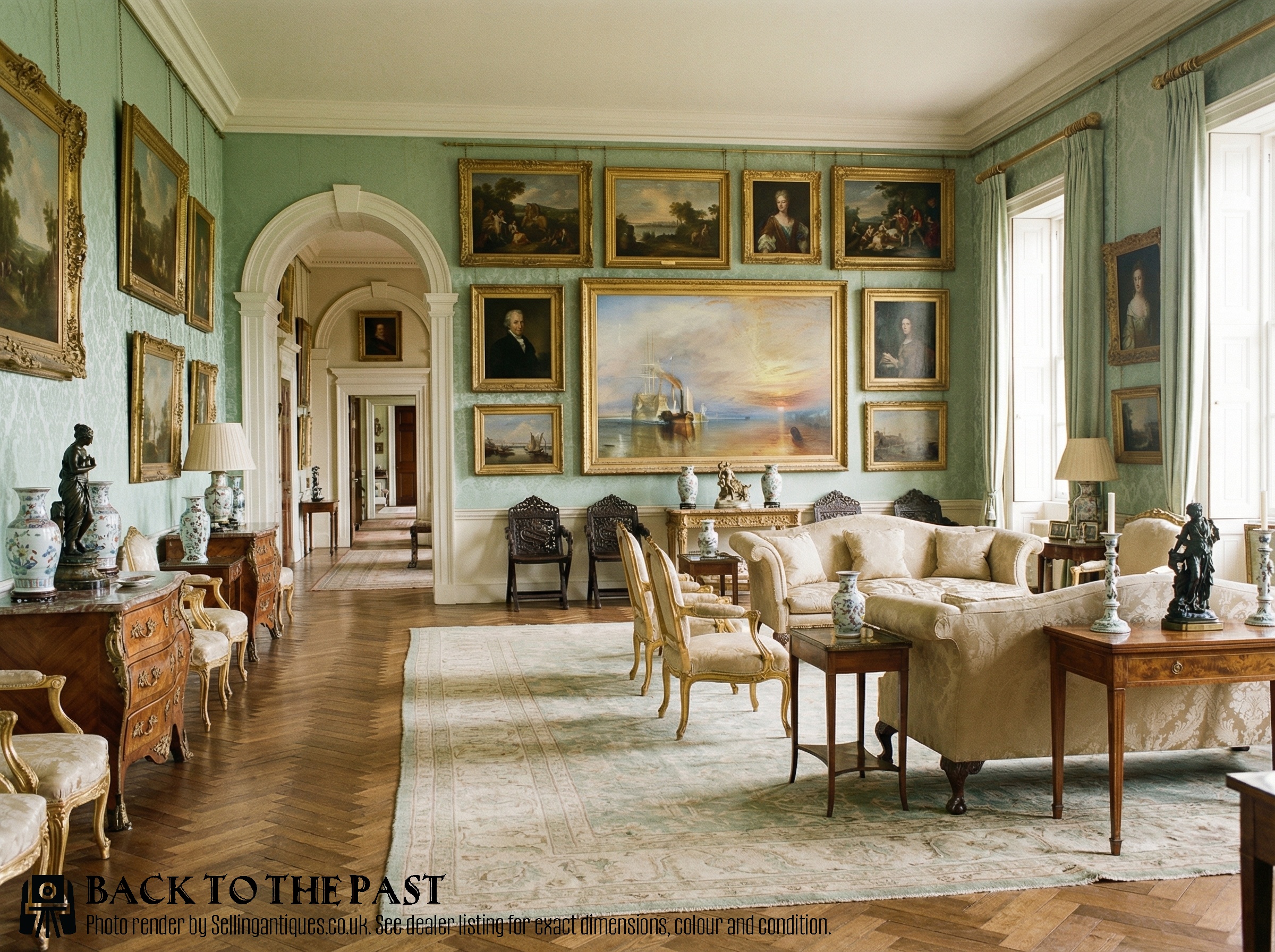
These chairs work well as statement pieces flanking a fireplace or providing balanced seating in a living room. Their strong architectural lines complement both minimalist and traditional interiors.
Allow enough surrounding space to appreciate the carved details and the sweep of the armrests without crowding other furniture.
What is the difference between yoke-back and horseshoe chairs?
Yoke-back chairs feature a straight upright back posts with a curved top rail resembling a traditional ox yoke, designed primarily for scholars and officials.
Horseshoe chairs utilise a continuous curved rail that sweeps down to form the armrests, offering a more enclosed and relaxed seating position.
How should I care for lacquered and hardwood surfaces?
Maintain the wood and lacquer by dusting gently with a soft, dry cloth. Avoid placing the chairs near direct heat sources or strong sunlight to prevent the timber from splitting.
Occasional application of appropriate wax helps preserve the natural patina on unlacquered hardwood frames.
Are these chairs comfortable for daily use?
Traditional scholars and horseshoe chairs were built with upright posture in mind, offering sturdy wooden seats that can be softened with loose cushions if desired.
Their ergonomic curves were originally designed to support the spine during long periods of reading or administrative work.