
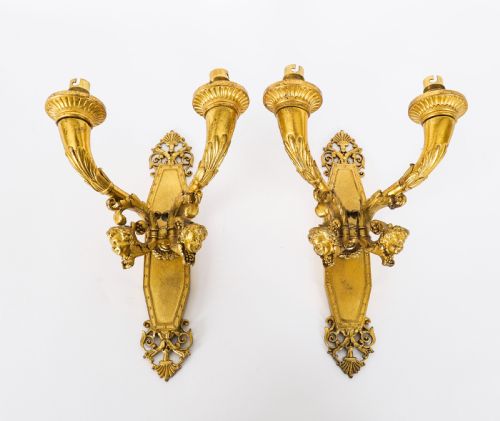
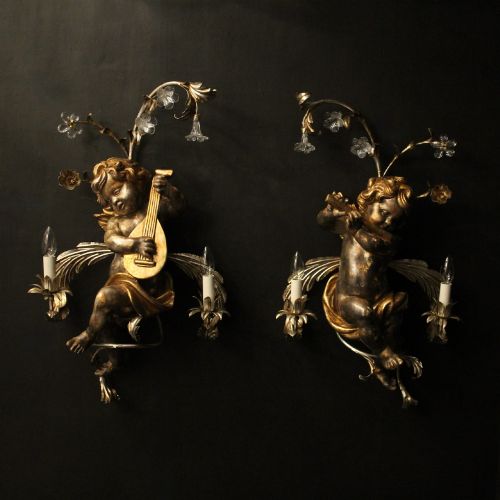

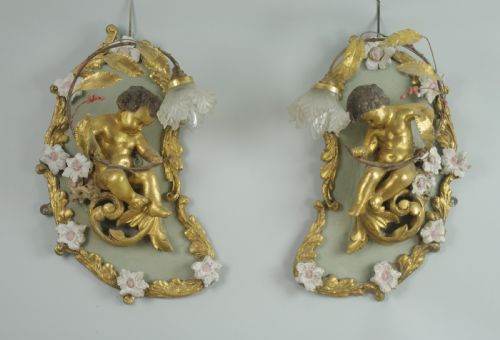
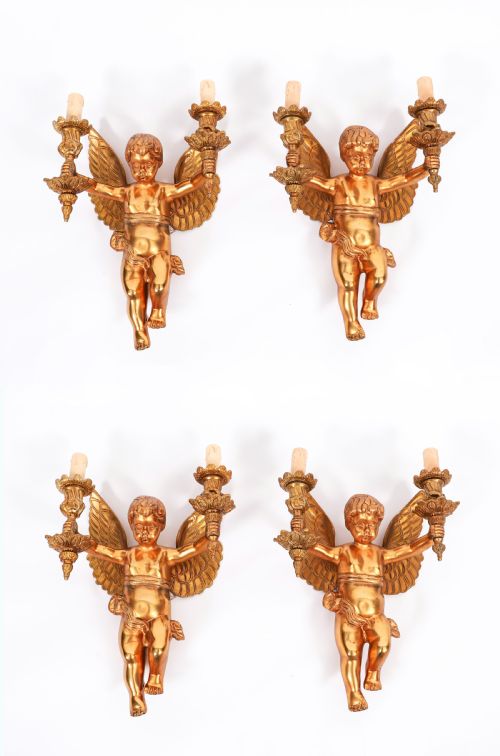
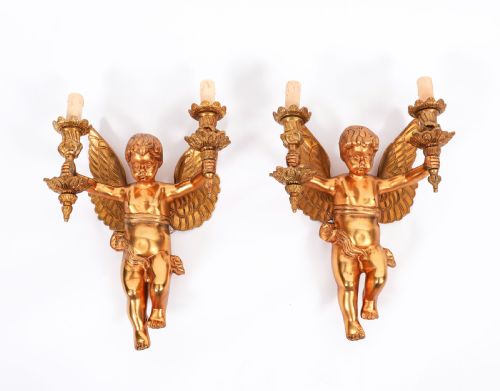
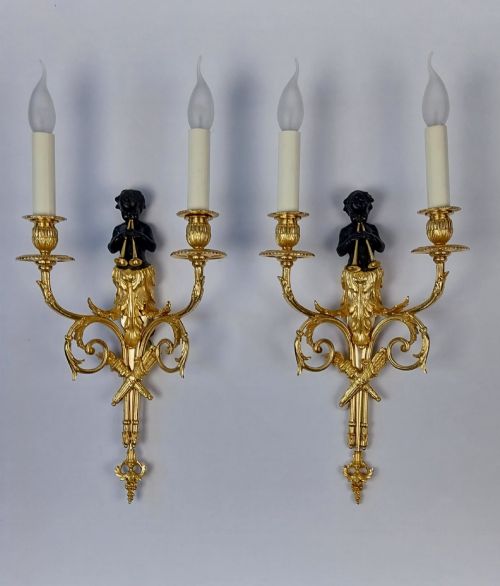


Pair Cherub Wall Lights
These pair cherub wall lights combine sculptural figures with functional illumination, offering decorative presence for period interiors.
Pair Cherub Wall Lights
When searching for pair cherub wall lights, buyers encounter ornamental twin or triple branch fixtures featuring figural putti or cherubs. These pieces function primarily as decorative wall sconces and appliqués designed to illuminate rooms while adding sculptural detail.
The selections available span from nineteenth century French examples to early twentieth century productions. French pieces dominate the record, alongside Italian and English interpretations reflecting various revival movements.
Forms range from compact two branch sconces to large giltwood creations adorned with crystal drops and lustre elements. Buyers most frequently meet gilt bronze, brass, or ormolu iterations dating across the eighteen hundreds and nineteen hundreds.
How they were made
Maker construction relies heavily on metal casting techniques utilising bronze, brass, and ormolu. Artisans also employed carved giltwood for substantial Italian and French wall lights, incorporating intricate detailing across the figures and arms.
Many examples integrate glass elements such as Murano components, crystal drops, and lustre pendants to enhance light reflection. Surface finishing typically involves gilding applied over bronze or metal bases.
Listings span from the early nineteenth century through to nineteen thirty, encompassing French Rococo Revival, Italian Baroque, and Arts and Crafts styles.
What varies in quality
Quality differentiates through the crispness of the figure carving and the depth of the metal casting. Superior pieces exhibit refined facial expressions and anatomical definition on the cherubs rather than generalized forms.
The richness of the original gilding and the integration of quality components such as crystal drops or Murano glass dictate the standing of a piece. Substantial weight in the metalwork and robust arm construction separate standard commercial production from finer artistic output.
The Pair Cherub Wall Lights Glossary
- Ormolu
- A technique of applying finely ground high-carat gold to a bronze object. This mercury gilding method provides a rich golden finish characteristic of French decorative items.
- Giltwood
- Timber that has been coated with a thin layer of gold leaf. This material appears frequently on elaborately carved wall lights.
- Putto
- A figure of a small chubby infant, often winged, depicted in classical art. These figures form the central sculptural motif of these wall lights.
- Lustre
- A glass pendant or drop hung from a light fixture to refract illumination. These additions are common on decorative nineteenth and twentieth century sconces.
- Appliqué
- A French term for a wall sconce or bracket light mounted directly onto a vertical surface. The term often describes ornate revival wall lights.
Pair Cherub Wall Lights: Frequently Asked Questions
How do I live with these wall lights?
Integrating these pieces into modern spaces involves mounting them securely to wall studs due to their weight. They suit dining rooms, living spaces, and entryways where their sculptural quality acts as a focal point.
Maintenance requires gentle dusting with a soft brush to protect delicate gilt surfaces and glass drops without damaging the finish.
How can I tell different periods apart?
Nineteenth-century examples often display heavier bronze casting with French Rococo Revival or Louis XIV styling. Early twentieth-century pieces incorporate lighter brass or gilt metal construction alongside transitional Arts and Crafts influences.
Stylistic cues such as acanthus leaves, scrollwork, and the rendering of the cherub figures help establish the likely date of manufacture.
Are these wall lights wired for electricity?
Most surviving examples have been adapted for electricity at some point in their history to suit contemporary domestic requirements. The original candle nozzles are typically converted to conceal electrical fittings.
Buyers should inspect the internal wiring of any antique light fixture and consult a qualified electrician to ensure safety compliance.