
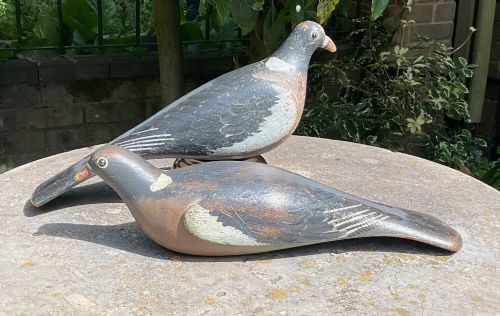
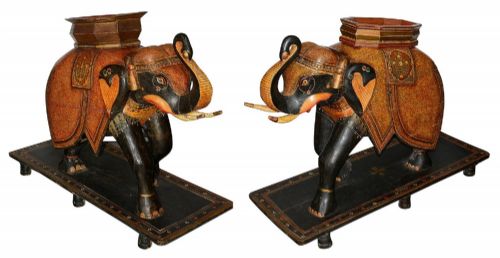


Pair Carved Wooden Sculptures
When you look for pair carved wooden sculptures, you are exploring dual ornamental figures shaped from timber across various centuries.
Pair Carved Wooden Sculptures
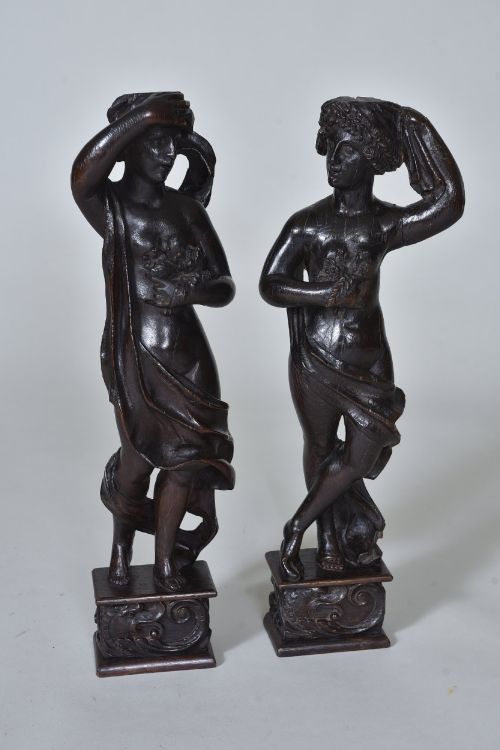
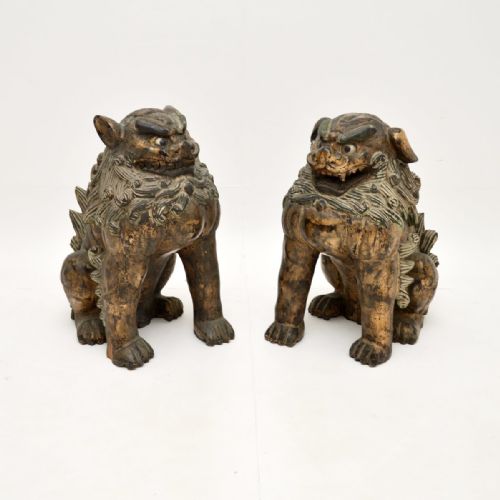
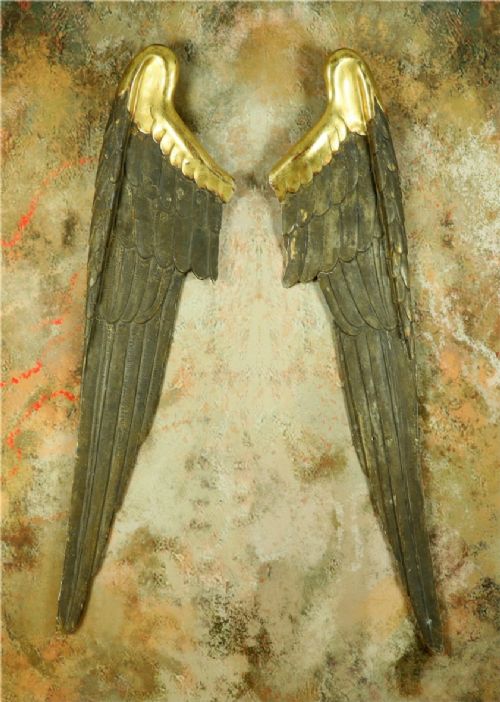
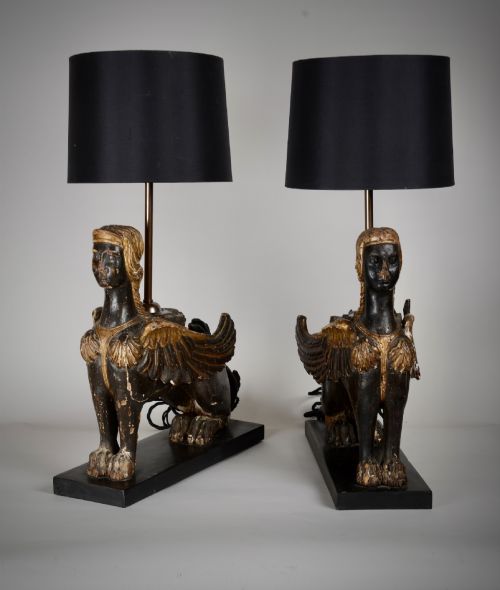
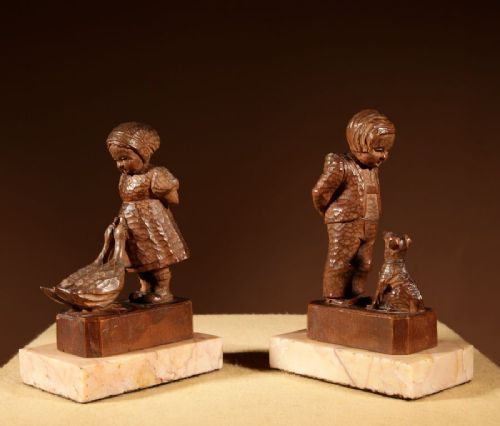
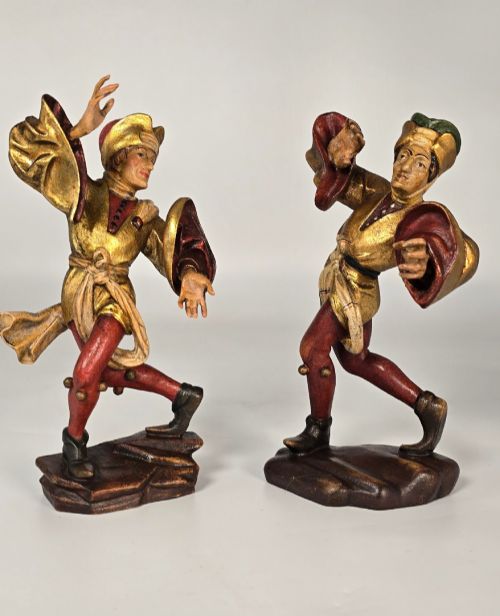
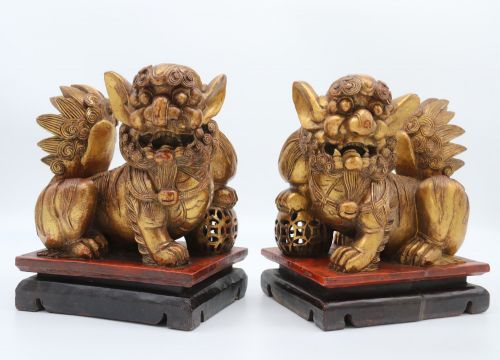
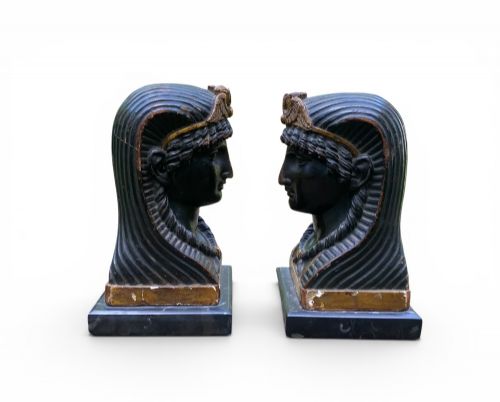
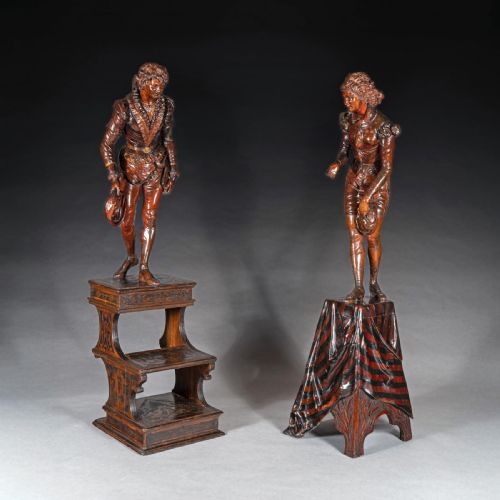
Pair carved wooden sculptures comprise matching thematic figures, animals or architectural ornaments shaped from timber by hand. These objects span domestic bookends, decorative panels, religious figures and large animal carvings produced across several centuries.
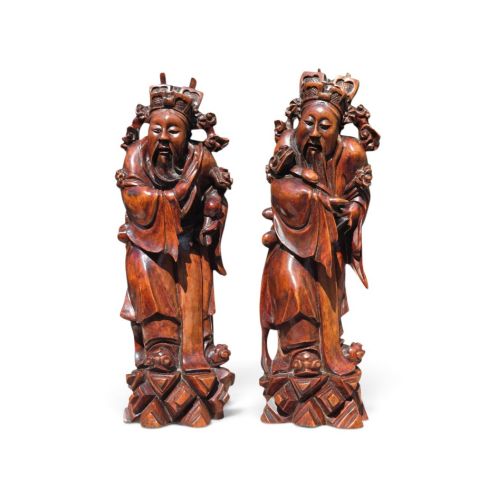
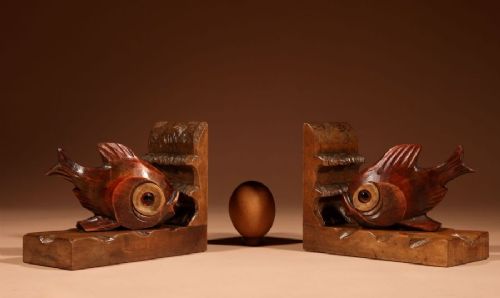
The selections on this page draw from distinct cultural traditions, including European Black Forest carvings, Chinese hardwood figures, English oak pieces and Swiss limewood animals. Buyers encounter both whimsical subjects like goldfish and bears alongside formal neoclassical sphinxes and religious angels.
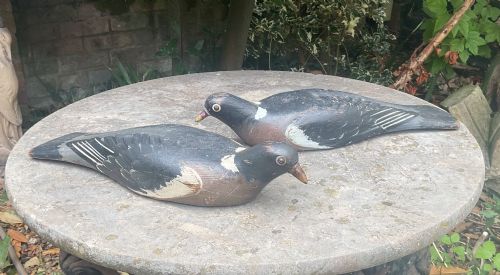
Forms range from compact tabletop bookends and decoy pigeons to monumental architectural elements and pedestals. Oak, limewood, teak and hardwood serve as the primary structural mediums for these paired works.
How they were made
Craftsmen utilised traditional hand tools such as gouges and chisels to shape dense timbers like oak, teak, limewood and hardwood. Artisans exploited the natural grain of the wood to accentuate muscle definition in animal subjects or folds in draped garments.
Many items received surface treatments including polychrome paint, gesso, gold leaf or dark lacquer to enrich the visual texture. Black Forest and Asian workshops often combined deep carving with fine surface polishing or painted highlights to define details.
Listings feature works spanning the 17th, 18th, 19th and early 20th centuries, executed in oak, limewood, teak, amboyna and painted pine.
What varies in quality
Quality rests in the precision and confidence of the carving, where master carvers achieved lifelike proportions and expressive anatomical movement. Lesser examples display rigid symmetry, shallow incisions and clumsy anatomical transitions.
The integrity of the original surface finish dictates desirability, particularly where polychrome paint, gilding or lacquer remain intact without heavy modern intervention. Matched pairs that retain their original scale, mounting and uniform patina command greater consideration than assembled counterparts.
Thomas Hope·Valentino Besarel·V . Ramirez
The Pair Carved Wooden Sculptures Glossary
- Black Forest
- A style of wood carving originating from the Brienz region of Switzerland, known for naturalistic depictions of animals and rustic figures.
- Gesso
- A plaster-like mixture applied to wood as a base for painting or gilding, creating a smooth surface for decorative details.
- Polychrome
- Decorated in multiple colours, frequently seen on painted wooden figures, decoys and architectural panels.
- Hardwood
- Dense timber derived from broad-leaved deciduous trees, frequently utilised for intricate Asian and European sculptural figures.
- Corbel
- A structural piece of stone or wood protruding from a wall to carry a weight, often intricately carved with figural or vegetative motifs.
Pair Carved Wooden Sculptures: Frequently Asked Questions
How do I care for wooden sculptures?
Keep wooden sculptures away from direct heat sources and dramatic humidity shifts to prevent timber splitting or warping. Dust gently with a dry, soft brush rather than using liquid polishes that can degrade older painted or lacquered surfaces.
Position matched pairs out of direct sunlight to preserve the original tones of the wood, gesso or polychrome paint. Stable indoor environments ensure the structural longevity of both the timber and any applied surface gilding.
Are these pairs strictly symmetrical?
Many historical pairs feature mirrored compositions designed to flank a central architectural element, mantelpiece or doorway. Other examples present identical poses or complementary actions rather than exact mirrored reflections.
Hand-carved pieces naturally exhibit subtle variations between the two objects due to the manual shaping process. These minor discrepancies confirm individual handcrafting rather than modern mechanical reproduction.
How can I tell the period of a carving?
Stylistic indicators such as Neoclassical motifs, Victorian proportions or specific regional traditions like Black Forest animal subjects help establish the era of manufacture. Tool marks left on the underside or interior surfaces also provide clues regarding historical production techniques.
Examining the ageing of the timber, shrinkage cracks and the composition of underlying gesso layers assists in confirming age. Comparing the piece against documented examples from specific workshops or decades refines attribution.
Where were these sculptures displayed originally?
Large figures and architectural carvings often occupied grand country houses, civic halls or religious settings as decorative statements or structural supports. Smaller items like bookends and animal studies adorned Victorian libraries, studies and drawing rooms.
Trading signs and decoy figures served practical commercial or sporting functions before transitioning into decorative collections. Today, these objects find placement on mantels, sideboards, desks and dedicated pedestals within domestic interiors.