




Pair Brass Firedogs
These pair brass firedogs anchor an open hearth, bringing weight and gleam to the chimney breast.
Pair Brass Firedogs
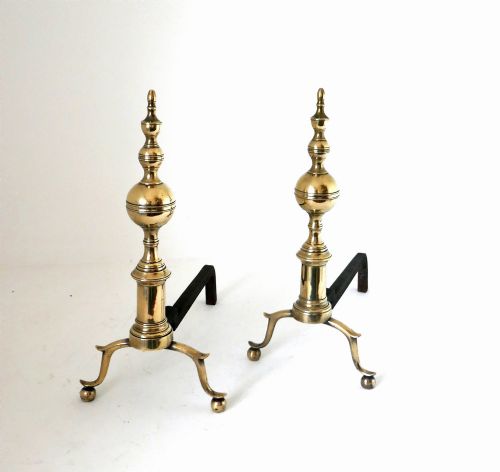
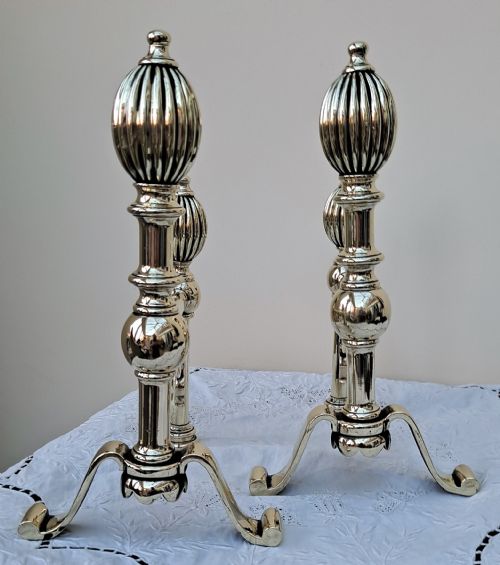
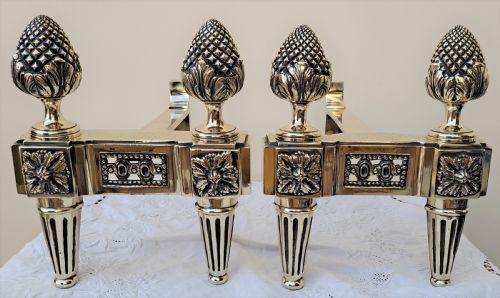
When you search for pair brass firedogs, you are looking at heavy metal supports designed to hold logs above the hearth floor for better airflow. These items span periods from the eighteenth century through the Victorian era and into the early twentieth century, taking forms such as standard andirons, chenets and fire tool rests. English and French workshops produced the majority of these pieces, alongside American examples from New York.
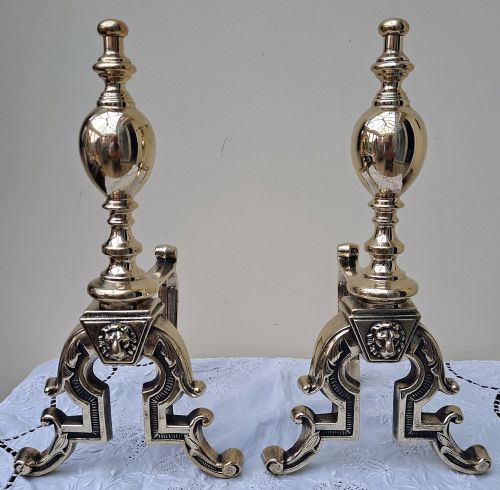
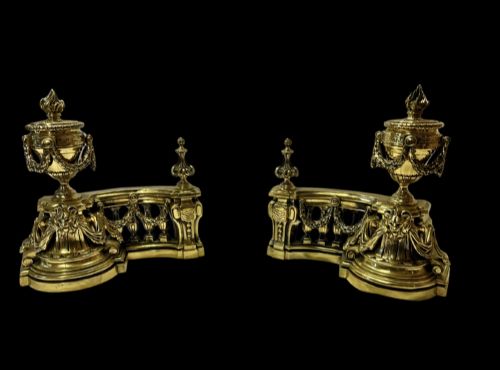
The version you are most likely to meet on this page is the Victorian brass andiron, often paired with iron components for structural strength. These pieces appear in styles ranging from Georgian and Regency to French Rococo, Aesthetic Movement and Gothic Revival. Makers shaped them to sit on the hearth either as purely decorative fixtures with gilt or ormolu mounts or as functional supports for burning wood.
How they were made
Foundry workers cast brass and bronze in moulds to create the decorative fronts, terminals and feet of these firedogs. Skilled hands then chased and finished the metal surfaces, occasionally applying gilt or ormolu to achieve a bright, reflective finish.
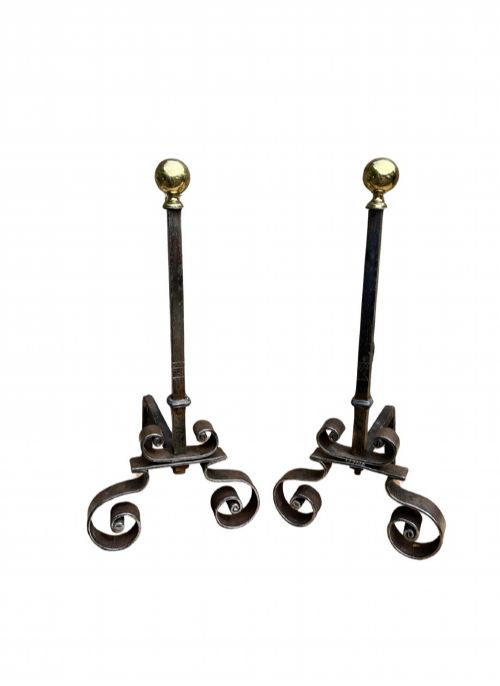
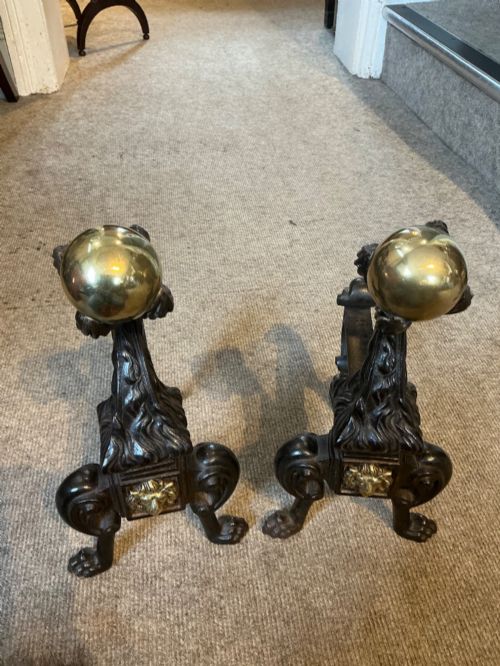
Blacksmiths and ironworkers forged the underlying bars, billets and rests from wrought iron or cast iron to bear the heavy weight of burning logs. Brass elements were then fixed to these sturdy iron backings, combining ornamental metalwork with functional durability.
What varies in quality
The distinction between ordinary and exceptional pair brass firedogs lies in the crispness of the casting and the depth of the hand-chasing. Finer pieces display sharply rendered foliage, figures or geometric motifs without the softness or pitting typical of hurried production.
Substantial weight and the thoughtful integration of brass with iron indicate a higher grade of manufacture. Pieces designed by notable firms or executed in specific artistic styles show superior balance, proportion and durability in their heavy mounts.
Thomas Jeckyll·William Tonks·James Cartland & Sons·Christopher Dresser
The Pair Brass Firedogs Glossary
- Andiron
- A horizontal metal support raised on legs, used to hold logs in an open fireplace. A pair of these stands at each side of the hearth.
- Chenet
- The French term for an andiron, frequently applied to decorative brass or bronze firedogs featuring ornate scrolling or figural mounts.
- Ormolu
- Gilt bronze created by applying a mixture of mercury and gold leaf to a bronze base, producing a rich golden surface finish.
- Fire tool rest
- A specialised horizontal support attached to or accompanying firedogs, designed to hold hearth pokers and tongs.
- Gilt brass
- Brass that has been coated with a thin layer of gold or gold-coloured wash to enhance its brightness and prevent tarnishing.
Pair Brass Firedogs: Frequently Asked Questions
What is the difference between firedogs and andirons?
The terms are used interchangeably to describe the same hearth furniture. Both refer to metal supports placed in pairs to hold logs above the hearth floor.
Historically, regional preferences determined the label, with andiron being common in English and American contexts and firedog used more broadly across various periods.
Were these pieces meant to hold burning wood?
Many examples on this page served a dual purpose as both decorative hearth furniture and functional log supports. The iron billets behind the decorative brass fronts took the direct heat and weight of the fire.
Other lighter or gilt pairs were intended primarily for visual effect in formal drawing rooms, sometimes accompanied by tool rests rather than heavy log bars.
How do I identify Victorian pieces?
Victorian examples often display eclectic revival styles, drawing on Gothic, Baroque, Rococo or Aesthetic Movement design motifs. They frequently combine cast brass fronts with sturdy wrought iron or cast iron back bars.
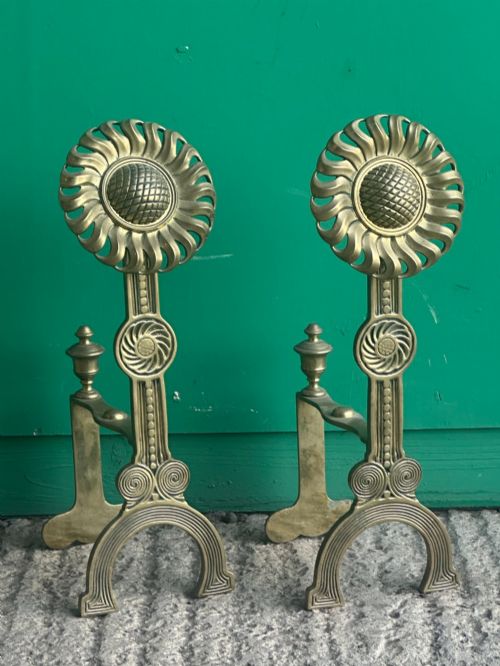
Makers from this era sometimes marked their work or produced distinctive sunflower and neoclassical patterns that reflect nineteenth-century manufacturing techniques.