
Pair Brass Bedside Lamps
Pair brass bedside lamps bring symmetry and warm illumination to a room, drawing on periods from the Victorian era to Art Deco.
Pair Brass Bedside Lamps
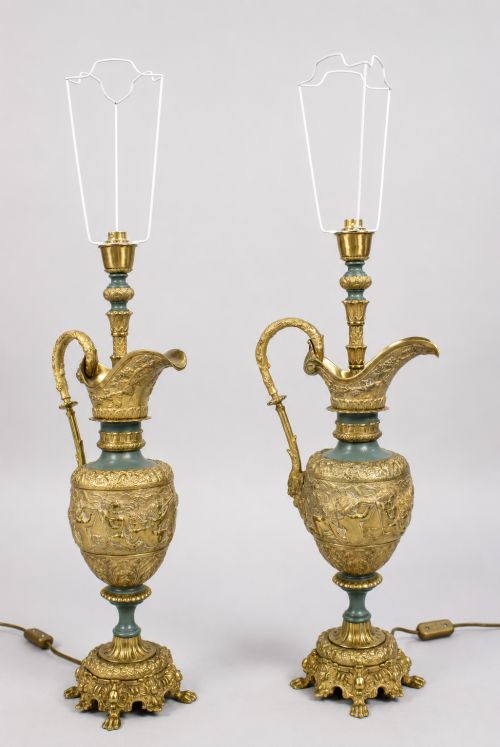
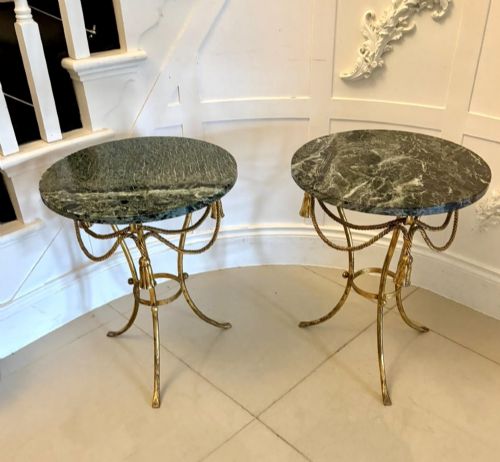
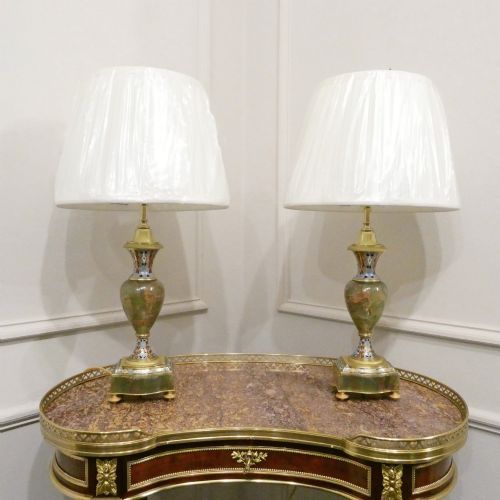
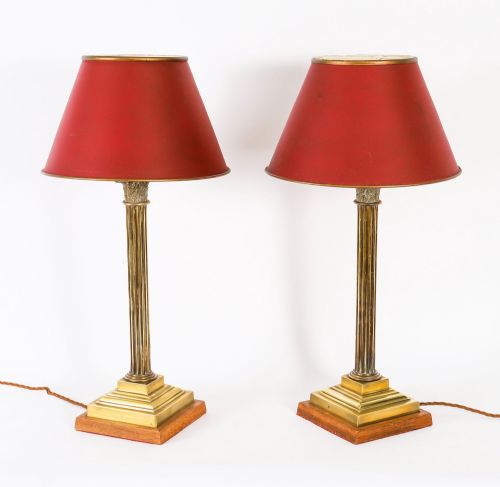
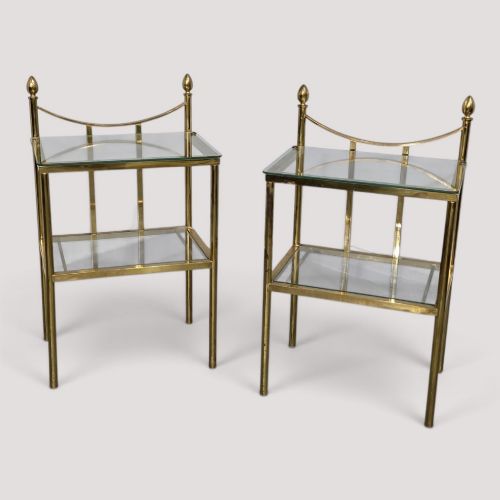
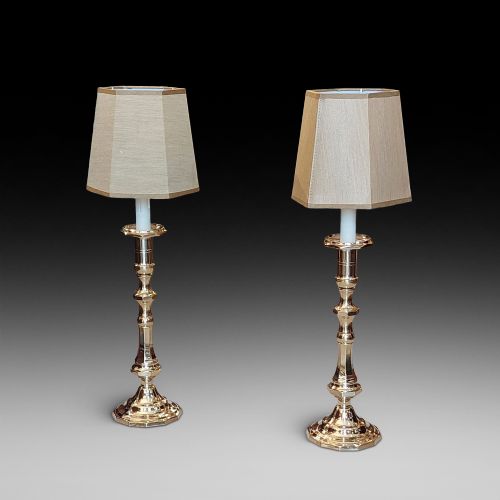
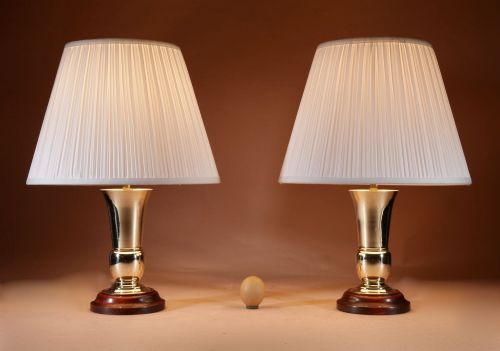
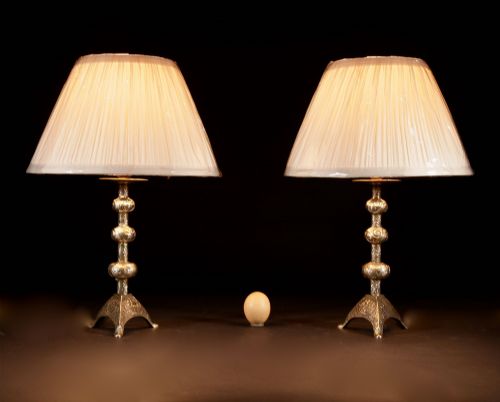
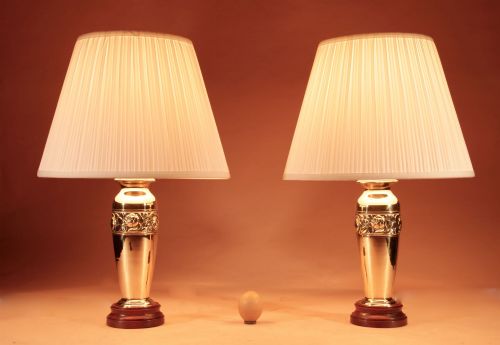
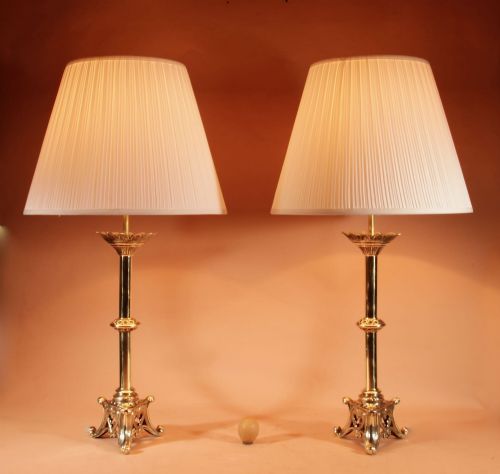
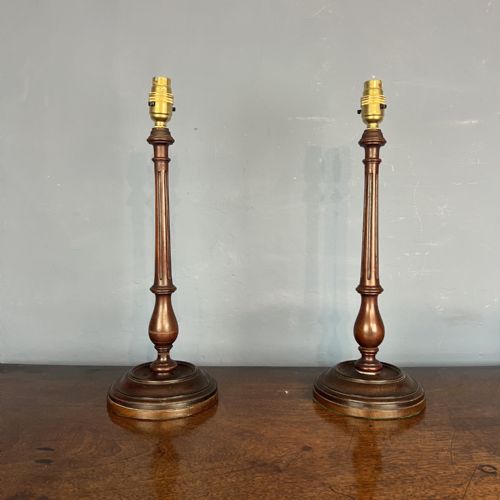
When searching for pair brass bedside lamps, buyers encounter lighting formed from cast metal, converted candlesticks, and columnar designs originating across the nineteenth and twentieth centuries. The selection encompasses Victorian and Edwardian examples alongside French Neoclassical, Art Deco, and Hollywood Regency styles.
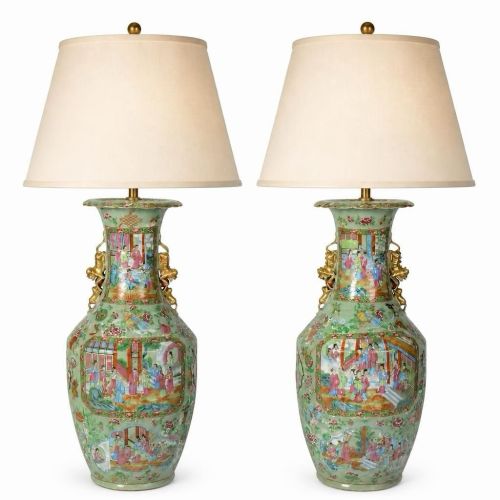
Many options utilise mixed media, pairing metal bases with glass shades, marble plinths, or fabric components. The forms vary from Corinthian columns and ewer shapes to converted ecclesiastical candlesticks and swan neck desk configurations.
How they were made
Maker techniques rely heavily on brass casting, ormolu mounting, and gilt bronze fabrication, frequently incorporating carved marble, onyx, or crystal elements into the structural body. Enamel work, champlevé detailing, and hand-etched glass shades complete the construction of these items.
Conversion plays a significant role in the lineage of these objects, with many historical candlesticks and vases adapted for electrical wiring during subsequent decades while retaining their original nineteenth or early twentieth-century metalwork.
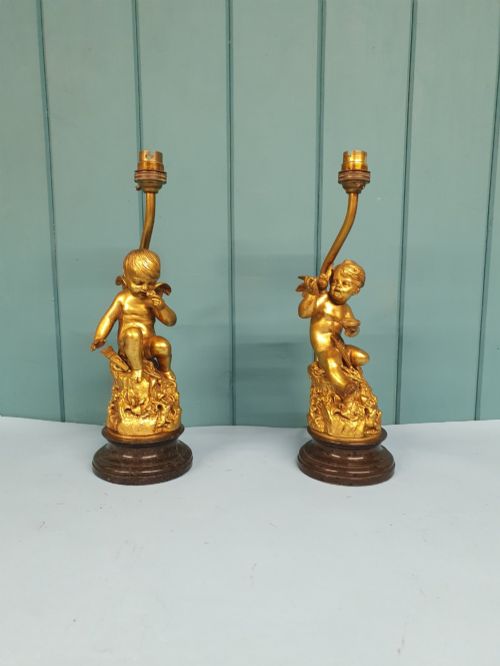
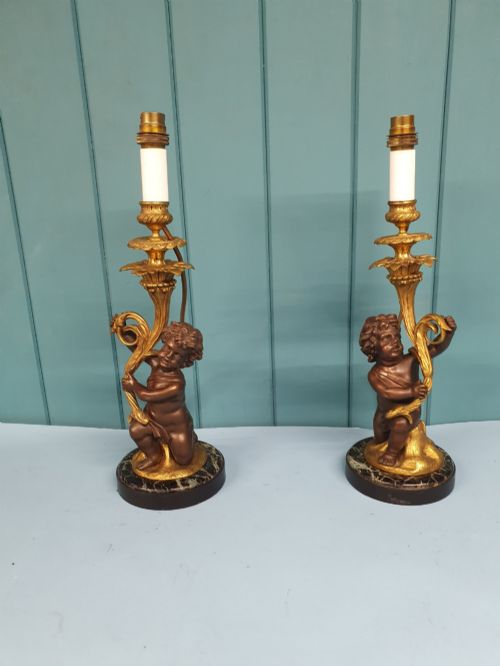
Several pairs incorporate cherubs and swans, watching over bedtime reading with resolute metallic serenity.
What varies in quality
The standard of a pair depends upon the crispness of the cast metal ornamentation, the depth of the gilding, and the integrity of integrated materials such as rouge marble or champlevé enamel. Finer specimens display substantial weight, precise detailing in classical motifs like Corinthian fluting, and harmonious proportions between the base and the shade.
Consistency within the pair remains paramount, ensuring that matching patination, identical casting marks, and corresponding components present a unified appearance when placed on bedside tables or side surfaces.
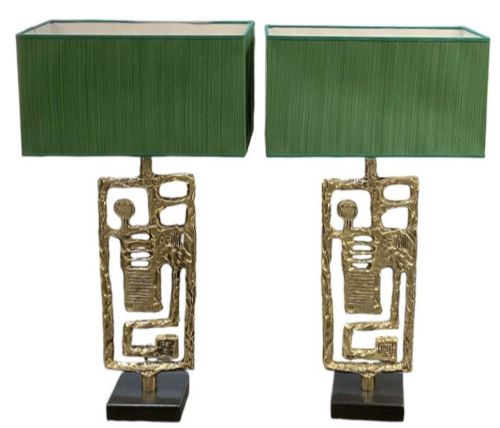
Angelo Brotto for Esperia·Mallett·Sitzendorf
The Pair Brass Bedside Lamps Glossary
- Ormolu
- Gilded bronze, typically produced using a mercury amalgamation process on decorative metal mounts during the eighteenth and nineteenth centuries. This technique imparts a rich, golden surface finish.
- Champlevé
- An enamelling technique where troughs or cells are sunk into the surface of a metal object and filled with vitreous enamel powder before firing. It frequently appears on decorative Japanese and French pieces.
- Corinthian column
- An architectural order featuring an ornate capital decorated with acanthus leaves, frequently utilised as the main shaft for nineteenth-century table lamps.
- Ewer
- A large jug with a wide spout, historically used for water but adapted in the nineteenth century into decorative vase and lamp forms.
- Opaline glass
- A pale, translucent white glass popular during the nineteenth and early twentieth centuries for decorative lighting and shades.
Pair Brass Bedside Lamps: Frequently Asked Questions
Are antique brass lamps wired for modern use?
Many historical examples arrive with modern electrical wiring or have been safely converted from older oil lamps and candlesticks during the twentieth century.
Buyers should consult individual listings for details regarding current plugs, fittings, and rewiring status before installation.
How do I identify a Victorian brass lamp?
Victorian models frequently exhibit heavy brass casting, classical architectural motifs like Corinthian columns, or traditional candlestick configurations.
Evidence points towards robust construction methods typical of the nineteenth century, sometimes paired with etched glass shades.
What styles are common in brass bedside lighting?
The selection spans multiple design movements, including Gothic Revival, French Neoclassical, Art Deco, and Hollywood Regency.
These varied aesthetic influences allow the lighting to complement both traditional period interiors and more streamlined modern rooms.
Can converted candlesticks serve as bedside lamps?
Historical candlesticks and church candlesticks frequently undergo conversion to function as table and bedside lighting while preserving their original metal patination.
This practice bridges centuries of craftsmanship, turning functional antique metalwork into usable domestic illumination.