
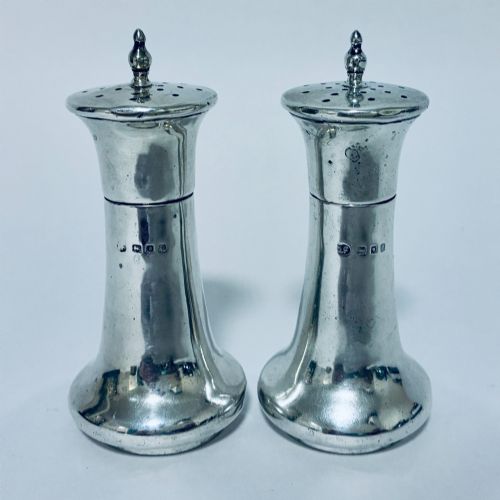
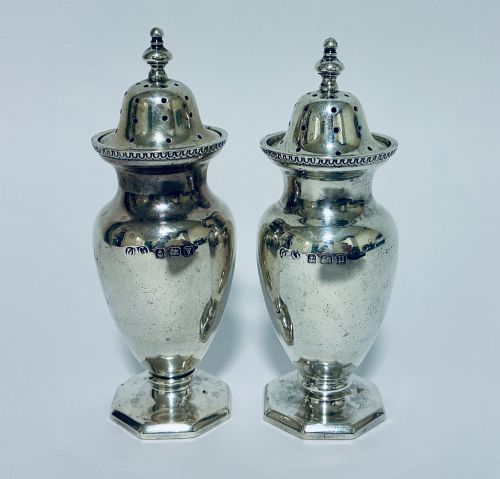
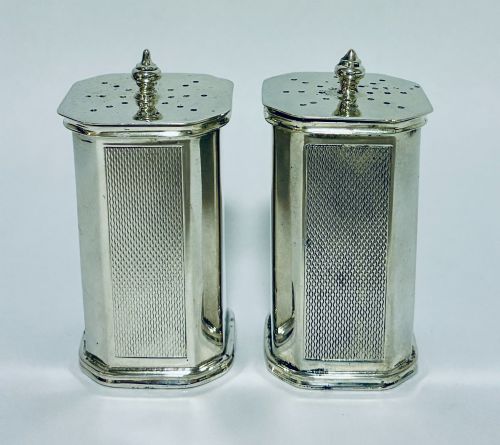


Pair Pepper Pots
Pair antique pepper pots bring proper dining table character, offering matching double service in sterling silver, bronze, and glass.
Pair Pepper Pots
Pair antique pepper pots are matching dual tableware containers designed for seasoning dining tables across Georgian, Victorian, and Edwardian periods. Collectors encounter these items frequently formed as traditional casters, novelty figural animals, or glass vessels fitted with precious metal tops.
The selections span standard shakers, salt and pepper shakers, and condiment sets that frequently include matching table salts. Most pieces originate from British workshops and domestic makers working in sterling silver and bronze.
How They Were Made
Silversmiths formed the bodies of these vessels using sterling silver and solid silver, often incorporating pierced tops for shaking ground spice. Glass liners in cobalt blue appear alongside metal frameworks, while bronze was utilised for heavier spice pounce shakers.
Makers employed casting and hand-finishing techniques, visible in detailed figural models and hallmarked pepperettes. Piercing patterns on the caps varied from simple geometric holes to intricate botanical cutwork.
Some Victorian diners seasoned their meals watched by the stern face of Mr Punch's dog Toby in solid silver.
What Varies in Quality
Quality rests upon the crispness of casting detail and the integrity of hallmarks stamped into the metal. Novelty examples shaped as animals or literary figures demonstrate superior artisanal ambition compared to standard cylindrical shakers.
Matched sets maintain higher desirability when all original components, liners, and fitted presentation boxes survive together without replacement parts.
Sampson Mordan·Mappin & Webb
The Pair Pepper Pots Glossary
- Caster
- A small tabletop vessel with a pierced cover used for sprinkling seasoning or sugar. Early versions typically stood taller than later Victorian shakers.
- Pepperette
- A small container specifically designed for dispensing ground pepper at the dining table. The term appears frequently in Victorian hallmarked silver descriptions.
- Pounce shaker
- A container used for sprinkling fine powder over damp ink to speed up drying or prepare writing paper. Bronze examples survive from the Georgian period.
- Cruet set
- A matched assembly of bottles or shakers held in a frame for oils, vinegar, and seasonings. These collections often incorporate pepper pots alongside mustard pots and table salts.
Pair Pepper Pots: Frequently Asked Questions
Were these always sold in matching pairs?
Many condiment vessels were produced as matching pairs or larger cruet assemblies to satisfy formal dining customs of the Victorian and Edwardian eras.
Some surviving examples represent matched pairs assembled later by dealers rather than original workshop sets.
What is the difference between a pepper pot and a salt?
Pepper pots feature pierced shaker lids designed to dispense dry ground seasoning evenly across food.
Table salts are open vessels or small bowls intended for dry salt taken with a small spoon rather than shaken.
How can I tell the period of a silver shaker?
Examine the stamped hallmarks on the base or lid, which indicate the assay office, standard of silver, and date letter.
Stylistic details like Georgian urn shapes or Edwardian novelty animal designs also point directly to the era of manufacture.