

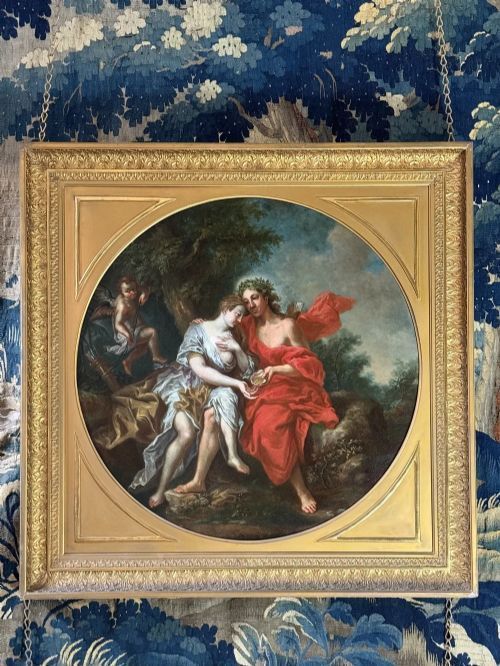
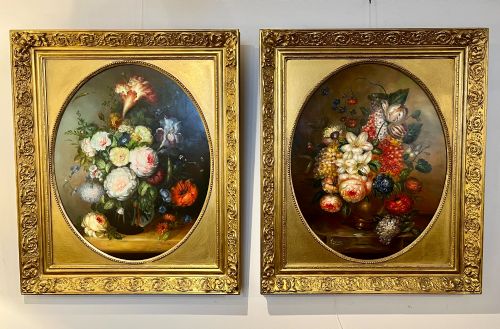
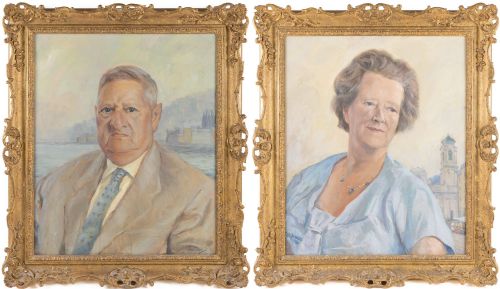
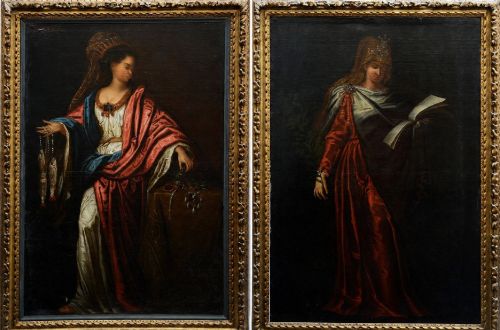
Pair Oil Paintings
Pair antique oil paintings bring balanced symmetry to a room, offering matched companion works created centuries ago.
The Nature of Companion Works
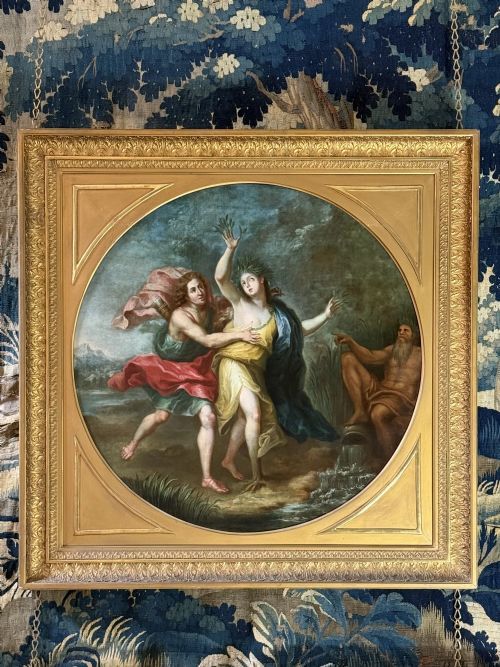
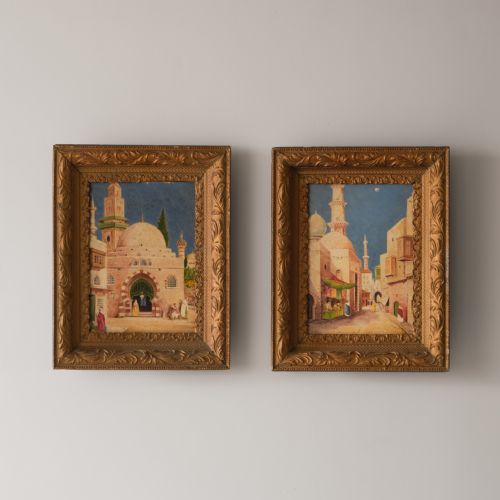
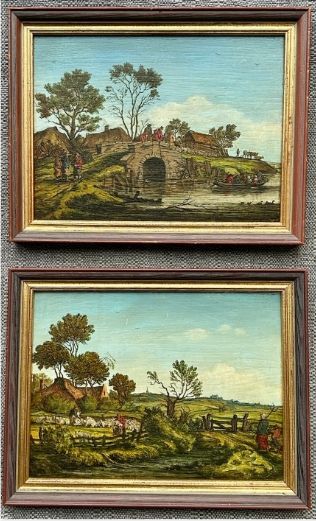
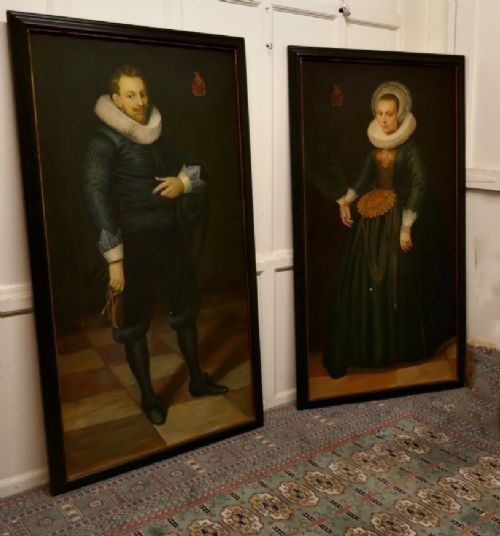
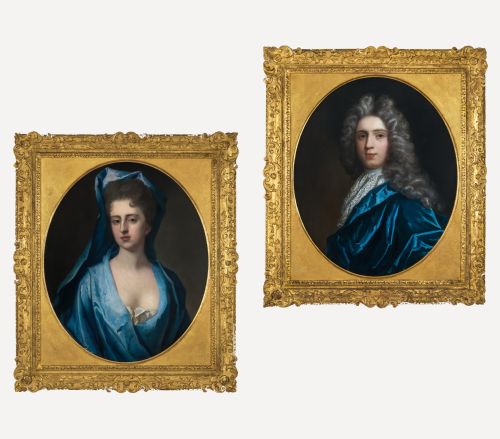
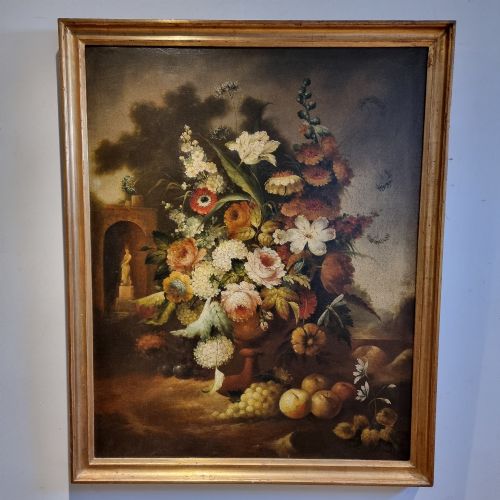
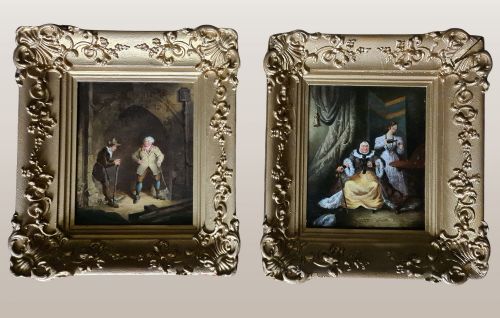
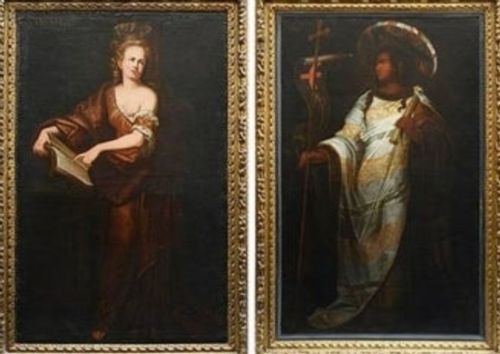
When searching for pair antique oil paintings, collectors look for matched compositions designed to hang together as a harmonious set. These dual works span subjects from serene English landscapes and Scottish Highland cattle to Venetian canals, marine scenes, and intimate still lifes.
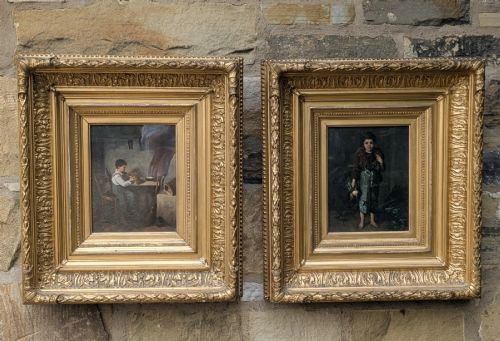
The pieces appearing on this page predominantly date from the nineteenth century, including works from around eighteen seventy and the Edwardian era. Buyers frequently encounter formats featuring oil on canvas, wood panels, and board, often housed in their original giltwood or gold leaf frames.
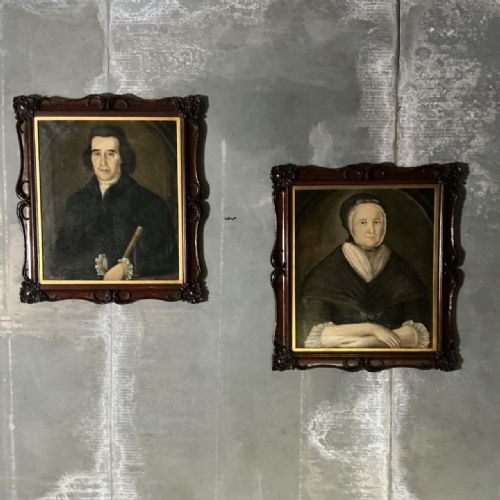
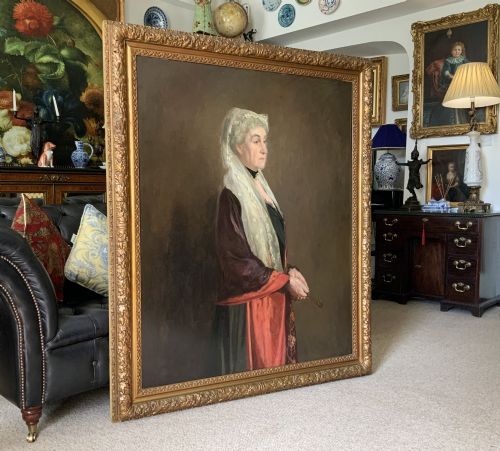
Subjects range from academic realism and pastoral views to folk art and primitive ancestral portraits. This variety allows collectors to select matching canvases that suit both formal period interiors and eclectic spaces.
Materials and Construction
These works utilise traditional mediums, applying oil paint directly onto prepared canvas, wooden panels, or rigid board substrates. Pigments were blended and layered by hand to achieve depth in landscapes, portraits, and maritime views.
Frames play a crucial role in the construction of these items, frequently incorporating carved giltwood and gold leaf applied over wooden moulding. Such framing protects the perimeter of the canvas while enhancing the visual weight of the paired artworks.
Retail Price Guide 2026
Typical UK retail prices for pair oil paintings, calculated from the Sellingantiques database of over a million retail prices indexed since 2003. This retail price guide relies exclusively on Sellingantiques data; no external sources or auction records are used, so the figures do not describe the wider market.
Several Victorian pairs capture moody Scottish Highland cattle staring out at the viewer as if interrupted during breakfast.
Distinctions in Execution
The distinction between standard works and exceptional pieces rests upon the confidence of the brushwork and the harmony of the composition. Superior examples demonstrate a careful balance in tone and perspective between both canvases, ensuring they function as a cohesive pair rather than two unrelated pictures.
Condition of the original support material and the integrity of the paint layer also dictate standing. Canvases retaining stable paint surfaces without excessive craquelure, paired with well-preserved gilt frames retaining their original leaf, represent the upper tier of the range.
Johann Friedrich Voltz·Evelyn Chester·Alfred Pollentine·James Salt·George Jennings·A Collin·William Adolphus Knell·Peter Dommersen·Raffaelle Frigerio·H Leslie·Richard Wilkinson·S Williams·Luigi Pastega·Jan Evert Morel
The Pair Oil Paintings Glossary
- Canvas
- A closely woven fabric stretched across a wooden frame to serve as a foundation for oil painting. It provides a flexible yet durable surface that accommodates historical painting techniques.
- Giltwood
- Wood that has been coated with a thin layer of gold leaf or metallic powder. This finish brings a bright, reflective border to nineteenth-century and Edwardian frames.
- Companion portraits
- Two separate paintings executed as a matching pair, often depicting related subjects or individuals intended to be displayed side by side.
- Oil paint
- A slow-drying paint made by mixing pigments with a drying oil such as linseed. It allows artists to blend colours smoothly and build rich, luminous layers.
- Board
- A rigid flat sheet of wood or paper-based material used as a painting support instead of stretched fabric. Many nineteenth-century works utilised this sturdy alternative for smaller compositions.
Frequently Asked Questions
How should I hang pair antique oil paintings?
Hang the two works at eye level with a consistent gap between them to maintain visual balance on the wall. Aligning the centre points of both frames ensures they read as a unified decorative statement.
Keep them away from direct sunlight and strong heat sources to protect the oil pigments and wooden frames from drying out or warping over time.
Were these always sold together?
Companion paintings were conceived, painted, and framed as a pair by the artist or workshop to complement each other in size, subject, and palette.
Over the centuries, some pairs remain together through successive collections, preserving the original curatorial intent of the creator.
What subjects are most common?
Landscapes, waterscapes, and Venetian scenes dominate the selection, often reflecting nineteenth-century pastoral and maritime interests. Portraiture and still life examples also appear frequently among historical inventory.
These popular subjects allowed Victorian and Edwardian buyers to decorate domestic interiors with recognisable, pleasing natural and domestic themes.
How do I identify the period?
Examine the stretcher frames, canvas preparation, and framing style for clues to the date of execution. Nineteenth-century works often display characteristic canvas textures and hand-carved giltwood mouldings distinct from later periods.
Signatures, inscriptions on the reverse, and stylistic markers such as nineteenth-century realism or folk art tendencies further help narrow down the decade.