



Painted Wooden Barrel
A painted wooden barrel brings robust utility and vernacular charm into a hallway, offering practical storage that doubles as a striking decorative anchor.
Painted Wooden Barrel
When you search for a painted wooden barrel, you encounter sturdy stave-built vessels and related functional forms rooted in 19th century utility. These pieces bridge the gap between utilitarian workshop equipment and decorative country house furniture.
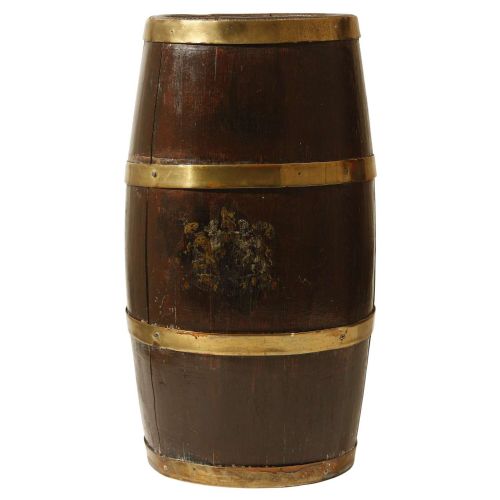
The versions most frequently met on this page span the Victorian and Georgian eras, often taking the form of umbrella or stick stands rather than traditional dry storage casks. They frequently incorporate brass bands and painted finishes that reflect regional Scandinavian or British vernacular tastes.
Construction and materials
Makers constructed these sturdy forms from solid timbers like oak, shaping individual wooden staves to create a watertight or load-bearing cylinder. Metal components, particularly brass braces and bands, were fitted tightly around the wood to maintain structural integrity.
Surfaces were frequently finished with paint or polychrome decoration, ranging from simple protective coats to detailed folk art motifs. This combination of timber, metal binding and applied colour ensured the pieces could withstand heavy daily use in busy entrance halls.
Painted Wooden Barrel Retail Price Guide 2026
Typical asking prices for painted wooden barrel among the pieces listed under this phrase on Sellingantiques today, from the lower quarter to the upper quarter. They describe what is for sale here now, not the wider market.
Current listings feature items executed in oak, incorporating painted finishes, brass fittings and carved wood elements from the 1800s onward.
Markers of quality
Quality in these vessels rests upon the tightness of the stave construction and the integrity of the original timber. Examples that retain their authentic brass fittings and early painted surfaces without excessive modern intervention command greater interest.
The distinction between standard utility items and finer decorative pieces often lies in the character of the painted finish and the precision of the cooperage work. Pieces exhibiting distinctive folk art details or well-preserved heraldic motifs show a higher level of individual craftsmanship.
The Painted Wooden Barrel Glossary
- Stave
- A narrow strip of wood with bevelled edges that forms the sides of a barrel or tub. Multiple staves are bound together with metal bands to create a sealed cylinder.
- Cooperage
- The trade and craft of making wooden staved vessels that are bound with hoops. This traditional technique ensures the durability of barrels and related umbrella stands.
- Polychrome
- Decorated or printed in several colours. This term describes surfaces finished with multiple painted pigments rather than a single plain tone.
- Vernacular
- Architecture or decorative objects created in a local or regional style, using traditional methods and materials without academic pretension.
Painted Wooden Barrel: Frequently Asked Questions
What were painted wooden barrels used for?
These vessels originally served various storage and transport purposes in domestic and commercial settings, holding dry goods or liquids.
Over time, many surviving examples were adapted into hallway umbrella and stick stands due to their deep cylindrical form and durable construction.
How do I care for a painted barrel?
Keep the wood conditioned by avoiding placement near direct heat sources or in overly damp environments, which can cause the timber to warp or split.
Dust gently with a dry cloth and avoid harsh chemical cleaners that might compromise the integrity of the historic paint finish.
Are these barrels waterproof?
While historic staved vessels were constructed to hold liquids, antique examples should generally not be filled directly with water.
Use a modern liner inside the barrel if you intend to use it for holding wet umbrellas or potted plants to protect the antique wood.
How do I identify the period?
Dating relies on examining the type of timber, the forging of the metal braces, and the composition of the paint layers.
Georgian and Victorian pieces often display distinct construction marks, hand-beaten brass, and patinated surfaces that differ from later reproductions.