



Painted Tub Chairs
Painted tub chairs combine enclosing upholstery with decorative painted surfaces, offering a comfortable seat wrapped in period style.
Painted Tub Chairs
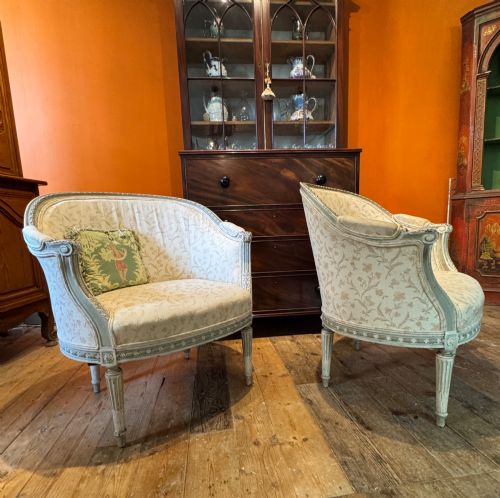
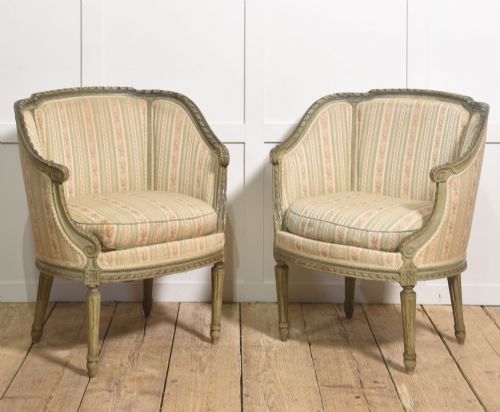
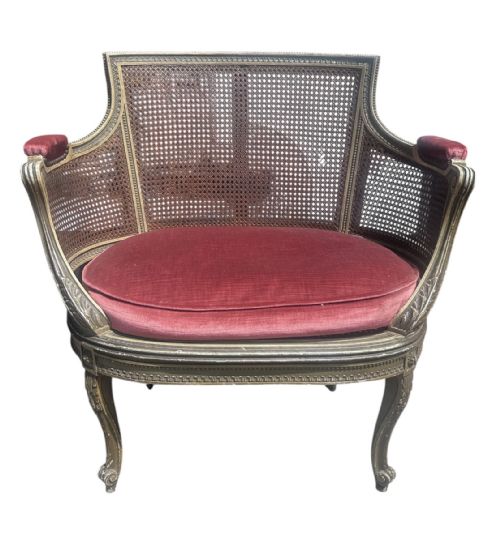
Buyers encounter various timber frames finished with original paint, lacquer, or silver gilt, often paired with cane panels or upholstered seats. Origins span French workshops, English makers, and Scandinavian studios, reflecting diverse regional interpretations of the curved chair form.
How they were made
Construction relies primarily on beech and satinwood frames, shaped to create the characteristic curved enclosing back of the tub chair. Artisans integrated woven cane panels into the structural framework or prepared wooden surfaces for decorative paintwork and silver gilding.
Upholstery techniques incorporated traditional padding covered in woven fabrics, velvet, or specialised textiles. Painted finishes were applied directly to the timber, sometimes utilising lacquering methods or Chinoiserie motifs to achieve distinct decorative surfaces.
Painted Tub Chairs Retail Price Guide 2026
Typical asking prices for painted tub chairs among the pieces listed under this phrase on Sellingantiques today, from the lower quarter to the upper quarter. They describe what is for sale here now, not the wider market.
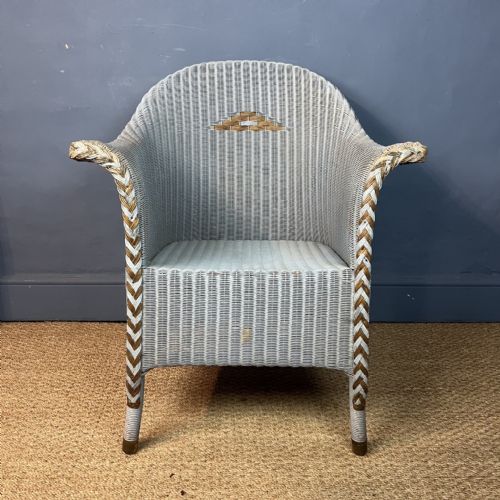
Period origins span nineteenth-century pieces to 1930s Art Deco and Lloyd Loom designs.
What varies in quality
Quality rests in the preservation of original painted surfaces and the intricacy of the underlying woodwork, where crisp carving elevates the piece. The survival of period cane work and the harmony of proportion between the curved back and the legs distinguish finer examples.
Distinct stylistic execution, such as detailed Chinoiserie decoration or sculptural forms by notable designers, sets certain chairs apart. The integrity of the frame construction and the subtlety of the original finish dictate the overall standing of each armchair.
Anton Rosen
The Painted Tub Chairs Glossary
- Bergere
- An enclosed upholstered armchair with wooden framing, often featuring a cane back and sides. This French seating style provides deep, comfortable proportions.
- Cane
- Woven rattan or plant material used for chair panels. It offers a lightweight yet supportive surface for backs and seats.
- Chinoiserie
- European decorative style imitating Chinese artistic traditions. It appears on furniture through painted motifs and lacquered finishes.
- Silver Gilt
- A thin layer of silver applied to a wooden or metal surface. This technique imparts a metallic sheen to decorative furniture details.
- Tub Chair
- A deep-seated armchair with a continuous curved back and arms forming a single unit. The enveloping shape provides enclosed seating.
Painted Tub Chairs: Frequently Asked Questions
What is a tub chair?
A tub chair is an armchair featuring a continuous curved back and armrests that form a single enclosing structure. The design wraps around the sitter to offer a deep and supportive seat.
Historically, these chairs appeared in libraries, desks, and parlours, often finished with decorative painted surfaces or upholstered frames.
How do I identify period styles?
Identifying periods involves examining structural curves, decorative motifs, and framing materials. Louis XV revival pieces display flowing asymmetric lines, while Edwardian or Art Deco examples show simpler or more sculptural geometry.
Original paint finishes, cane work, and specific timber choices like satinwood or beech also point toward distinct manufacturing decades.
Where were these chairs used?
These chairs served multiple domestic functions, from library seating to desk chairs and drawing room armchairs. Their enclosed shape made them suitable for reading rooms and formal reception spaces.
They functioned both as practical seating and as decorative accents within period interiors.
How do I care for painted wood?
Caring for painted wooden furniture requires keeping pieces away from direct sunlight and moisture fluctuations. Gentle dusting with a dry, soft cloth preserves the original painted or gilt surface without abrasion.
Avoid chemical polishes that can degrade historical paint layers or delicate lacquered finishes.