


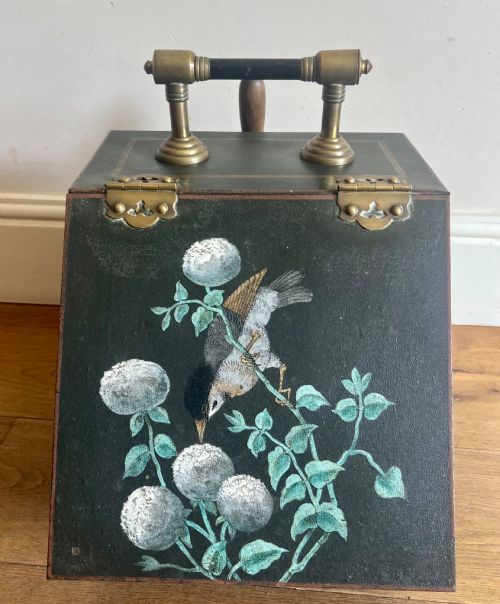


Painted Toleware Box
These painted toleware box items are robust sheet iron vessels dressed in rich pigments, offering durable storage with distinct period charm.
Painted Toleware Box
A painted toleware box brings together functional sheet iron containers and decorative hand painting from the nineteenth century. Buyers encounter forms ranging from compact money boxes and tobacco tins to larger coal scuttles and storage caddies.
The selection on this page centres on domestic and utilitarian items from the Regency and Victorian periods, alongside early twentieth century pieces. Examples include document tins, log boxes, and waste paper bins.
Makers often drew inspiration from folk art traditions, creating decorated household items that served both practical duties in country houses and commercial roles in shops.
How they were made
Craftsmen shaped sheet iron, tin, and metal into rigid bodies, frequently adding brass rims for strength and reinforcement. These metal foundations received coats of paint and lacquer to form smooth surfaces suitable for decoration.
Painters applied fine details and gold leaf over the dark grounds, producing durable finishes that withstood everyday use in kitchens and offices. Certain pieces integrate wooden elements or feature specialised compartments for specific storage tasks.
Painted Toleware Box Retail Price Guide 2026
Typical asking prices for painted toleware box among the pieces listed under this phrase on Sellingantiques today, from the lower quarter to the upper quarter. They describe what is for sale here now, not the wider market.
Solicitors once stored their most important paperwork inside matching sets of painted tin document boxes.
What varies in quality
The sophistication of the hand painting dictates the distinction between standard utility items and finer decorative pieces. Superior examples display crisp brushwork, intricate gold leaf detailing, and well-preserved pigment layers over the sheet iron.
Construction details also separate the tiers, such as neatly turned brass rims, integrated compartments, and matching sets of multiple boxes. The integrity of the underlying metal body and the stability of the lacquered surface govern the overall standard.
The Painted Toleware Box Glossary
- Toleware
- Painted or lacquered metalware, typically made from sheet iron or tin, shaped into household objects. This technique turned utilitarian metal into decorative domestic furnishings.
- Regency
- An English design period spanning the early nineteenth century, known for classical restraint and elegant proportions. Pieces from this era often feature refined painted motifs.
- Folk art
- Utilitarian items decorated within regional or vernacular traditions rather than high academic styles. These objects carry charming, unpretentious painted details.
- Gold leaf
- Thin sheets of hammered gold applied to decorated surfaces to create glowing highlights. Artisans used this material sparingly to accentuate the edges and painted scenes.
- Lacquered
- Coated with a protective varnish or resin that dries to a hard, durable finish. This treatment protected the painted metal beneath from moisture and wear.
Painted Toleware Box: Frequently Asked Questions
What is a painted toleware box?
A painted toleware box is a metal container made from sheet iron or tin and finished with decorative paint or lacquer. These items were produced in various forms for domestic storage, money keeping, and commercial use.
Surviving examples reflect the aesthetic tastes of the nineteenth and early twentieth centuries, blending sturdy metal construction with hand-painted artistry.
How were these boxes used originally?
Households and businesses utilised these metal containers for everyday storage, document organisation, and waste management. Specific forms held items like tobacco, tea, coal, and legal papers in country houses and offices.
Their robust metal construction allowed them to withstand heavy daily handling in kitchens, shops, and administrative settings.
How do I care for antique toleware?
Protect painted metal surfaces by keeping them away from damp environments and direct sunlight, which can fade the pigments. Dust them gently with a dry, soft cloth rather than using liquid cleaners.
Maintaining a stable indoor climate prevents the sheet iron from corroding and preserves the delicate lacquer and gold leaf details.
How can I tell the period of a piece?
Dating relies on observing the structural forms, the specific types of paint and lacquer, and stylistic clues from periods like the Regency or Victorian eras. Examining the construction of the sheet iron and any applied hardware offers further guidance.
Comparing the decorative motifs with documented examples helps establish the likely decade of manufacture.