



Painted Tin Urns
Painted tin urns bring robust charm to a room, offering tactile metal surfaces decorated with historic motifs for interior display.
Painted Tin Urns
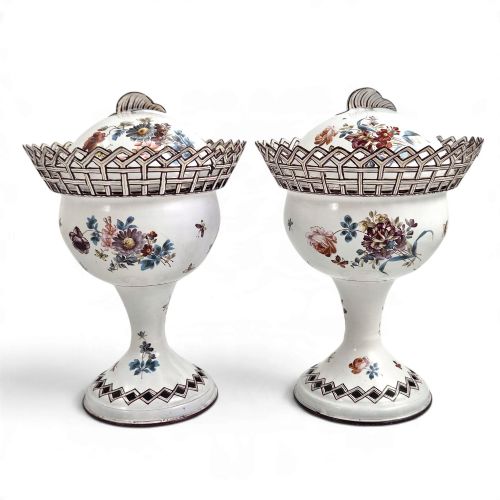
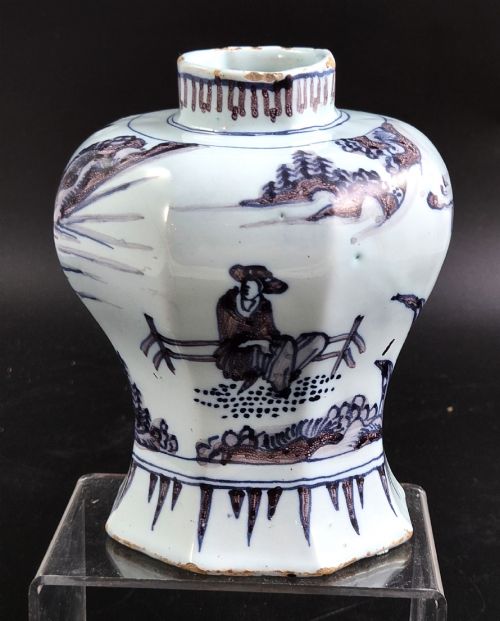
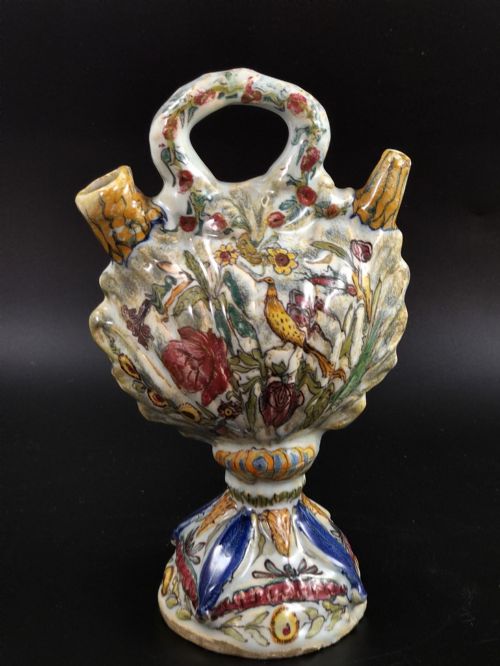
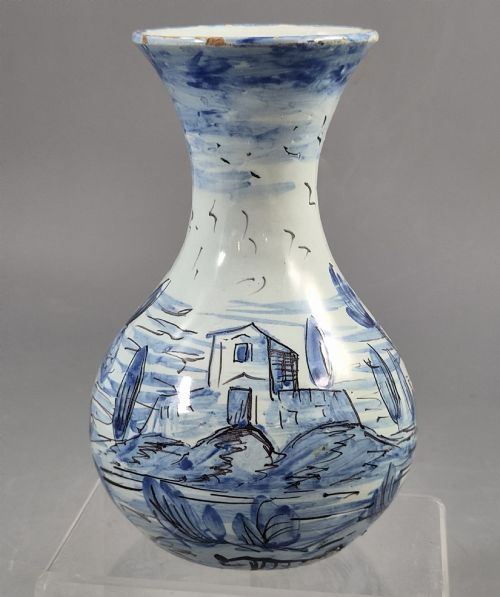
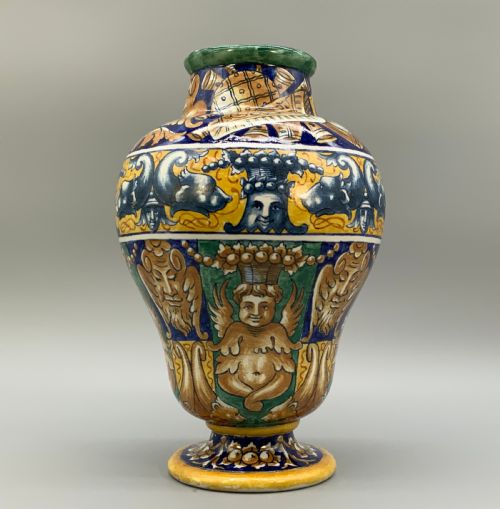
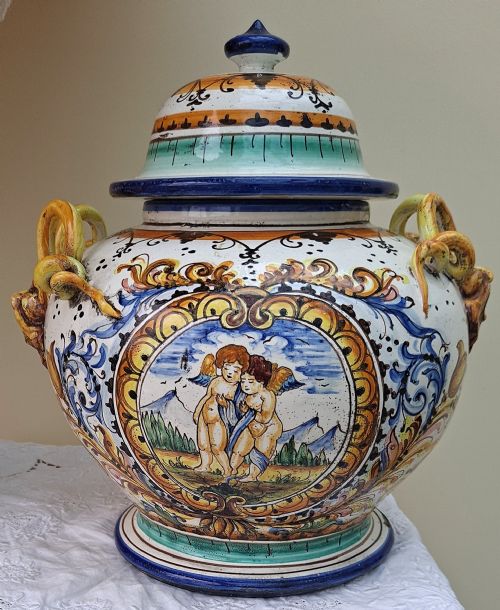
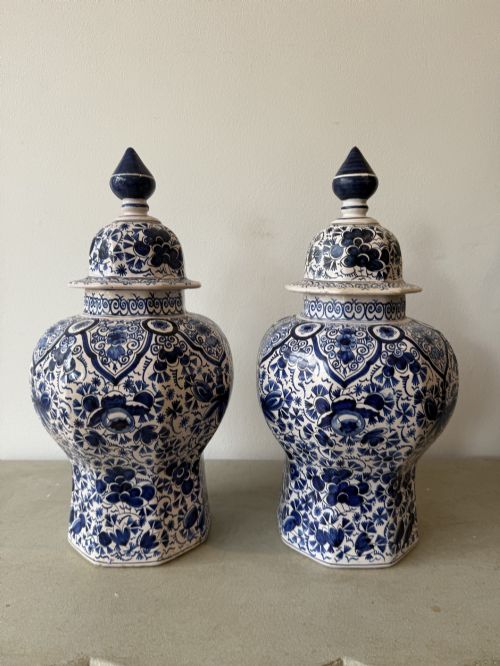
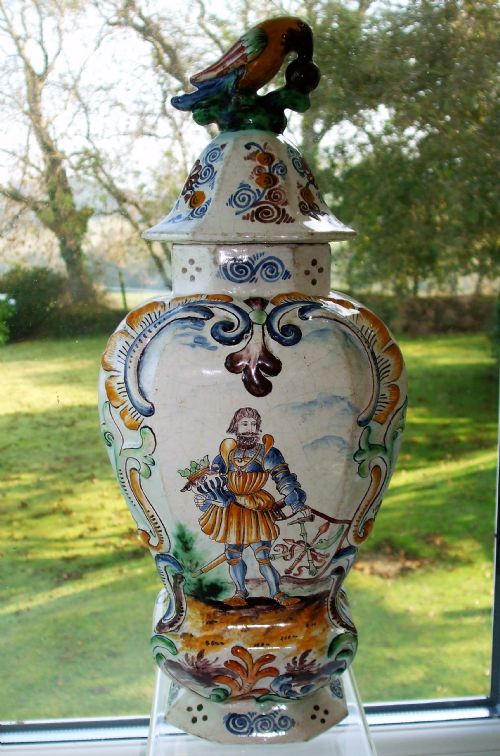
When buyers search for painted tin urns, they find metal vessels finished with decorative surface treatments, though the actual inventory spans tin-glazed earthenware, faience, and majolica alongside japanned tinware. These decorative objects date predominantly from the eighteenth and nineteenth centuries, originating from workshops in France, Italy, and the Netherlands. The typical pieces available combine functional container forms like wine coolers or lidded jars with hand-painted pictorial programmes.
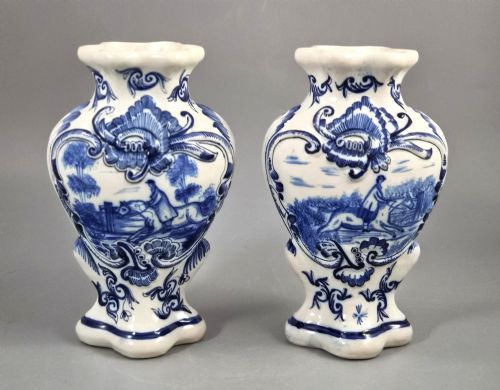
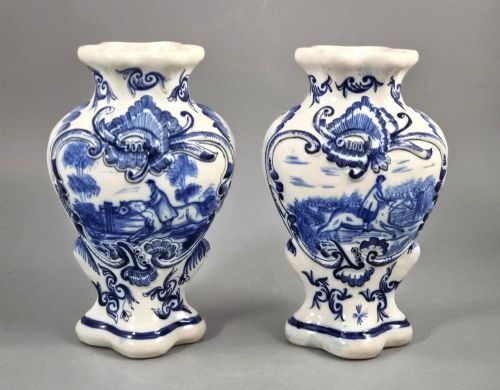
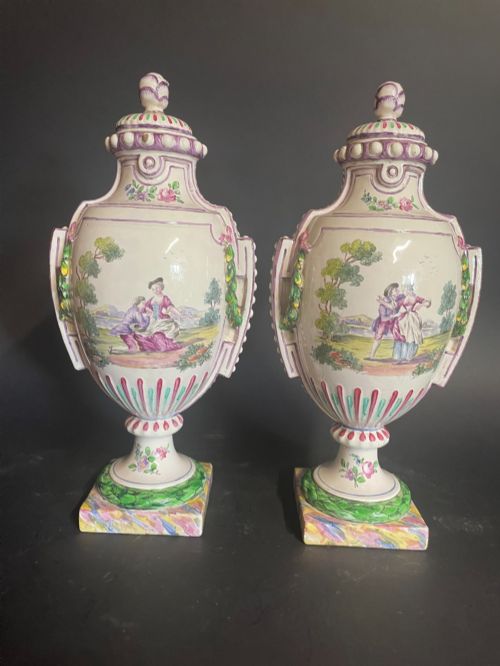
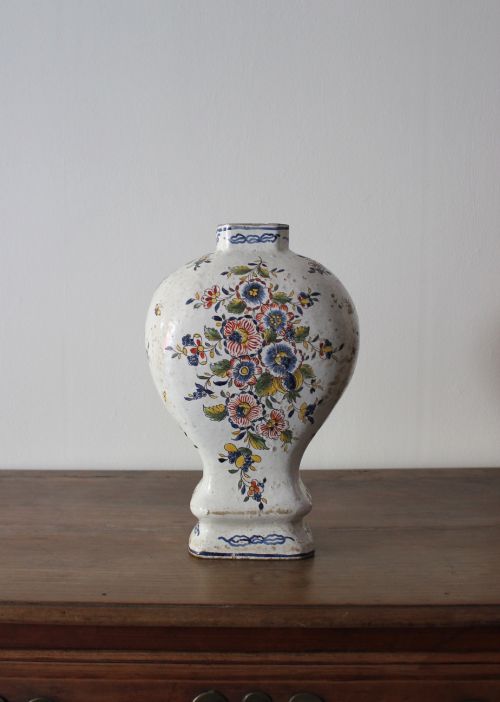
The most notable metal example recorded is an early nineteenth-century Pontypool type japanned decorated tin-ware lidded wine-cooler, which employs built-up lacquer finishes on metal. Alongside this, the selection leans heavily towards ceramic equivalents such as Dutch Delftware, French faience, and Italian majolica sharing similar baluster, jar, and urn silhouettes. Buyers encounter these painted vessels in pairs or as single display pieces suited for mantelpieces and sideboards.
How they were made
Makers formed metal plate by hand-beating or rolling iron sheets before applying protective and decorative coatings. Japanned pieces utilised layers of dark heat-cured varnish to mimic Asian lacquerware, upon which artists painted floral or landscape subjects.
Ceramic counterparts relied on earthenware bodies coated with tin-glaze opacified by metal oxides to produce a white ground for cobalt blue and polychrome pigments. Potters shaped these bodies on the wheel or pressed them into moulds before firing them in kilns.
Painted Tin Urns Retail Price Guide 2026
Typical asking prices for painted tin urns among the pieces listed under this phrase on Sellingantiques today, from the lower quarter to the upper quarter. They describe what is for sale here now, not the wider market.
What varies in quality
The refinement of the painted decoration dictates the distinction between standard production and superior examples. Skilled brushwork displaying crisp botanical details or complex figural scenes elevates a vessel above simple repetitive motifs.
The integrity of the surface coating determines overall preservation. Intact tin-glaze or well-preserved japanned layers without extensive flaking represent the higher tier of survival for these fragile domestic items.
Fourmaintraux Courquin·Sceaux Faience·Cantagalli
The Painted Tin Urns Glossary
- Japanned
- European imitation of Asian lacquerwork created by applying successive coats of varnish and dark paint to metal or wood bases. This technique provided a glossy, durable surface often embellished with gilt Chinoiserie motifs.
- Tin-Glazed Earthenware
- Pottery fired with a lead glaze made opaque by the addition of tin oxide. This creates a smooth white background suitable for direct painting before a final glaze firing.
- Faience
- European tin-glazed earthenware produced chiefly in France. It encompasses both utilitarian vessels and highly ornamental display pieces decorated in cobalt blue and polychrome palettes.
- Majolica
- Italian tin-glazed earthenware known for vibrant colour and pictorial decoration. The style encompasses Renaissance revivals and traditional regional wares produced across Italy.
- Baluster
- A vase form with a rounded body that tapers toward the base and swells near the lower centre. This architectural silhouette appears frequently among historic decorative jars and urns.
Painted Tin Urns: Frequently Asked Questions
What were painted tin urns used for?
These metal vessels served practical domestic functions such as cooling wine or holding provisions while also acting as decorative ornaments in period interiors. Their painted surfaces made them suitable for prominent display on side tables and mantelpieces.
Over time, their role shifted entirely toward decorative display as interior fashions changed. Today they function as sculptural focal points in traditional rooms.
How do I care for japanned tinware?
Keep metal objects away from direct sunlight and damp environments to protect the delicate japanned surface layers. Dust them gently with a dry, soft cloth without applying modern liquid polishes.
Avoid abrasive cleaners that can damage the underlying varnish or lift hand-painted details. Gentle handling preserves the original finish of the metal.
How do I tell tinware from ceramics?
Examine the weight and temperature of the object to distinguish metal from earthenware bodies. Tinware feels lighter and responds quickly to ambient room temperature.
A close visual inspection under good light reveals the underlying sheet metal construction where paint has worn at the seams or edges.
Where were these pieces made?
Production centres for metalware and tin-glazed vessels spread across Britain, France, Italy, and the Netherlands during the eighteenth and nineteenth centuries. Regional workshops developed distinct decorative vocabularies and potting techniques.
British manufacturers focused on japanned ironware in regions like Pontypool, while continental makers produced tin-glazed earthenware urns and vases. Each origin imparts specific stylistic traits to the finished object.