




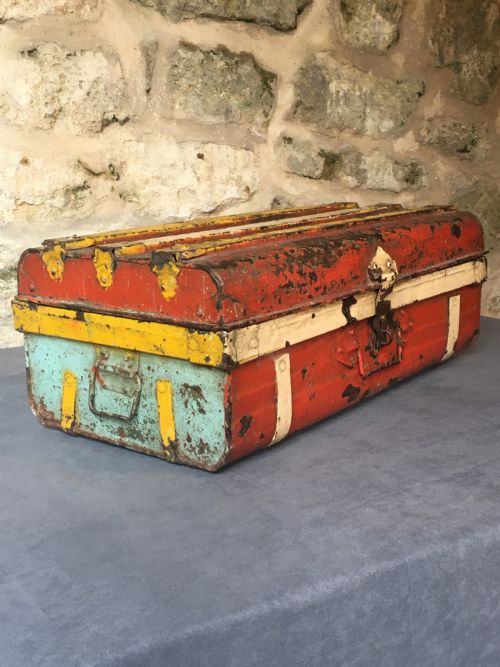


Painted Tin Box
These painted tin box pieces bring functional folk art and decorative metalwork into everyday interiors, offering lasting charm for collectors.
Painted Tin Box
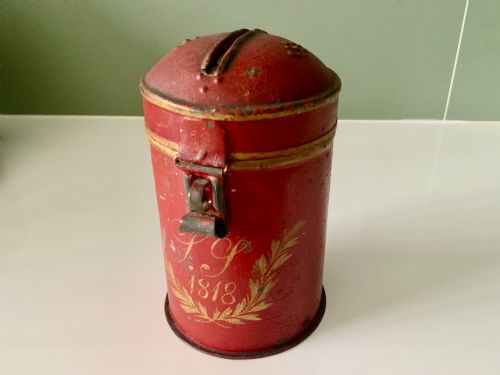
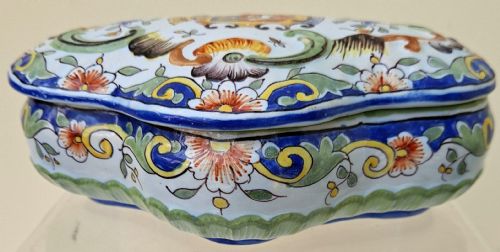
A painted tin box encompasses a diverse group of functional containers, ranging from small tobacco tins and snuff boxes to larger trunks, deed cases, and storage bins. These items emerge across multiple periods, with nineteenth-century examples and early twentieth-century pieces appearing frequently alongside earlier ceramic or toleware variants.
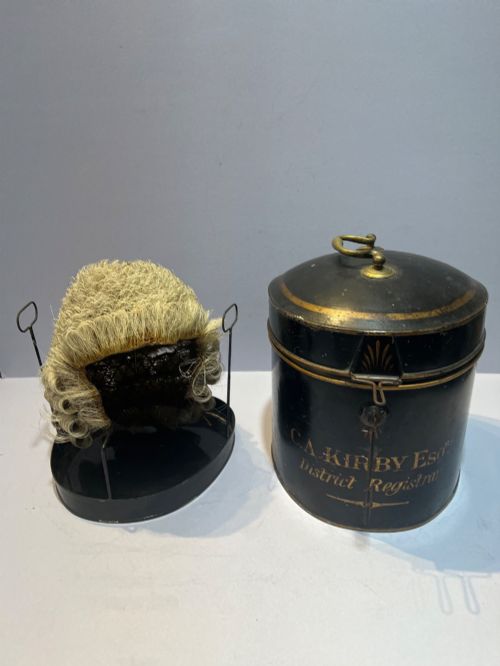
The selection includes specialised items such as solicitor document tins, coffee shop storage containers, wig cases, and dome-top caskets. Buyers encounter both British and continental European origins, reflecting varied domestic and commercial uses from past centuries.
Materials and construction
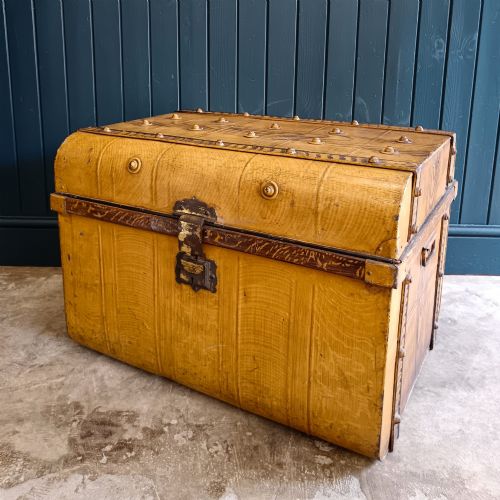
Construction relies primarily on sheet metal, iron, and tinplate, often shaped into trunks, boxes, and cylindrical canisters with brass or metal rims. Makers applied surface decoration using oil paint, lacquer, or tin-glaze techniques, sometimes achieving simulated finishes like faux-wood graining.
Folk art traditions and industrial methods intersect in these objects, demonstrated by hand-painted motifs, toleware coatings, and specialised compartments designed for commercial or domestic storage.
Painted Tin Box Retail Price Guide 2026
Typical asking prices for painted tin box among the pieces listed under this phrase on Sellingantiques today, from the lower quarter to the upper quarter. They describe what is for sale here now, not the wider market.
Listings span the seventeenth through the early twentieth centuries, incorporating materials such as sheet metal, iron, earthenware, and toleware.
Assessing quality and finish
Quality rests upon the preservation of the original painted surface, the crispness of any hand-applied decoration, and the structural integrity of the sheet metal or iron body. Pieces retaining clear brushwork, authentic patination, and functional lids command stronger interest than those with heavy surface loss or later repainting.
The complexity of the form also dictates standing, with multi-compartment containers, specialised legal or military boxes, and distinct folk art pieces showing greater craftsmanship than plain utilitarian storage vessels.
Eade and Son·Dorotheenthal Germany
The Painted Tin Box Glossary
- Tin Glaze
- A white opaque tin-opacified glaze applied to earthenware before firing, commonly found on historic European boxes and small containers.
- Faux-Wood
- A painted surface finish designed to imitate the grain and appearance of natural timber, frequently applied to nineteenth-century metal trunks.
- Solicitor Document Tin
- A metal storage container utilised by legal professionals for holding deeds and papers, often painted and lettered for identification.
Painted Tin Box: Frequently Asked Questions
What were painted tin boxes originally used for?
These containers served practical roles in homes, shops, and offices for storing dry goods, tobacco, documents, and personal valuables.
Larger trunk forms transported belongings or secured legal papers, while smaller boxes held snuff or trinkets.
How do I date an antique painted tin box?
Dating relies on examining the construction methods of the sheet metal, the style of the hinges, and the characteristics of the paintwork.
Nineteenth-century examples often display hand-applied folk art or faux-wood finishes, whereas early twentieth-century items show different industrial production traits.
How should I clean a painted tin box?
Maintenance requires only gentle dusting with a dry or slightly damp cloth to protect the delicate painted surface and original patina.
Harsh chemical cleaners and abrasive materials should be avoided entirely to prevent permanent damage to the finish.
Can I use these boxes for daily storage?
Many of these containers remain sturdy enough for holding small household items, letters, or dry goods in modern spaces.
Care should be taken to keep them away from excessive moisture to preserve the metal and paint.