






Painted Tea Caddy
A painted tea caddy brings decorative lacquer, enamel and woodwork from the eighteenth and nineteenth centuries into daily domestic use.
Painted Tea Caddy
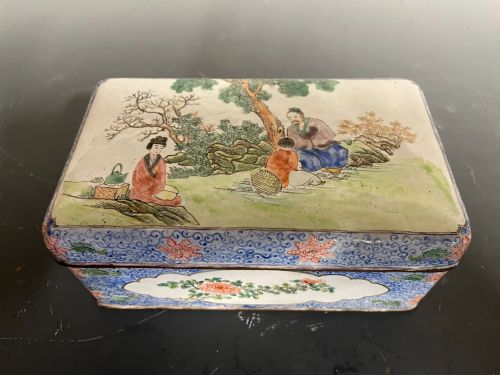
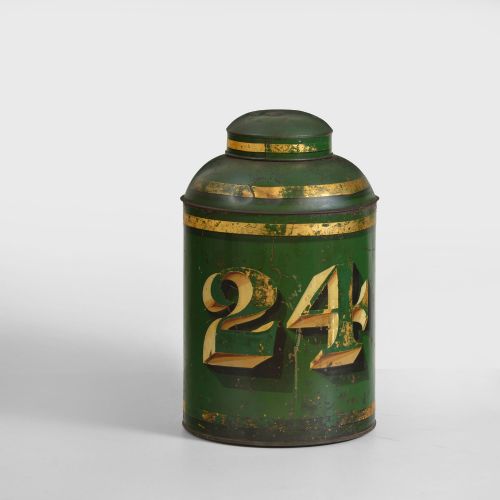
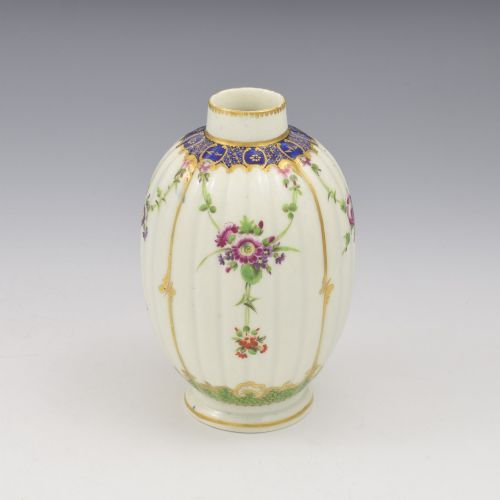
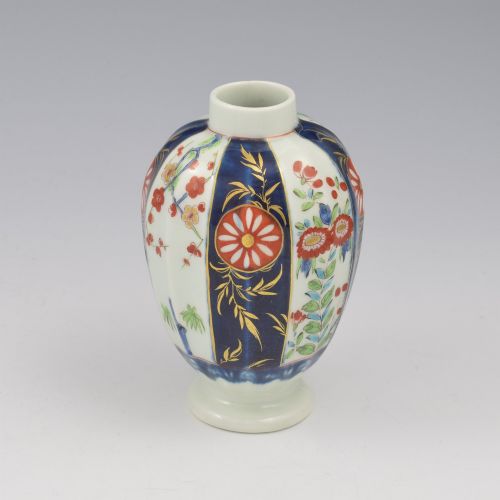
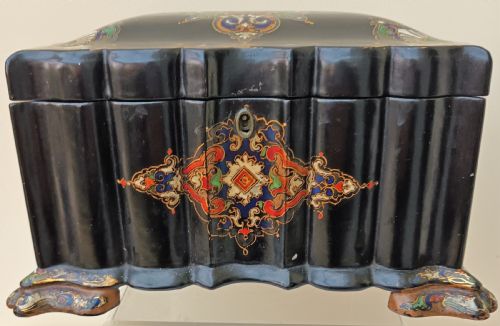
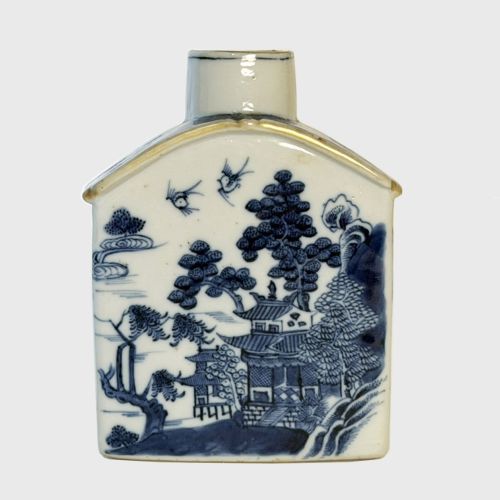
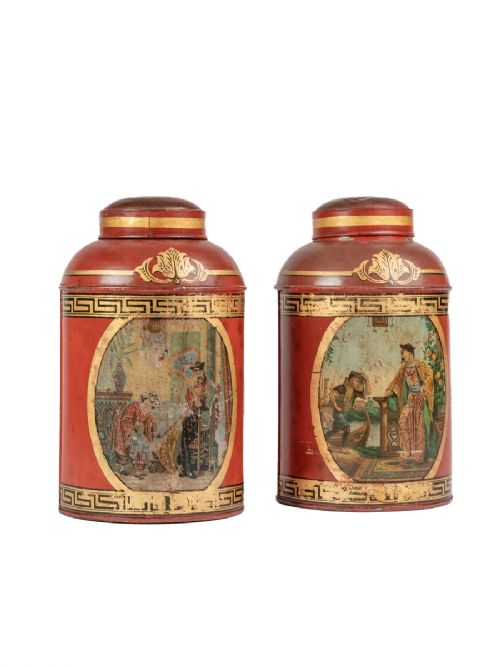
A painted tea caddy is a small storage vessel designed to keep precious tea leaves dry and secure during eras when tea was a luxury commodity. The pieces on this page span the Georgian, Regency and Victorian periods, taking forms from simple wooden boxes to toleware tins and porcelain canisters.
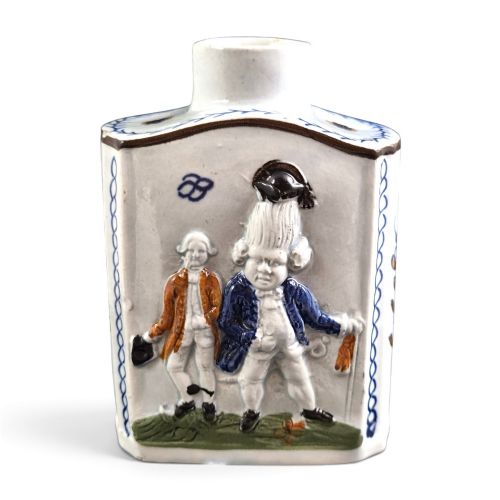
Makers utilised various surfaces for ornament, including mahogany, papier-mâché, earthenware and lacquer. Buyers encounter Chinese export porcelain, Japanese Satsuma wares, English toleware and Scottish Prattware alongside classic Georgian and Regency cabinetry.
Many examples double as decorative storage boxes or have been adapted into table lamps. Forms range from rectangular tea canisters and sarcophagus boxes to round jars and novelty containers.
How they were made
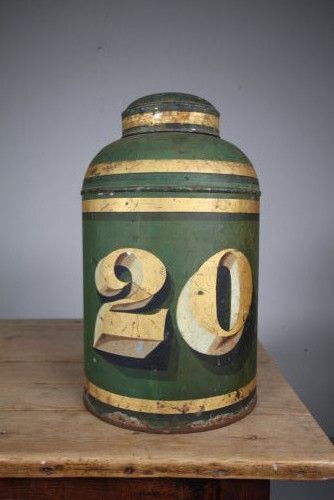
Craftsmen applied paint, gold leaf and enamel over wood, metal, papier-mâché and porcelain substrates. Toleware items relied on painted and japanned sheet metal, whilst wooden caddies employed mahogany and other timbers finished with lacquer or penwork.
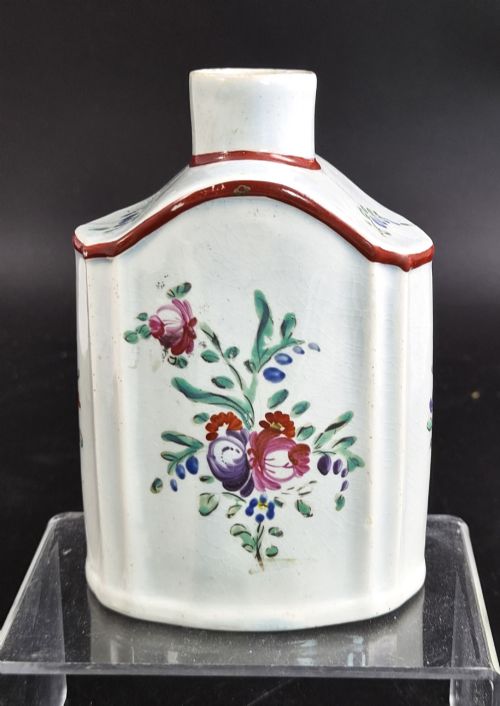
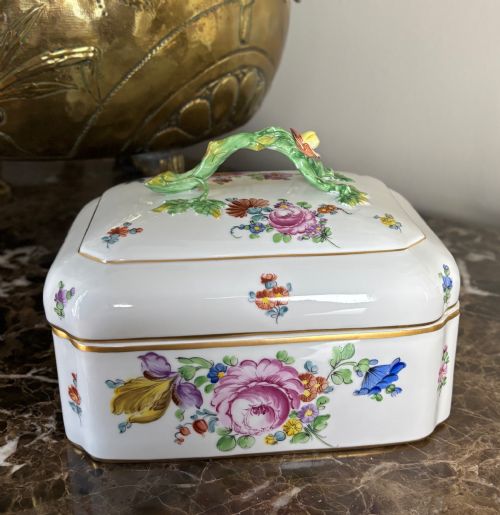
Decoration often featured hand-painted motifs, Chinoiserie scenes and floral details. Porcelain versions from factories like Leeds and Worcester incorporated underglaze painting and enamel highlights, sometimes finished with gilding.
Painted Tea Caddy Retail Price Guide 2026
Typical asking prices for painted tea caddy among the pieces listed under this phrase on Sellingantiques today, from the lower quarter to the upper quarter. They describe what is for sale here now, not the wider market.
Design styles represented across the inventory include Georgian, Regency, Victorian, Chinoiserie, Chinese Export, Rococo Revival and Meiji period works.
What varies in quality
The standard of a painted tea caddy rests upon the crispness of the hand-painted decoration and the preservation of the original surface finish. Pieces featuring intricate Chinoiserie, detailed figures or fine gold leaf work command attention.
The integrity of the underlying material, whether wood, porcelain or toleware, dictates durability and historical value. Retaining original lids, inner containers and period hardware distinguishes superior examples from later adaptations.
Leeds Pottery·Asprey and Co·Tokyo Taizan·Kizan
The Painted Tea Caddy Glossary
- Chinoiserie
- Chinoiserie is the European imitation and interpretation of Chinese and East Asian artistic traditions. This style appears frequently on lacquer boxes and tea caddies from the Georgian and Regency periods.
- Prattware
- Prattware refers to a type of English earthenware characterised by low-relief moulding and specific underglaze colours like ochre, blue and brown. It is found on eighteenth-century canisters.
- Satsuma
- Satsuma is a type of Japanese earthenware featuring a ivory-coloured, crackle-glaze ceramic body decorated with enamel and gold. These pieces often depict figures and traditional motifs.
- Penwork
- Penwork is a decorative technique using India ink applied to a wood or ivory surface to create fine line drawings resembling engravings. It appears on Regency boxes.
Painted Tea Caddy: Frequently Asked Questions
What were tea caddies used for?
Tea caddies served as secure storage containers for loose tea leaves when tea was an expensive commodity kept under lock and key. Wealthy households utilised them in the parlour or dining room to dispense tea before guests.
Over time, many of these vessels lost their internal compartments or locking mechanisms. Today they function as decorative boxes, trinket storage or table lamps.
How do I date a painted tea caddy?
Dating relies on identifying the underlying material, decorative style and construction methods. Georgian and Regency examples often feature mahogany, penwork or Chinoiserie lacquer, whilst Victorian pieces frequently employ papier-mâché or toleware.
Examining the hinges, interior linings and paint pigments helps narrow the production window. Makers marks on porcelain canisters provide a definitive point of reference.
Are painted tea caddies fragile?
Painted and lacquered surfaces require careful handling to prevent chipping, scratching or wear to the gold leaf and enamel. Papier-mâché and wood are sensitive to extreme fluctuations in humidity and temperature.
Keeping them away from direct sunlight preserves the original pigment colours. Dusting with a dry, soft cloth is sufficient for routine maintenance.
How can I tell porcelain from toleware?
Porcelain tea canisters are ceramic objects fired at high temperatures, often originating from English factories like Worcester and Leeds or from Chinese export sources. They feel heavy and cool to the touch.
Toleware consists of painted sheet metal. It has a metallic structure that responds differently to handling and displays distinct signs of ageing on metal surfaces.