

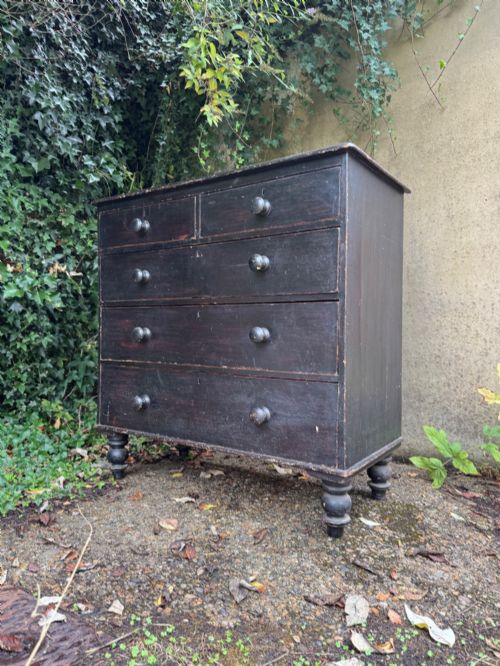
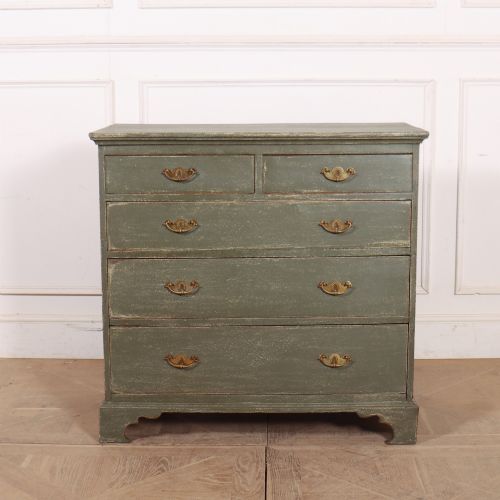
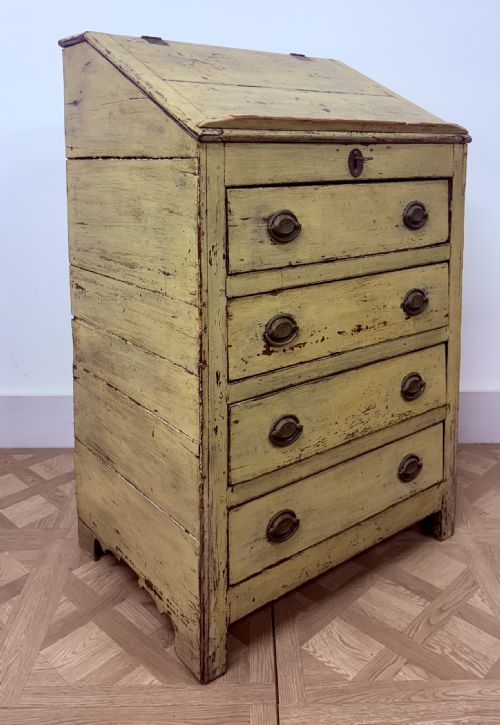
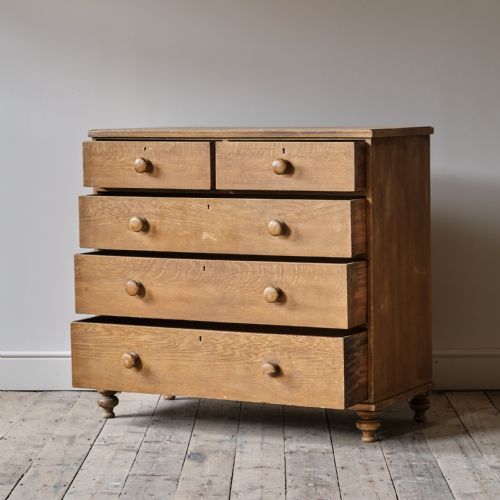
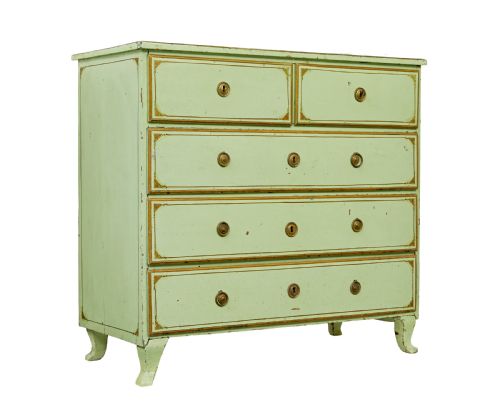
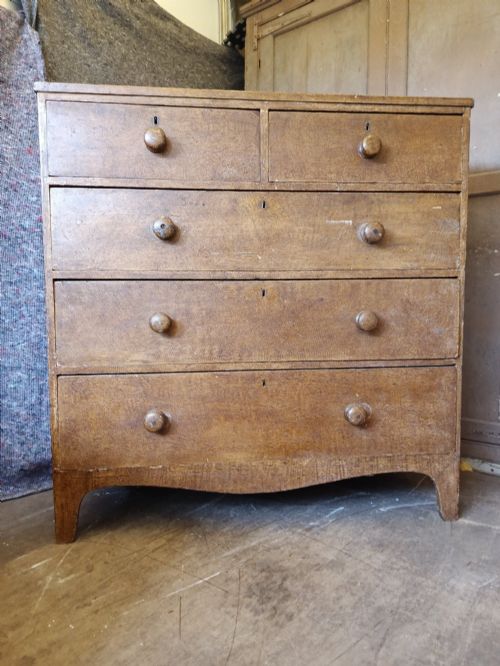
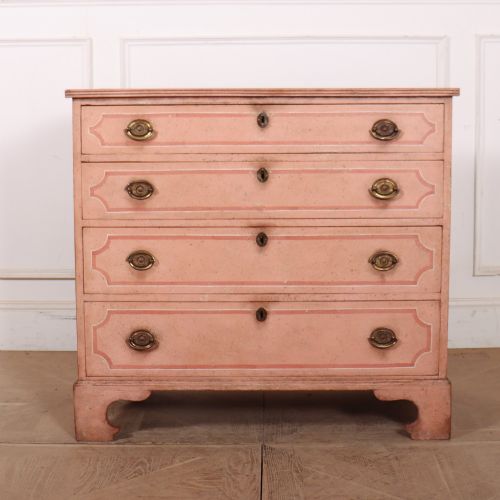
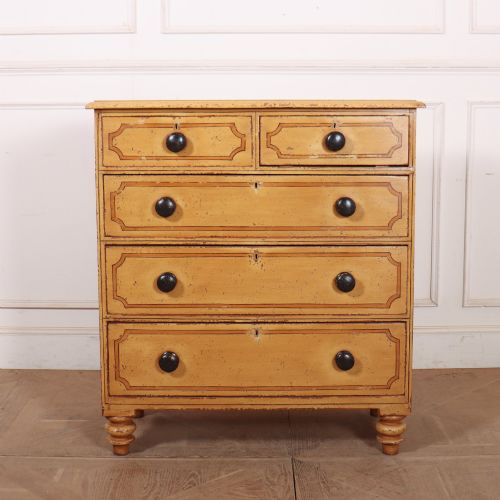
Painted Tallboy Dresser
A painted tallboy dresser brings upright storage and aged colour into a room, offering practical depth with surface character.
Painted Tallboy Dresser
A painted tallboy dresser brings together vertical storage and surface finish, combining tall case furniture with applied colour. When you search for a painted tallboy dresser, you encounter pine chests, multi-drawer cabinets, and chests-on-chest spanning the eighteenth to the twentieth centuries.
The pieces appearing on this page lean heavily toward nineteenth-century Victorian and Regency pine furniture, alongside regional English, Swedish, and Hungarian examples. Formats range from standard two-over-three drawer configurations to bonnet top cabinets and tall five-drawer units.
How they were made
Makers constructed these carcasses primarily from solid pine and ash, utilising sturdy dovetailed drawer construction to withstand daily use. Fittings incorporated brass handles, ceramic pulls, and iron fixings.
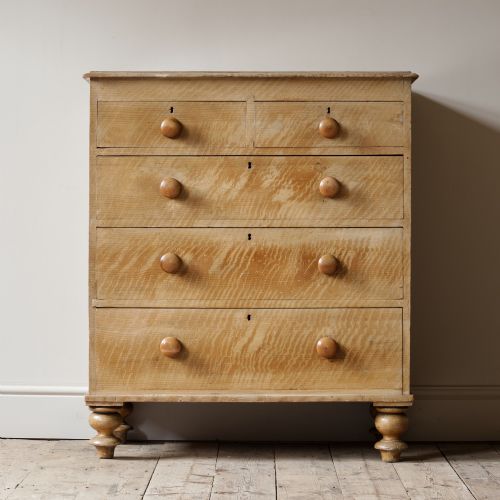
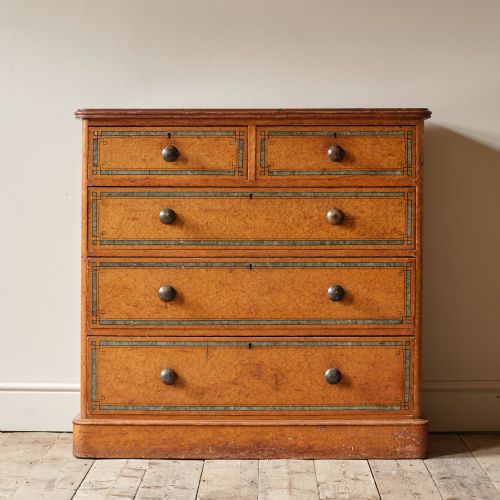
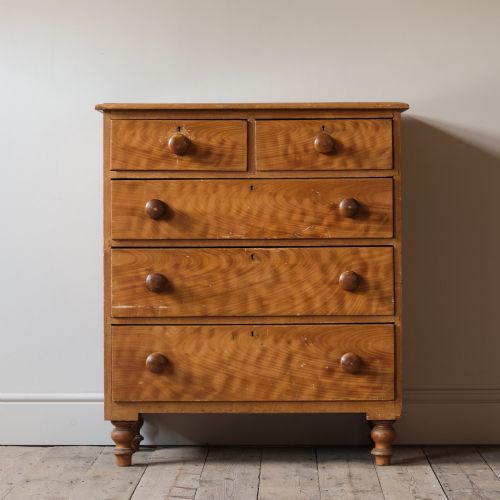
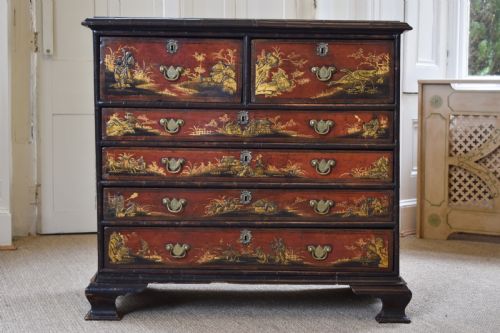
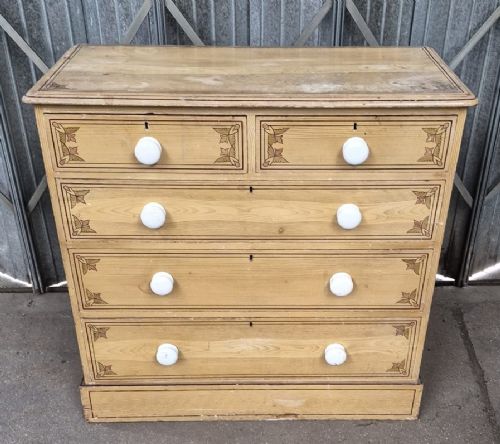
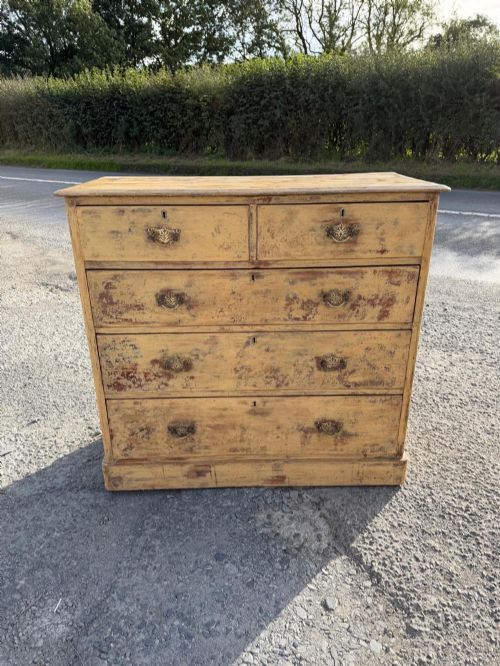
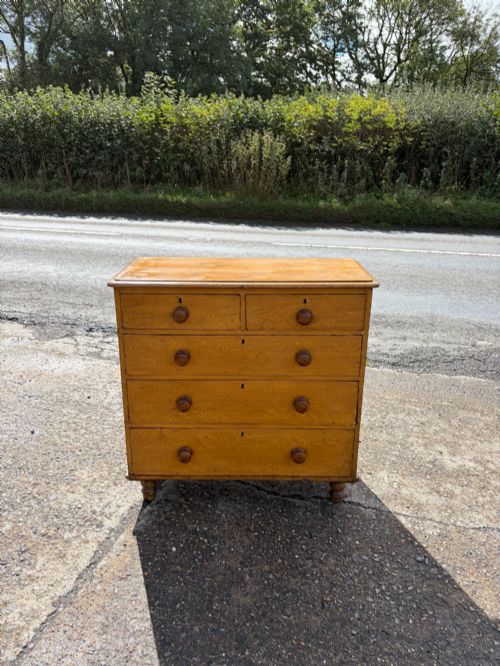
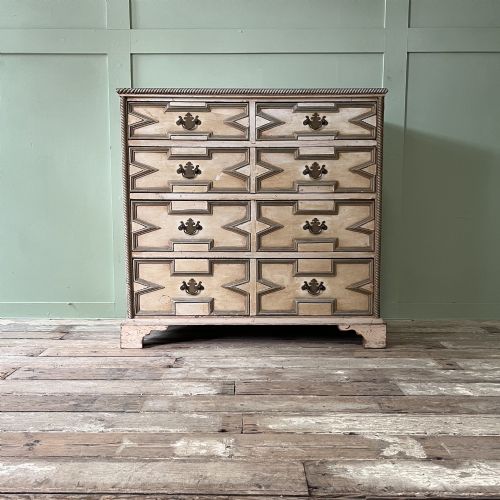
Surfaces received layers of hand-applied paint, original graining, scumble glazes, or simulated birch finishes. Certain pieces retain their early painted schemes, whilst others display later decorative treatments.
Painted Tallboy Dresser Retail Price Guide 2026
Typical asking prices for painted tallboy dresser among the pieces listed under this phrase on Sellingantiques today, from the lower quarter to the upper quarter. They describe what is for sale here now, not the wider market.
Several tall chests include dedicated spaces once termed ladies make-up drawers, hiding small compartments beneath the top surface.
What varies in quality
The integrity of the painted surface dictates much of the character, distinguishing untouched historical layers from later decorative overpainting. Original graining and scumbling hold distinct appeal for collectors valuing period honesty.
Proportion and scale separate standard regional pieces from finer examples, such as those with bonnet tops or two-part modular construction. Timber selection and the crispness of the joinery further define the standard of the build.
Sir Clough Williams-Ellis·Gemla Fabrikers
The Painted Tallboy Dresser Glossary
- Scumble
- A decorative painting technique involving a translucent top layer dragged over a lighter base to imitate wood grain. This finish appears frequently on nineteenth-century pine furniture.
- Chest-on-chest
- A tall storage unit formed by stacking a smaller chest of drawers directly on top of a wider base section. This eighteenth-century form maximises vertical capacity.
- Bowfront
- A cabinet or chest featuring a convex, curved front profile. This design softens the geometric lines of standard case furniture.
- Bonnet top
- An arched or hooded upper canopy topping a tall cabinet or chest. The profile adds architectural height and presence to the piece.
Painted Tallboy Dresser: Frequently Asked Questions
How are these tall chests constructed?
Carpenters built the bodies from solid pine or ash, joining the timber with hand-cut dovetails on the drawers to ensure lasting strength. Many tall units were manufactured in two separate stacking parts to ease transport and placement.
Fittings typically include brass or ceramic drawer pulls, accompanied by iron internal locks. The structural timber remains robust, designed to hold substantial weight across multiple drawers.
What does original paint mean on furniture?
Original paint refers to the earliest decorative surface applied to the timber, remaining undisturbed by later redecoration. This layer often shows natural wear, craquelure, and softening that indicate genuine age.
Such finishes contrast with pieces that have undergone later surface updates or hand-painted colour changes. Collectors generally value untouched historical finishes for their visual honesty.
Where did regional painted styles originate?
Regional styles developed according to local timber availability and domestic painting traditions across Britain, Sweden, and Hungary. Scandinavian and Hungarian pieces frequently exhibit pale greys or dark black finishes suited to local interiors.
English country workshops relied heavily on native pine and ash, applying scumble glazes or simple colour washes to mimic more expensive exotic hardwoods.
How do I care for a painted wooden surface?
Maintain the finish by dusting with a dry, soft cloth and avoiding chemical sprays or abrasive cleaning pads. Keep the timber away from direct heat sources and strong sunlight to prevent paint flaking and wood shrinkage.
Applying occasional specialist wax where the paint has worn thin helps protect the underlying wood. Gentle handling preserves both the structural joins and the historic surface.