



Painted Pine Plate Rack
A painted pine plate rack brings functional utility and rustic charm to a kitchen, offering open display storage for everyday earthenware.
Painted Pine Plate Rack
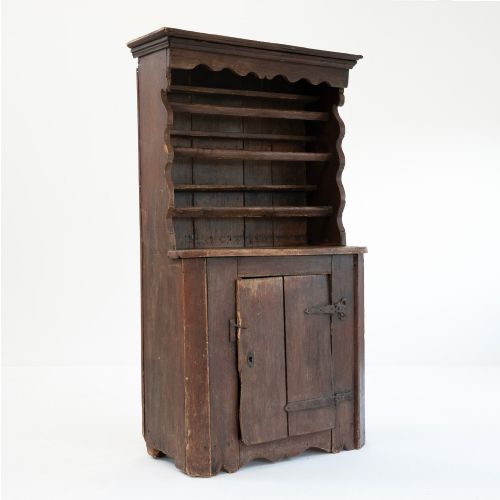
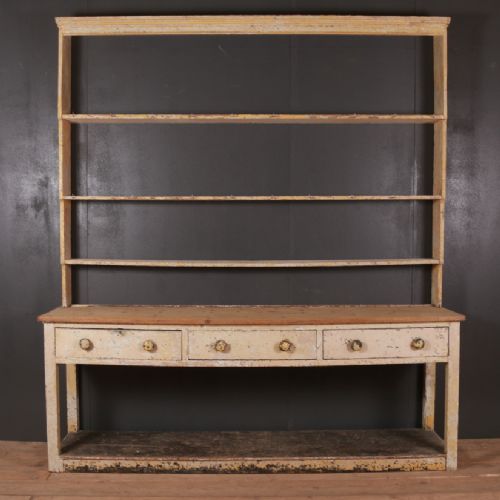
When searching for a painted pine plate rack, you encounter wall-mounted display shelves, compact spice combinations with integrated racks, and substantial country dressers featuring upper plate sections. The selection spans the eighteenth century through to the early twentieth century, drawing from English, Irish, French, Scandinavian, and Alpine vernacular traditions.
The version most commonly met on this page is the nineteenth century wall-mounted or dresser-top rack, constructed in softwood and finished with historic or later painted surfaces. These pieces reflect regional domestic habits across the West Country, Georgian townhouses, and continental farmhouses where plates stood upright against vertical timber slats.
How they were made
Makers built these racks primarily from solid pine and softwood planks, joined with traditional carpentry methods such as pegged mortise and tenon joints for structural stability. Surfaces received layers of lead-based or oil-based paint, sometimes finished with simulated wood graining or Folk Art decoration.
Hardware additions typically include wrought iron or brass hooks for hanging domestic implements, alongside small iron fixings for wall hanging or securing spice drawers within the frame.
Painted Pine Plate Rack Retail Price Guide 2026
Typical asking prices for painted pine plate rack among the pieces listed under this phrase on Sellingantiques today, from the lower quarter to the upper quarter. They describe what is for sale here now, not the wider market.
Some humble pine racks come with hidden spice drawers, as if hiding cinnamon was a serious rural priority.
What varies in quality
Quality rests in the integrity of the original timber construction and the character of the painted surface, ranging from untouched layered historic paint to later decorative schemes. Proportion, timber thickness, and the retention of original spice drawers or hanging hooks distinguish simple utility pieces from finer vernacular examples.
The refinement of joinery and regional stylistic details, such as shaped sideboards on West Country pieces or Georgian architectural mouldings, elevate certain examples above standard domestic kitchen furniture.
The Painted Pine Plate Rack Glossary
- Plate rack
- A wall-mounted or dresser-integrated wooden frame designed to hold plates upright in grooves or behind timber bars for drying and display. These fixtures formed a central part of historic kitchen storage.
- Pot board
- A lower open shelf built into a dresser base, traditionally used for storing heavy pots and pans off damp stone floors. This feature appears frequently on vernacular country furniture.
- Vernacular
- Architecture and furniture built by local craftsmen using regional materials to satisfy immediate domestic needs, without adherence to high academic style. West Country and Alpine traditions exemplify this approach.
- Folk art
- Decorative objects and utilitarian furniture created within a traditional community aesthetic, often featuring hand-painted motifs or vernacular carving. These pieces reflect local cultural heritage rather than professional academic design.
Painted Pine Plate Rack: Frequently Asked Questions
How were plate racks used historically?
Historic households utilised plate racks in kitchens and sculleries to air, dry, and display everyday ceramic plates and platters after washing. The vertical slats kept crockery secure while allowing air circulation.
Many examples incorporated lower shelves, hooks for mugs, or small drawers for spices, creating a multi-functional storage hub for the domestic workspace.
How do I hang a heavy pine rack?
Mounting a heavy timber plate rack requires securing the frame directly into wall studs or masonry using appropriate heavy-duty brackets and screws. The weight of stacked ceramic plates demands robust wall fixings.
Professional installation ensures the wooden structure bears the load safely without pulling away from the wall during daily use.
How do I clean a painted pine surface?
Maintenance involves dusting with a dry, soft cloth and avoiding harsh chemical cleaners that can damage historic paint layers. Moisture should be kept to a minimum.
Preserving fragile or layered paint finishes requires gentle treatment and occasional application of appropriate conservation wax if the timber appears dry.
How can I tell an eighteenth century rack from a later one?
Eighteenth century examples often show hand-planed timber surfaces, forged iron nails, and construction methods characteristic of Georgian craftsmanship. The wear patterns reflect extended domestic service.
Later nineteenth and twentieth century pieces typically display machine-sawn timber elements, standardised fixings, and differing paint applications relative to their production era.