

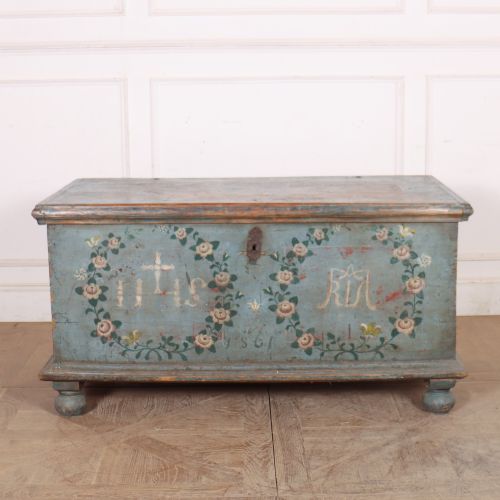


Painted Pine Dower Chest
These painted pine dower chest examples offer utilitarian storage adorned with folk palettes, giving any interior historic warmth and character.
Painted Pine Dower Chest
A painted pine dower chest is a traditional storage piece designed to hold household linens, blankets, or a bride's trousseau. Buyers browsing this selection typically encounter 19th-century examples spanning Georgian through Victorian periods, along with specific decades like 1860 and 1890.
These items manifest in various forms including marriage trunks, mule chests, coffers, blanket boxes, and dome-top boxes. The geographic origins stretch across European regions, featuring Scandinavian, Hungarian, Romanian, and Alpine folk art traditions.
Regional styles dictate the visual presentation, ranging from traditional Swedish surfaces to vibrant Hungarian floral coffer boxes. Each piece serves as a functional trunk and a decorative carrier of regional European heritage.
How they were made
Construction relies on solid pine timbers joined to form deep rectangular boxes, sometimes featuring dome tops or lower drawer configurations found in mule chests. The wood is prepared to receive surface decoration, utilising natural pigment and paint applied by hand.
Iron and wrought iron provide essential structural reinforcement and hardware, including strap hinges, carrying handles, and locking hasps. Artisans combined utilitarian carpentry with local folk painting techniques to create durable domestic containers.
Painted Pine Dower Chest Retail Price Guide 2026
Typical asking prices for painted pine dower chest among the pieces listed under this phrase on Sellingantiques today, from the lower quarter to the upper quarter. They describe what is for sale here now, not the wider market.
One box proudly displays the painted date 1837, preserving the exact moment an artisan finished decorating a Scandinavian home.
What varies in quality
Quality differences lie in the preservation and artistic complexity of the original hand-painted surface decoration. Pieces featuring intricate floral motifs or well-documented regional folk art display a higher degree of artisan skill than plain utility boxes.
The integrity of the structural pine and the survival of original wrought iron hardware influence the overall calibre of the piece. Superior examples maintain their historic pigment layers and functional integrity without losing the character imparted by decades of domestic use.
The Painted Pine Dower Chest Glossary
- Pine
- A softwood timber commonly used for historic furniture construction due to its availability and workability. It provides the lightweight yet sturdy foundation for these painted containers.
- Mule chest
- A traditional storage form resembling a blanket box with one or more drawers built into the base beneath the main compartment. This hybrid design bridges the chest and the chest-of-drawers.
- Cofer
- An alternative spelling of coffer, denoting a strongbox or chest used for safekeeping valuables and textiles. These heavy-duty receptacles often feature iron reinforcements.
- Folk art
- Artistic work created within a traditional culture by self-taught or local artisans. It encompasses the regional painted motifs seen on these European boxes.
- Pigment
- Finely ground colouring material mixed with a binder to create the historic paints applied to wood. These substances form the vibrant surfaces characteristic of continental marriage chests.
Painted Pine Dower Chest: Frequently Asked Questions
What is a painted pine dower chest?
A painted pine dower chest is a historic storage box built from pine and decorated with regional folk art paintwork. These pieces were traditionally used to store household linens and a bride's personal belongings.
Today, they function as decorative storage furniture in modern homes. Their surfaces display the distinct artistic styles of various European regions.
How were these chests used?
These boxes served primarily as durable receptacles for blankets, textiles, and domestic valuables. Families utilised them for practical storage and to commemorate marriages.
Many examples double as benches or tables within modest rural dwellings. Their robust construction allowed them to withstand heavy daily use across generations.
How do I care for antique pine?
Preserving antique pine involves placing the piece away from direct sunlight and extreme temperature fluctuations. Stable indoor climates prevent the wood from drying out or cracking.
Cleaning should be limited to gentle dusting with a soft dry cloth to protect fragile historic paint layers. Avoid using modern chemical polishes that might alter the original pigment surface.