



Painted Panel Sideboard
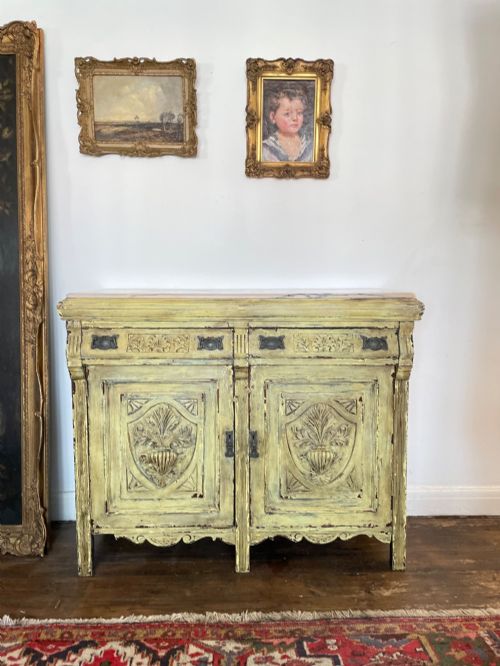
A painted panel sideboard brings character and colour to a room through painted decoration on wood.
Painted Panel Sideboard
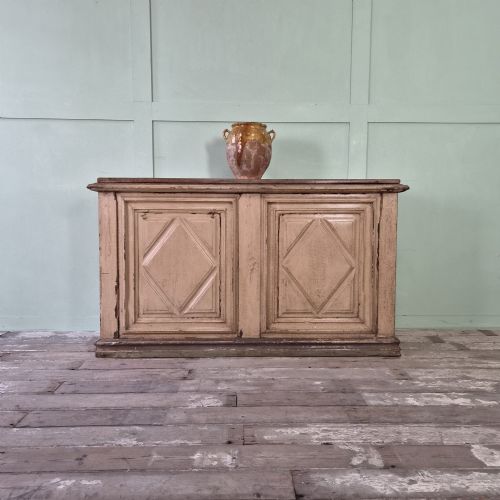
When you search for a painted panel sideboard, you encounter a variety of storage furniture including sideboards, cabinets, cupboards, and shop counters. These pieces span multiple periods such as the seventeenth century, Victorian era, and the nineteenth century.
The styles range widely across European traditions, taking in French Provincial, Scandinavian Country, Gustavian, Italian Provincial, Regency, and Jacobean influences. You will frequently find pine, oak, walnut, and satinwood used as the foundation for these painted surfaces.
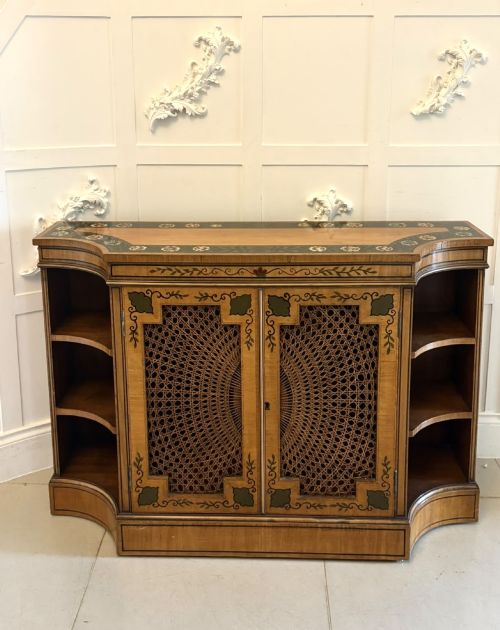
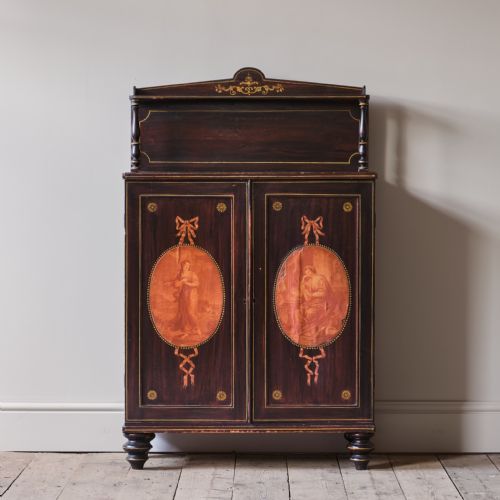
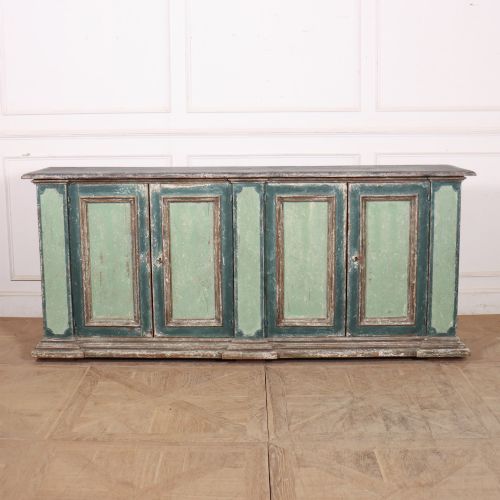
Forms include demi-lune commodes, chiffoniers, dresser bases, and shop counters, often featuring classical panels or majolica inserts. The painted finishes vary from simulated rosewood to simpler country paint schemes.
How They Were Made
The construction relies predominantly on solid timbers such as pine, oak, walnut, and satinwood, shaped into cabinets, dressers, and counters. Iron and brass hardware frequently support the doors and drawers of these items.
Makers applied paint finishes directly to the wood, sometimes simulating rarer timbers like rosewood or incorporating classical panels and majolica inserts into the design. Surfaces were treated with wax or paint to protect the wood and provide decorative colour.
Painted Panel Sideboard Retail Price Guide 2026
Typical asking prices for painted panel sideboard among the pieces listed under this phrase on Sellingantiques today, from the lower quarter to the upper quarter. They describe what is for sale here now, not the wider market.
Regional styles span French, Italian, and Scandinavian traditions, alongside English country house pieces.
What Varies in Quality
Quality rests in the execution of the painted finish and the integrity of the underlying woodwork, whether pine, oak, walnut, or satinwood. Finer examples display careful detail in classical panels or majolica inserts.
The balance of proportions between the cabinetry and the decorative elements distinguishes standard utility furniture from more ambitious regional and provincial pieces.
The Painted Panel Sideboard Glossary
- Demi-Lune
- A half-moon shape commonly found on the fronts of commodes and side cabinets. This curved form sits flat against a wall.
- Chiffonier
- A small sideboard or cabinet featuring storage space enclosed by doors. These pieces date across the Regency and Victorian periods.
- Majolica
- A type of glazed pottery inset into cabinet panels for decoration. These colourful ceramic plaques appear on pieces from around nineteen hundred.
- Dresser Base
- An open or closed storage unit originating from kitchen and pantry use. Seventeenth century and nineteenth century examples survive in oak and painted pine.
- Gustavian
- A Swedish style inspired by French neoclassical design, characterised by light paint colours and restrained ornamentation. Pieces from this tradition often utilise pine.
Painted Panel Sideboard: Frequently Asked Questions
What rooms suit a painted panel sideboard?
These cabinets suit dining rooms, hallways, and living spaces where surface storage and decorative painted finishes add utility. Their varied footprints accommodate different spatial requirements.
Selecting a piece depends on whether you need the enclosed storage of a cupboard or the display surface of a demi-lune commode.
How do I identify the period of a painted cabinet?
Period identification relies on observing the construction timbers, hardware materials such as brass or iron, and the stylistic vocabulary. Details like majolica panels or simulated rosewood paint point toward specific eras.
Comparing the structural joinery with regional traditions helps confirm whether a piece belongs to the seventeenth century, the Victorian era, or later periods.
Are painted finishes original on these pieces?
Painted surfaces on antique furniture can be original, refreshed, or applied at a later date to suit changing tastes. Examining the wear patterns and the interaction between the paint and the underlying pine or oak provides clues.
Many pieces from Scandinavian and French provincial traditions were painted as part of their initial manufacture to decorate domestic interiors.
What is the difference between a shop counter and a sideboard?
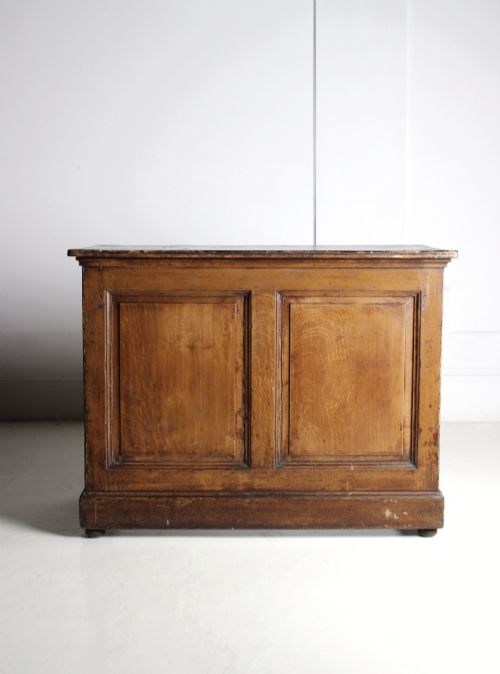
Shop counters and drapers counters were built for commercial environments, featuring robust timber construction designed for daily trade use. Sideboards and cabinets served domestic dining and living rooms.
Both forms now function in residential settings, though shop counters often offer longer proportions and utilitarian work surfaces.