


Painted Panel Clock
A painted panel clock brings together precision horology and fine ceramic art, offering a decorative centrepiece for the mantel or wall.
Painted Panel Clock
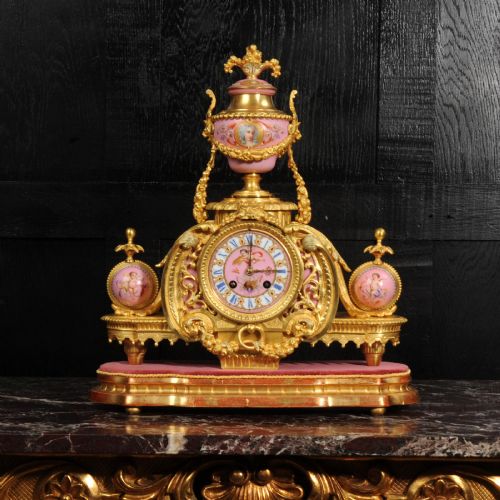
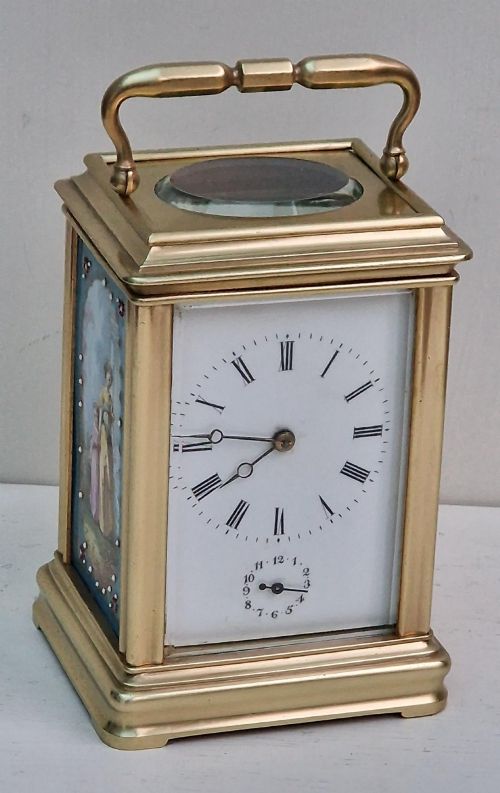
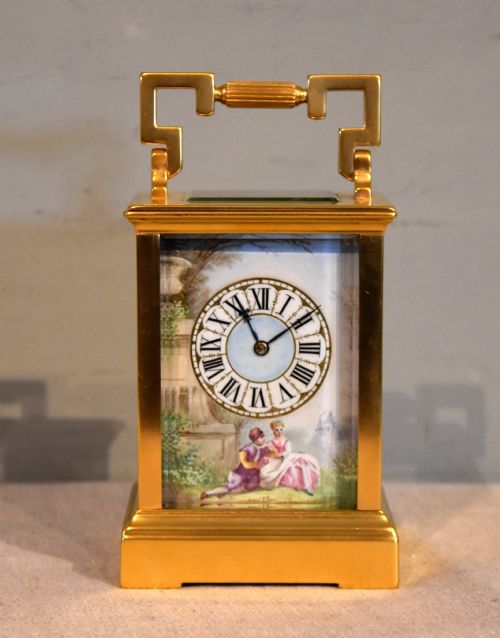
The horological forms range from compact porcelain-mounted carriage timepieces to large ormolu mantel clocks and American wall clocks. Makers integrated painted porcelain plaques and dials into gilt brass, ormolu, and glass cases, occasionally accompanied by matching garnitures or clock sets.
Makers utilised various regional styles, including French Rococo Revival, Victorian, and Napoleon III designs. These pieces served both practical timekeeping duties and ornamental roles in period interiors.
What varies in quality
The fineness of the hand-painted detail on the porcelain panels separates standard production from exceptional work, particularly in floral motifs and figural scenes. Recognised horologists and makers who signed their movements or porcelain plaques command greater attention from collectors.
The weight and casting quality of the ormolu and gilt bronze mounts define the higher tiers of these timepieces. Complete sets featuring original matching garnitures or preserved glass domes retain greater integrity.
Listings for painted panel clocks span the eighteenth and nineteenth centuries, incorporating brass, porcelain, and ormolu materials.
Achille Brocot·JP Delettrez·Alfred Drocourt·Jacot·Henri Jacot
The Painted Panel Clock Glossary
- Ormolu
- A gilded bronze technique utilising a mercury amalgamation process to apply gold to metal mounts. This finish provides a warm, durable metallic lustre found on nineteenth-century French clock cases.
- Carriage clock
- A portable spring-driven timekeeper originally designed for travel by horse-drawn transport. These pieces typically feature brass cases with glass viewing windows and mounted porcelain panels.
- Garniture
- A set of ornamental vases or figures designed to match a central mantel clock. These decorative groupings balance mantelpieces and sideboard displays in period rooms.
- Crystal regulator
- A mantel clock featuring glass panels on all four sides that reveal the internal movement and pendulum suspension. This architectural style gained popularity during the second half of the nineteenth century.
Painted Panel Clock: Frequently Asked Questions
How do I wind a carriage clock?
Insert the appropriate key into the winding square located on the backplate of the movement and turn it gently until resistance is felt. Avoid over-winding to protect the mainspring.
Ensure you handle the heavy brass and glass case with both hands when moving the clock to your workbench.
What is a repeating carriage clock?
A repeating carriage clock includes an internal mechanism that chimes the last hour or quarter-hour when a button or plunger on the case is pressed. This allowed owners to check the time in the dark.
Collectors prize this mechanical complication for its intricate gear train and utility before electric lighting.
How do Sevres style plaques differ?
Sevres style porcelain plaques imitate the soft paste porcelain and hand-painted decorative schemes produced by the royal French porcelain manufactory. They often feature Bleu de Roi grounds and gilt-framed cartouches enclosing painted flowers.
Nineteenth-century clockmakers adopted this aesthetic to impart an eighteenth-century aristocratic appearance to their mantel clocks.
Where should I place a glass dome?
Place the glass dome over the clock on a stable, level surface away from heavy foot traffic and direct sunlight. The dome protects the delicate ormolu and painted surfaces from dust and atmospheric grime.
Lift the dome off carefully using two hands placed around its lower rim when accessing the clock for winding.