
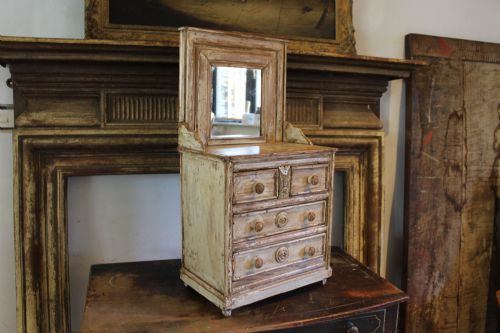


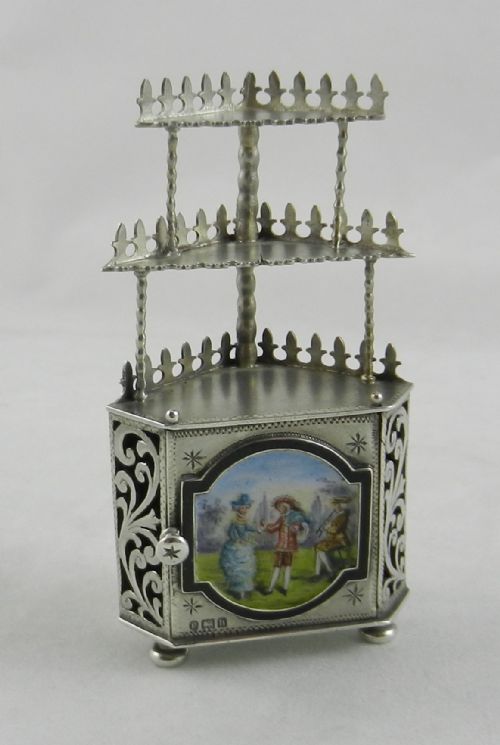

Painted Miniature Cabinet
These painted miniature cabinet pieces bring together small-scale decorative work and fine craftsmanship across several historic periods.
Painted Miniature Cabinet
When you search for a painted miniature cabinet, you encounter compact chests, table cabinets, and small decorative cupboards originating from periods such as the nineteenth century, Regency era, and eighteenth century. These diminutive items often replicate the forms of larger furniture, including dressers and chests of drawers.
The selection ranges from French provincial designs and English spice cupboards to Viennese enamel table cabinets and penwork pieces. Alongside actual miniature furniture, the listings include small decorative vessels, vases, and ewers that share the same meticulous scale.
How they were made
Makers utilised wood, pine, and brass to construct the structural carcasses of these small cabinets and chests, applying paint, enamel, and gold leaf for surface decoration. Porcelain also appears frequently, shaped into miniature ewers, vases, and toy teapots.
Techniques combined traditional cabinet making with delicate surface painting and metalwork, seen particularly in the detailed enamel of Viennese pieces and the penwork decoration of English table cabinets.
Listings span the 18th Century, 19th Century, Regency period, and up to 1940, incorporating paint, enamel, gold leaf, porcelain, wood, brass, pine, and glass.
What varies in quality
Quality rests in the precision of the miniature scale and the crispness of the painted or enamelled decoration. Pieces with intact gold leaf, refined brushwork, and well-executed mechanical details such as secret drawers stand apart from simpler iterations.
The choice of material, from standard pine to fine porcelain and silver, dictates the refinement of the piece. The skill of the hand-painted scenes, whether family motifs or floral designs, defines the upper tier of the range.
Chosei·William Ricketts·Spode·Coalport·Royal Worcester·Hutschenreuter
The Painted Miniature Cabinet Glossary
- Apprentice piece
- A small-scale model created by a craftsman to demonstrate skill and secure master status. These often mirror full-size furniture forms.
- Penwork
- A decorative technique using fine ink lines on wood to create intricate patterns and imagery. It resembles engraving and appears on English table cabinets.
- Enamel
- A glassy substance fused to metal through firing, providing durable and glossy surface colour. Viennese pieces frequently employ this technique.
- Ewer
- A large jug with a flared spout, rendered here in miniature porcelain form. They date from the early nineteenth century.
- Spice cupboard
- A small wall or table cabinet fitted with internal drawers for storing aromatics and condiments. Eighteenth-century English examples display early decorated surfaces.
Painted Miniature Cabinet: Frequently Asked Questions
What is a painted miniature cabinet?
These items are small-scale decorative cabinets, chests, or cupboards designed to replicate larger furniture or serve as desktop display pieces. They incorporate painted surfaces, enamel, or penwork.
They reflect the stylistic preferences of periods ranging from the eighteenth century to the early twentieth century, including Regency and Victorian eras.
How were these miniature cabinets used?
Historically, miniature cabinets functioned as desk accessories, display items in parlours, or apprentice demonstrations. They held small valuables, spices, or letters.
Their compact size allowed wealthy households to showcase fine craftsmanship and artistic painting without taking up significant space.
How do I identify the period of a piece?
Dating relies on materials, construction methods, and stylistic markers such as French provincial forms, Regency lines, or Viennese enamel techniques. The integration of brass fittings and specific paint styles helps narrow the era.
Comparing the structural wood, such as pine, alongside documented artist signatures on porcelain elements provides further chronological context.
Are all miniature cabinets made of wood?
While many small cabinets and chests utilise wood, pine, and brass, the category also encompasses works in porcelain, enamel, and silver. Some entries include porcelain vases and teapots alongside the wooden items.
Each material dictates the specific decorative technique applied, from gold leaf to delicate hand-painted scenes.