





Painted Library Table
A painted library table brings together utility and hand-decorated surface work across periods from Regency to Victorian.
Painted Library Table
A painted library table encompasses writing desks, drum tables, and centre tables produced across the nineteenth century. These pieces serve functional workspace needs while displaying decorative painted surfaces.
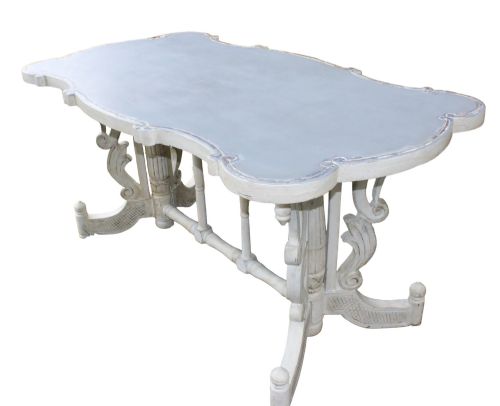
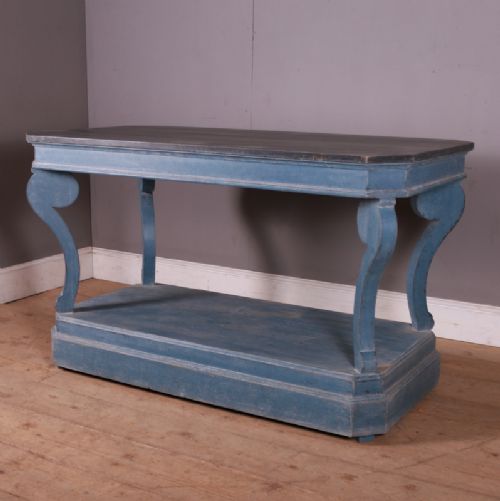
The version most commonly met on this page combines nineteenth century construction with painted wood finishes, mahogany structures, or satinwood panels. Forms range from freestanding knee-hole desks to round drum tables and trestle tables.
Origin details span English country workshops and French provincial or neoclassical ateliers, showing styles such as Sheraton, Regency, and French Empire. Each piece reflects the functional requirements of nineteenth century studies and drawing rooms.
Materials and construction methods
Cabinet makers utilised solid mahogany and satinwood as primary timber bases, often applying hand-decorations, parcel-gilt details, and ivory paintwork directly onto the wood. Metal components such as brass appear in supporting hardware and associated desk lamp fittings.
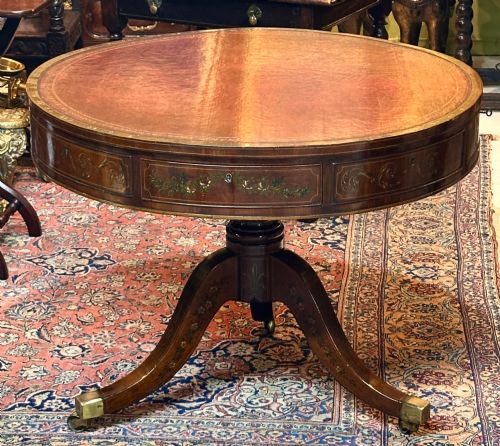
Surfaces frequently integrate inset leather writing panels alongside hand-decorated motifs and painted toleware elements. Structural integrity relies on traditional joinery suited to heavy nineteenth century library use.
Painted Library Table Retail Price Guide 2026
Typical asking prices for painted library table among the pieces listed under this phrase on Sellingantiques today, from the lower quarter to the upper quarter. They describe what is for sale here now, not the wider market.
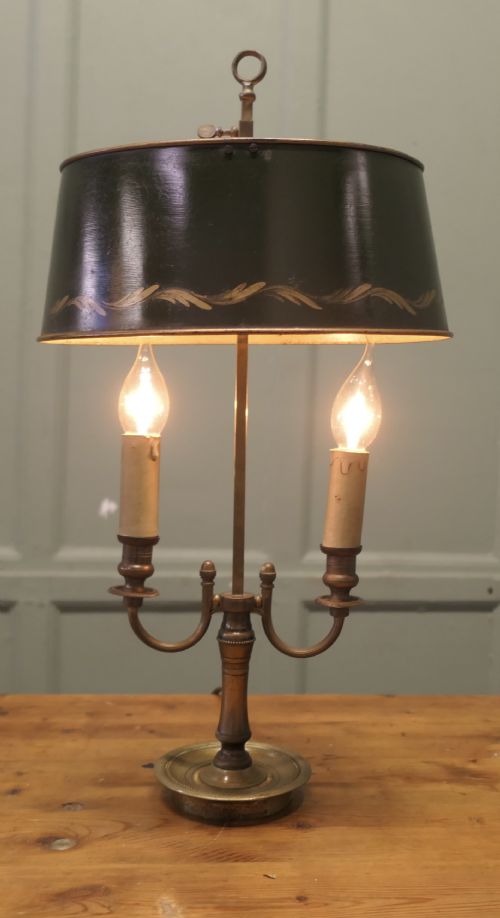
Several items retain their original painted toleware shades, proving that nineteenth century scholars enjoyed working under green metal light.
Distinguishing quality across pieces
The refinement of the hand-decoration and the sophistication of the painted surface separate standard utility items from finer examples. Superior execution shows in the crispness of parcel-gilt details, the preservation of original painted finishes, and the quality of the underlying timber such as figured satinwood or mahogany.
Proportion and stylistic purity also dictate standing, where pieces adhering closely to Regency, Sheraton, or French neoclassical design idioms demonstrate greater design cohesion than provincial variants.
The Painted Library Table Glossary
- Drum table
- A circular library table with a deep top containing drawers, usually supported by a central pillar and tripod base.
- Satinwood
- A durable, lustrous timber from tropical trees utilised for fine cabinet-making and decorative veneers throughout the eighteenth and nineteenth centuries.
- Parcel-gilt
- Partially gilded woodwork where gold leaf highlights specific carved or painted details against a contrasting painted ground.
- Toleware
- Lacquered or painted metalware, frequently shaped into decorative desk lamps and accessory items in French and English traditions.
- Centre table
- A freestanding piece designed to be viewed from all sides, placed in the middle of a room rather than against a wall.
Painted Library Table: Frequently Asked Questions
What is a painted library table used for?
These tables provide a stable surface for writing, reading, and organising correspondence in a study or principal room.
Their substantial construction and drawers accommodate books, papers, and writing implements while serving as a central decorative focus.
How do I identify a Regency painted library table?
Regency pieces often display classical architectural influences, clean structural lines, and restrained ornament drawn from French Empire or English Sheraton styles.
Look for balanced proportions, dark wood foundations with contrasting painted highlights, and traditional brass furniture mounts.
Where were these tables manufactured?
Surviving examples originate primarily from English and French workshops during the nineteenth century.
Stylistic cues link specific pieces to regional cabinet-making traditions, ranging from English country workshops to metropolitan French ateliers.
How do I care for a painted wooden surface?
Maintain painted and polished wooden surfaces by keeping them away from direct sunlight and extreme humidity fluctuations.
Dust gently with a dry, soft cloth and avoid chemical cleaning agents that might degrade the historic paint layer.