







Painted Glass Bowl
A painted glass bowl brings colour and light to a room, drawing the eye with rich enamel and gilt detail across various historical periods.
Painted Glass Bowl
A painted glass bowl encompasses a diverse selection of decorative and functional vessels, ranging from Victorian cranberry epergnes to Edwardian vanity jars and Bohemian punch sets. When searching for a painted glass bowl, buyers often encounter pieces styled in French Rococo Revival, Art Nouveau, and Neoclassical traditions, reflecting periods from the Georgian era through to the 1930s.
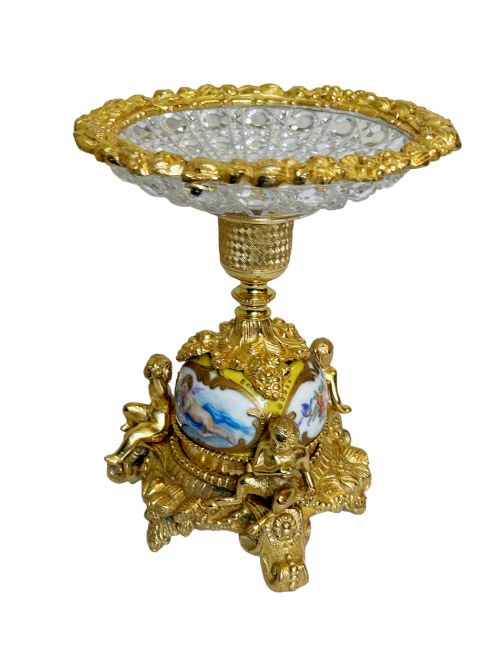
The forms vary widely across the inventory, including centrepieces, dressing table jars, ceiling lights, and cream jugs. Many items combine glass bodies with mounts of sterling silver, gilt bronze, or brass, while others feature intricate hand-painted porcelain plaques or overlaid portraits.
Bristol blue and opal glass feature frequently among the selections, alongside cut glass and cranberry glass. These pieces serve as striking table ornaments, hanging light shades, and functional vanity items.
How they were made
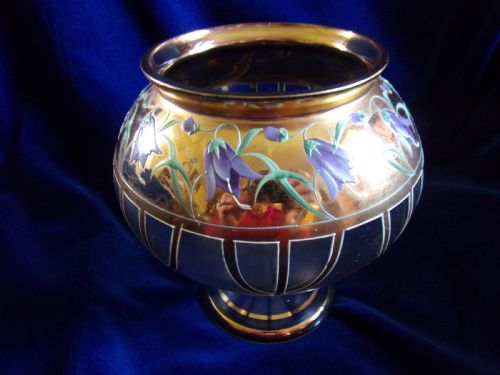
The construction of these vessels relies on traditional glassblowing and moulding techniques, often paired with hand-applied enamel decoration, gilding, and gold leaf. Artisans shaped molten glass into bowls, vases, and plafonnier shades before applying detailed surface painting.
Mounts and hardware of sterling silver, brass, and gilt bronze provide structural support and embellishment for items such as vanity jars, centrepieces, and ceiling lights. Cut glass and crystal components involve precise wheel-cutting to create faceted patterns that catch the light alongside the painted enamel.
Painted Glass Bowl Retail Price Guide 2026
Typical asking prices for painted glass bowl among the pieces listed under this phrase on Sellingantiques today, from the lower quarter to the upper quarter. They describe what is for sale here now, not the wider market.
Design styles represented span Edwardian, Victorian, French Rococo Revival, Art Nouveau, Neoclassical, Bohemian, and Georgian.
What varies in quality
The standard of a painted glass bowl rests on the crispness of the enamel work, the precision of any gilding, and the integration of metal mounts. Pieces featuring hand-painted porcelain plaques or finely rendered portraits demonstrate a higher level of artisan skill.
The weight and clarity of the underlying glass, whether Bristol blue, cranberry, or cut crystal, contribute significantly to the overall presence of the object. Superior examples maintain intact surface decoration without rubbing and feature secure, well-fitted metal hardware.
The Painted Glass Bowl Glossary
- Bristol blue glass
- A deep cobalt blue glass produced in Bristol, frequently decorated with enamel and gilding in Georgian and Victorian items.
- Plafonnier
- A ceiling-mounted bowl light shade, often made of painted or moulded glass popular during the early twentieth century.
- Epergne
- A large table centrepiece featuring a central bowl with multiple arms or attachments for holding fruit, sweets, or flowers.
- Cranberry glass
- A transparent pinkish-red glass created by adding gold to the molten batch, widely utilised in Victorian decorative ware.
- Gilt bronze
- An alloy of copper and zinc coated with a layer of gold, commonly used for decorative mounts and figures on centrepieces.
Painted Glass Bowl: Frequently Asked Questions
What periods do these bowls come from?
The pieces span from the Georgian era and the nineteenth century through to Edwardian, Art Nouveau, and Art Deco periods up to the 1930s.
Each era brings distinct decorative styles, ranging from Neoclassical motifs to fluid organic lines.
How were painted glass bowls used?
They served multiple functions in historic interiors, acting as table centrepieces for fruit or punch, dressing table storage for vanity items, and overhead illumination as ceiling lights.
Smaller jugs and bowls were also utilised for daily domestic service in dining and tea settings.
How do I care for antique glass?
Clean painted glass bowls gently by hand using lukewarm water and mild soap, avoiding harsh abrasives that could damage delicate enamel or gold leaf.
Dry them immediately with a soft cloth to protect any integrated metal mounts like sterling silver or brass.