


Painted French Style Commode
A painted french style commode brings provincial charm and classic serpentine lines to a room, offering generous storage topped with cool stone.
Painted French Style Commode
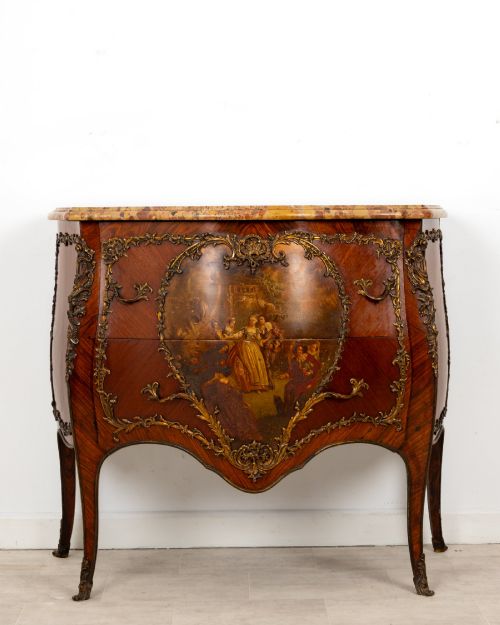
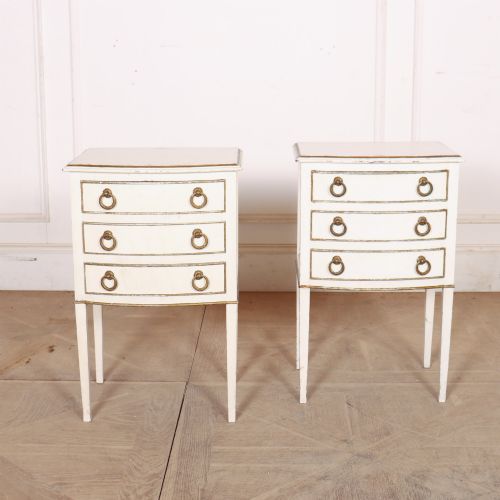
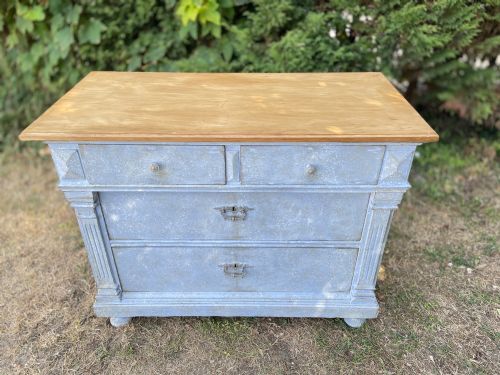
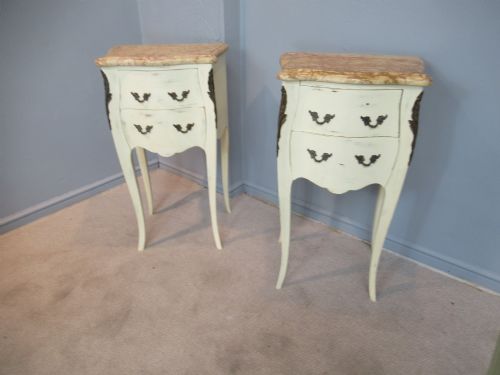
A painted french style commode functions as a decorative chest of drawers or bedside cabinet, taking inspiration from continental forms found in country houses and city apartments alike. These pieces emerge across periods from the eighteenth century through the early twentieth century, showing revival influences such as Louis XV and Louis XVI designs alongside provincial styles.
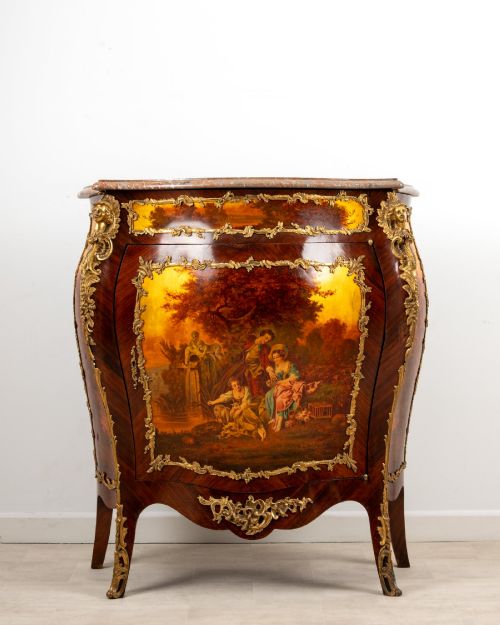
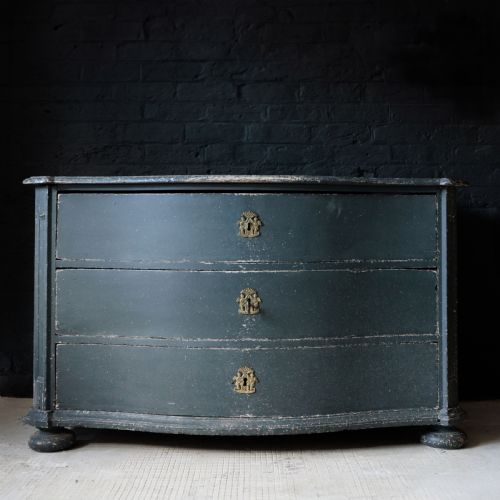
The forms vary from serpentine fronts and bombe shapes to straight chests and demi-lune cabinets, often fitted with two or three drawers. Buyers frequently encounter nineteenth-century interpretations and twentieth-century reproductions, reflecting enduring tastes for continental cabinetmaking.
Origins stretch beyond France to include Dutch, Italian, and English pieces sharing similar aesthetic vocabularies, constructed as side cabinets, music cabinets, and bedside chests.
How they were made
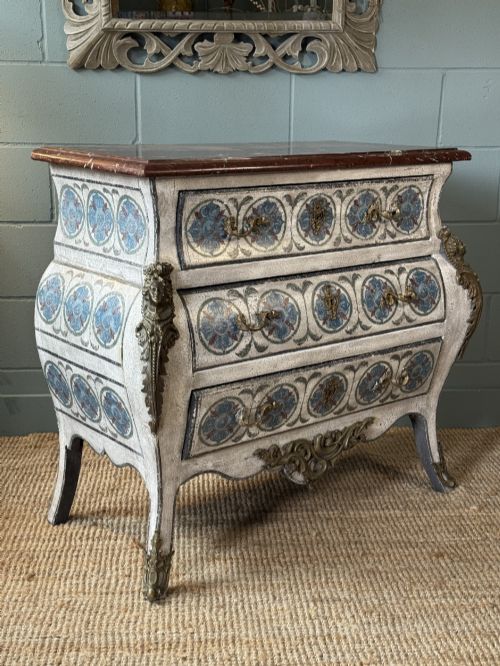
Makers utilised solid timbers like oak alongside exotic veneers such as kingwood and satinwood, building carcases designed to support heavy stone surfaces. Marble tops, often shaped to follow the serpentine or bombe contours of the body, sit unsecured or pinned directly to the wooden frame.
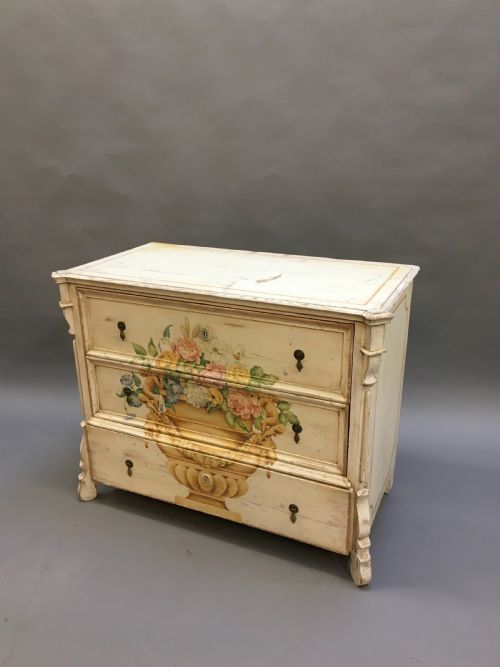
Surface finishes rely on layers of paint, sometimes applied later in the history of the piece, alongside decorative techniques like Vernis Martin and chinoiserie lacquer. Cast metal mounts in brass, ormolu, and gilt-bronze accent key corners, drawer pulls, and apron centres.
Some music cabinets disguised as commodes once held sheet music rather than linen.
What varies in quality
Quality rests upon the harmony of the proportions and the crispness of the carved details, distinguishing ambitious cabinetwork from simpler provincial joinery. The weight and integration of the marble top, along with the precision of the brass or ormolu mounts, separate standard production from finer examples.
The integrity of the painted surface determines visual success, where original decoration or accomplished hand-painted motifs hold greater merit than flat, uniform modern coatings.
The Painted French Style Commode Glossary
- Bombe
- A swelling, outward-curving chest shape associated with continental cabinetmaking. It requires complex carpentry to achieve the rounded profile.
- Serpentine
- A front contour curving inward at the centre and outward at the sides in an undulating wave. This shape appears frequently on eighteenth and nineteenth-century commodes.
- Ormolu
- Gilt bronze mounts applied to furniture for decorative accent. The technique involves treating bronze with a mercury and gold amalgam.
- Vernis Martin
- A simulated Japanese lacquer developed in France during the eighteenth century. It uses multiple resin layers to create glossy, decorative scenes.
- Demi-lune
- A half-moon shape used for small side cabinets and commodes designed to sit flush against a wall.
Painted French Style Commode: Frequently Asked Questions
Where should I place a commode?
These cabinets suit hallways, living rooms, and bedrooms where surface space and storage are both required.
The shallow depth of many styles allows them to sit comfortably in narrower passages without blocking movement.
Are marble tops original?
Many marble tops are contemporary with the wooden base, shaped specifically to match the curves of the carcase.
Some pieces feature replacements or later additions fitted to protect the timber underneath.
What is the difference between Louis XV and Louis XVI styles?
Louis XV pieces favour asymmetrical curves, cabriole legs, and sweeping serpentine outlines derived from Rococo tastes.
Louis XVI furniture introduces straighter lines, geometric symmetry, and neoclassical restraint inspired by classical antiquity.
How do I care for a painted wood surface?
Dust regularly with a dry cloth and avoid harsh chemical cleaners that can damage decorative paintwork.
Keep wooden furniture away from direct heat sources and strong sunlight to prevent the timber and finish from cracking.