





Painted French Bench
These painted french bench pieces bring regional charm and classic seating into a room, offering historic woodwork finished with historic surfaces.
Painted French Bench
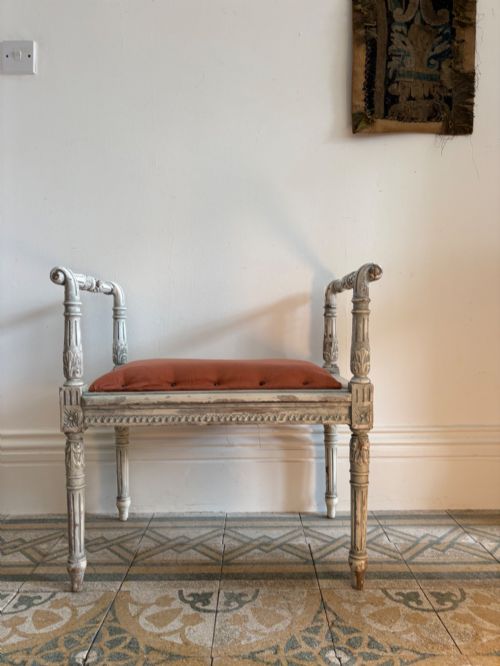
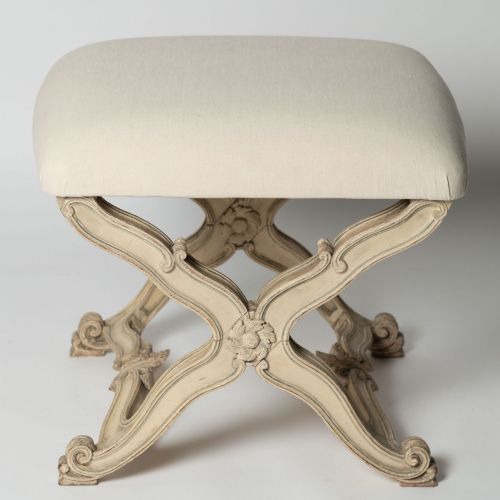
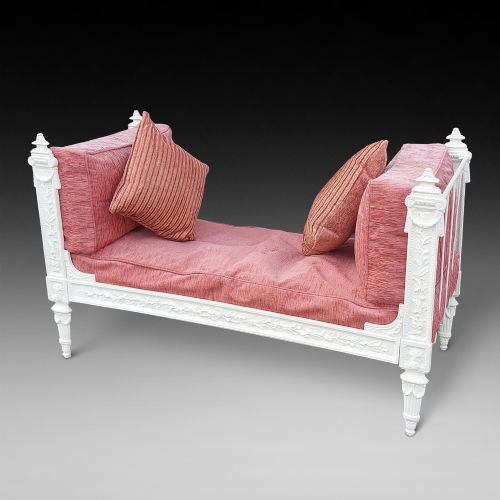
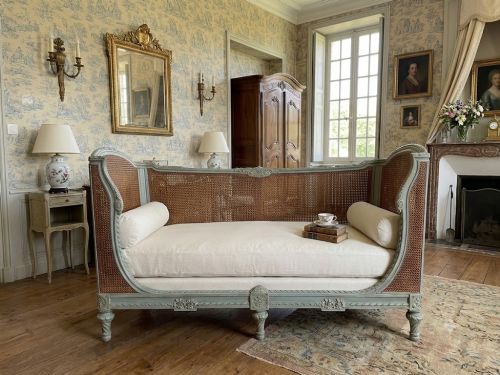
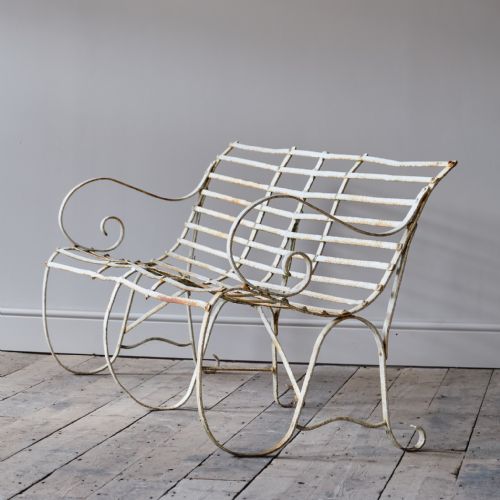
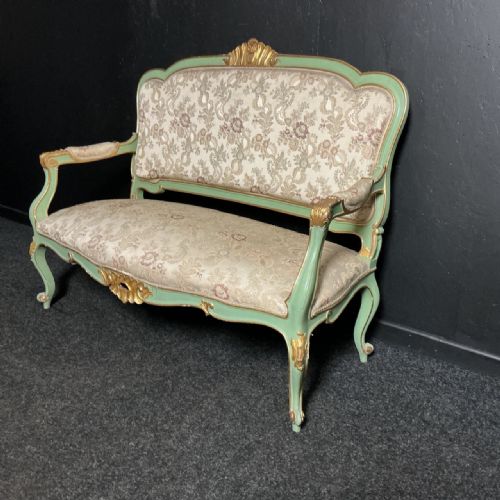
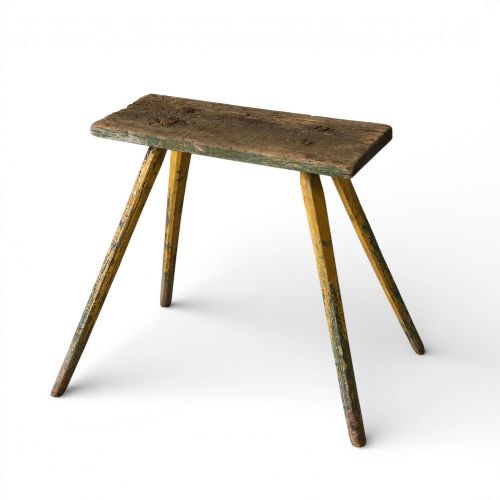
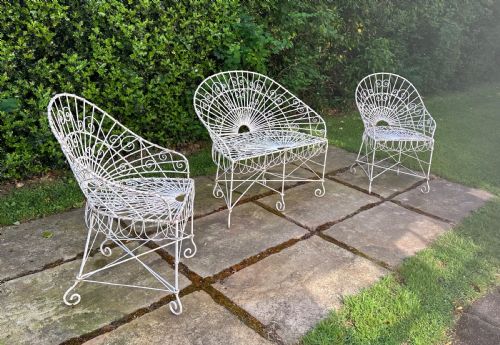
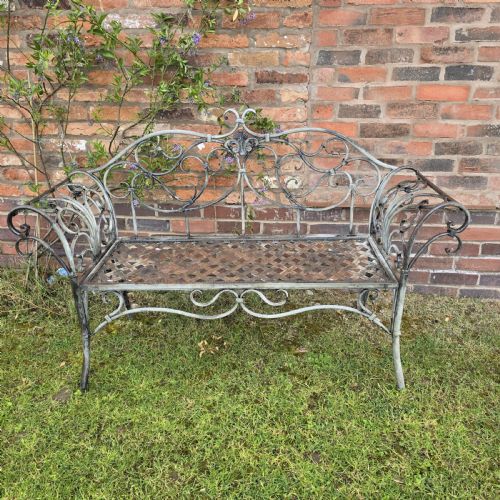
A painted french bench encompasses seating forms ranging from rustic pine farmhouse examples to sophisticated Louis XV and Louis XVI style canapés and daybeds. Buyers searching for a painted french bench typically encounter pieces spanning the nineteenth and early twentieth centuries, featuring painted timber frames alongside garden ironwork.
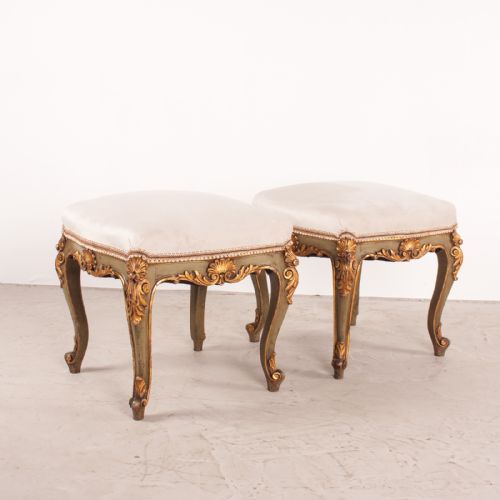
The selection here includes smaller stools, window seats, and two-seat settees alongside garden benches and daybeds. Regional country variations sit alongside more formal revival designs bearing carved details and fitted cane panels.
How they were made
Construction relies on traditional timber framing using beech, pine, and other hardwoods, shaped into curved rails and fluted legs. Metal variants utilise cast and wrought iron for structural support and decorative strap work.
Surfaces are finished with layers of paint, sometimes incorporating gilding or retaining original distressed patination. Canework and upholstered fabric elements are integrated into frames to provide seating pads.
One listed pine piece carries the designation of a gargoyle bench, adding a distinctly gothic touch to the French country aesthetic.
What varies in quality
Quality shows in the crispness of carved woodwork and the structural integrity of the frame joints. Finer examples display refined proportions, such as slender fluted legs and balanced Louis-style contours, rather than heavier proportions.
The integrity of the surface finish matters greatly, with original paint layers offering more character than later overpainting. The tightness of woven cane panels and the stability of ironwork also distinguish standard pieces from superior examples.
The Painted French Bench Glossary
- Canapé
- An upholstered sofa or settee, often featuring exposed wooden framing and carved details. These pieces typically reflect formal French interior styles.
- Bergère
- An enclosed armchair or sofa with upholstered sides and backrest panels. The frame is commonly painted or polished wood.
- Gustavian
- A Swedish neoclassical style characterised by pale painted finishes and restrained classical ornamentation. Pieces often exhibit simplified fluting and light proportions.
- Wrought iron
- Iron heated and hammered into shape by hand, used for garden benches and structural supports. This material allows for decorative strap work and scroll motifs.
- Canework
- Woven cane or rattan used for seats and back panels within wooden frames. It provides a lightweight and flexible surface.
Painted French Bench: Frequently Asked Questions
Where should I place a painted french bench?
These benches suit hallways, bedrooms, and living spaces where a decorative yet functional seat is required.
Garden variants and metal benches are built for outdoor placement in courtyards or conservatories, provided they are sheltered from extreme weather.
How do I care for original painted finishes?
Dust surfaces gently with a dry or slightly damp cloth, avoiding harsh chemical cleaners that might strip the historic paint.
Keep wooden and painted pieces away from direct heat sources and strong sunlight to prevent the timber from drying and the paint from flaking.
What is the difference between a settee and a daybed?
A settee is designed strictly for seated conversation, featuring a defined backrest and armrests along a standard bench length.
A daybed incorporates an extended frame configuration intended for reclining, often featuring raised ends or asymmetric back panels.
How do I identify Louis XV and Louis XVI styles?
Louis XV style pieces are defined by curving lines, cabriole legs, and organic rococo carvings.
Louis XVI style shifts toward straight lines, geometric symmetry, fluted legs, and neoclassical ornamentation.