


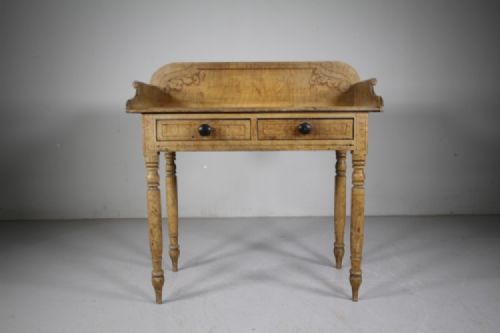


Painted Console Desk
A painted console desk brings both a working surface and a decorative finish into a room, drawing on periods from the eighteenth century to the early twentieth.
Painted Console Desk
A painted console desk sits at the intersection of practical writing furniture and decorative display pieces, spanning side tables, writing tables, and dedicated desks. These items appear across multiple periods, most notably the nineteenth century, alongside Georgian, Victorian, and later twentieth-century examples.
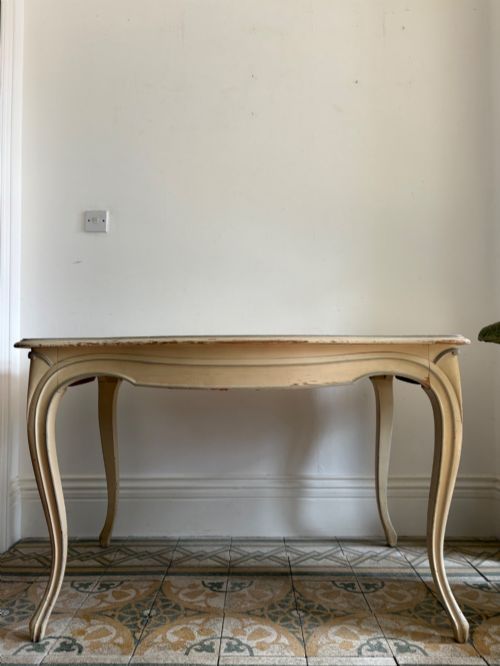
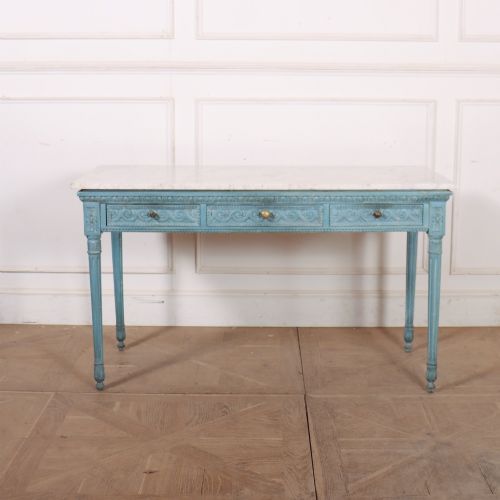
The forms on this page range from French Provincial and Gustavian models to English country pine tables and Italian neoclassical designs. Buyers most frequently encounter variations with single or double drawers, alongside simpler side tables and lamp tables adapted for writing use.
How they were made
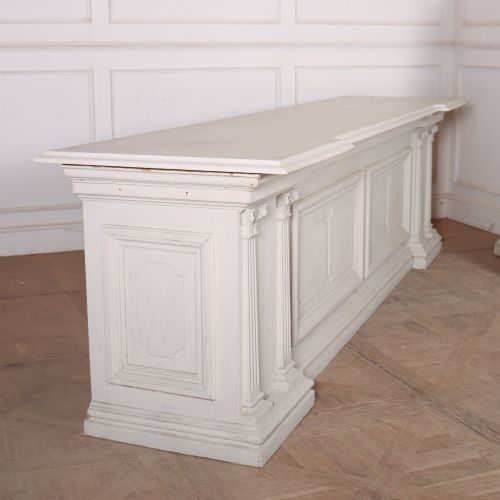
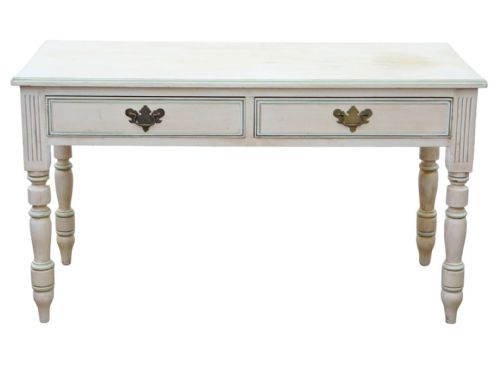
Construction relies primarily on timber and pine, shaped into side tables, writing desks, and shop counters using traditional joinery methods. Many pieces incorporate decorative metal elements such as brass or feature cast iron components on heavier tables.
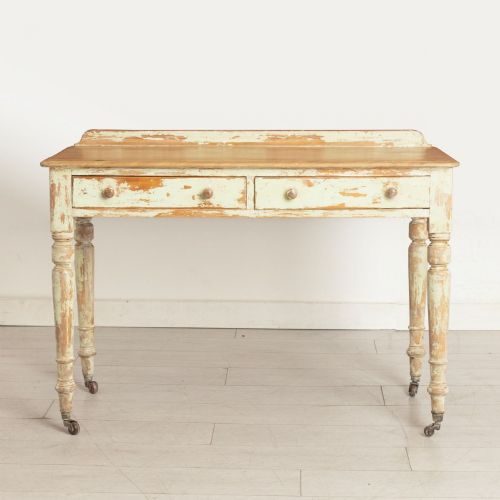
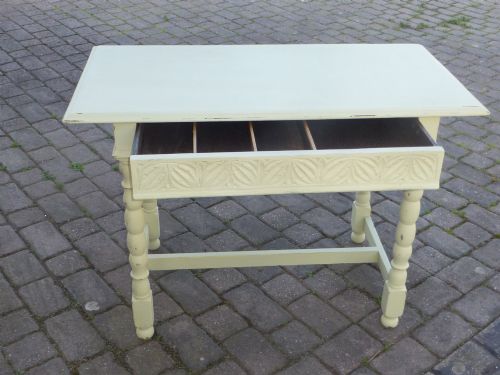
Surfaces receive layered applications of paint, occasionally revealing original ochre, cream, or red lacquered finishes, while select examples combine carved wood with inset suede tops, giltwood, or ceramic plaques.
Listings feature items spanning the eighteenth century to the early twentieth century, constructed from pine, timber, and metal.
What varies in quality
Quality rests upon the preservation of original painted surfaces and the integrity of the timber beneath, with untouched period finishes commanding greater interest than later repainting. Structural refinement also separates standard utility tables from finer pieces, evident in restrained carving, balanced proportions, and well-fitted drawer construction.
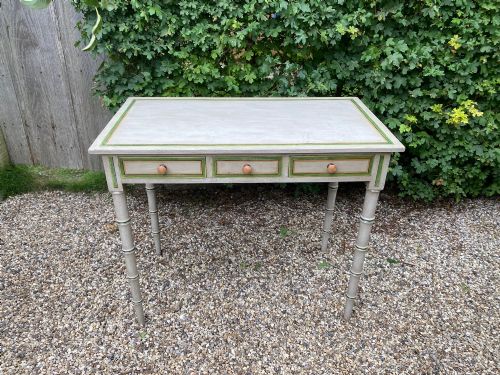
The presence of specialised details, such as faux bamboo turning, hand-painted geometric tops, or inset writing surfaces, distinguishes more ambitious provincial and neoclassical workshop output from plain utilitarian furniture.
The Painted Console Desk Glossary
- Console table
- A table designed to stand against a wall, frequently featuring decorative legs and supporting a surface for display or writing. These often form the basis of painted console desks.
- Faux bamboo
- Wood turned and carved to imitate the segmented stalks of bamboo, popular during the Regency period. This technique appears on several writing and side tables.
- Gustavian
- The Swedish interpretation of French neoclassical style, characterised by restrained carving and pale painted finishes. Swedish pieces of this type feature frequently.
- Scrub-top
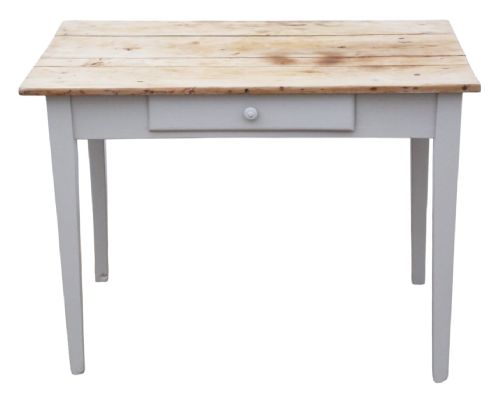
- A plain timber tabletop left unpolished and designed for frequent scrubbing with water and sand. This finish is typical of utilitarian kitchen and work tables.
- Serpentine front
- A furniture front curving outward in the centre and inward at the sides in a continuous wave shape. This contour adds visual complexity to French side tables.
Painted Console Desk: Frequently Asked Questions
What is a painted console desk?
A painted console desk is a versatile surface used for writing or display, typically placed against a wall. The pieces listed under this search combine the narrow proportions of a console with the functional surface of a desk.
They appear in various regional styles, including French provincial, Swedish Gustavian, and English country designs. Many examples originate from the nineteenth century and incorporate original painted finishes.
How do I identify the period of a painted desk?
Period identification relies on observing the combination of timber, construction methods, and decorative styles. Georgian and Regency pieces often show specific aesthetic restraint or faux bamboo turnings, while later nineteenth-century and early twentieth-century items reflect changing provincial tastes.
The specific type of paint application and surface wear also help place an item in time. Original layered paintwork offers the clearest physical evidence of a piece's age.
Were these tables originally used for writing?
Many tables on this page served multiple domestic functions beyond writing, operating as side tables, lamp tables, or server units. Drawers and flat wooden surfaces made them suitable for occasional correspondence and household administration.
Simpler pine and oak versions often doubled as kitchen work tables or hall counters. Their multifunctional nature reflects how historical households utilised available furniture.
How should I care for an original painted finish?
Preserving an original painted surface requires keeping the furniture away from direct sunlight and excessive moisture fluctuations. Gentle dusting with a dry cloth prevents the accumulation of dirt without risking the integrity of older paint layers.
Avoid using harsh chemical polishes or modern cleaning agents on antique timber and painted decoration. Maintaining stable indoor conditions protects both the wood and the decorative surface over time.