


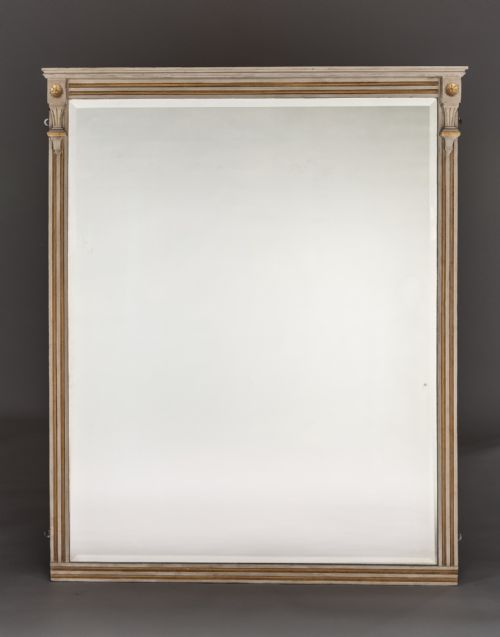


Painted Classical Mirror
A painted classical mirror brings architectural order and reflective depth to a room through balanced proportions and restrained ornament.
Painted Classical Mirror
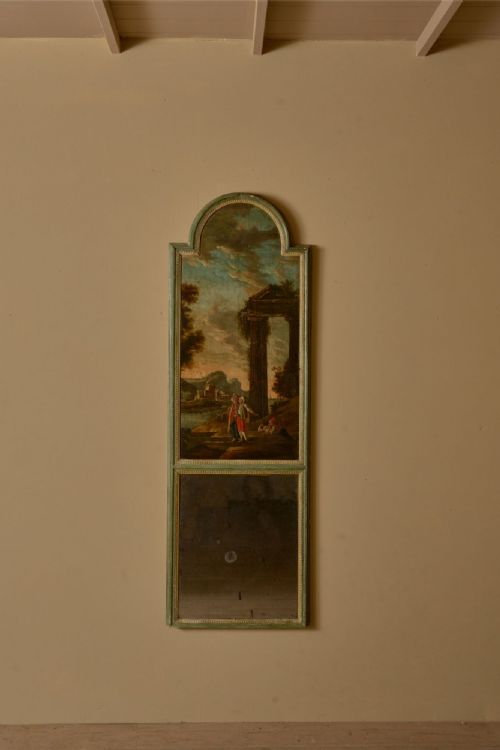
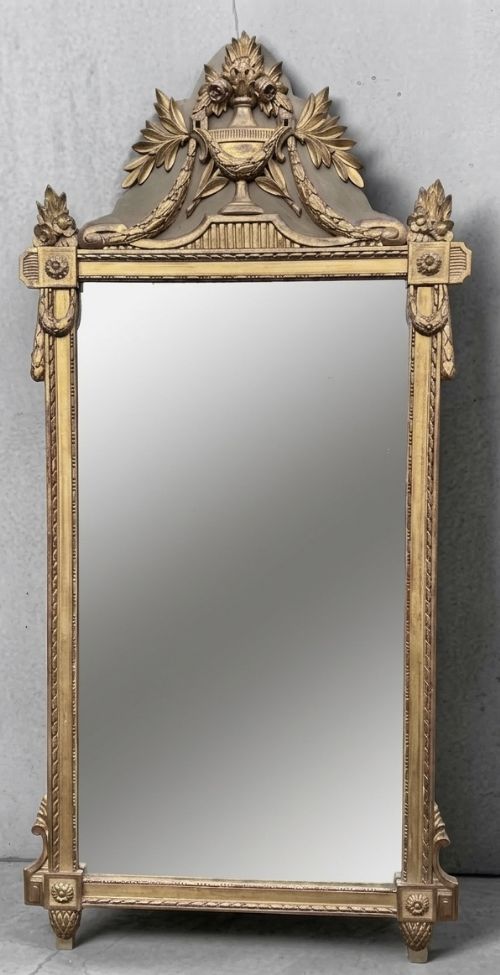
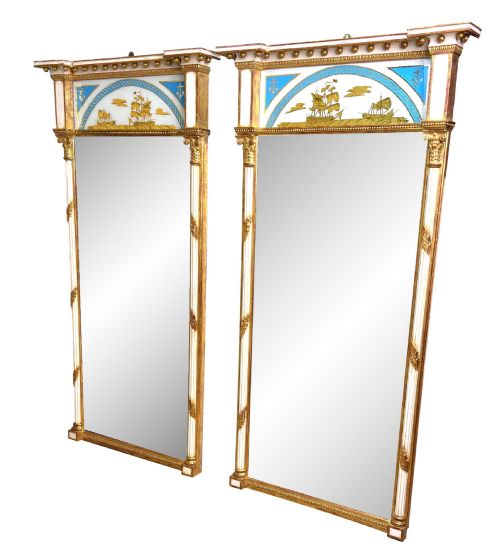
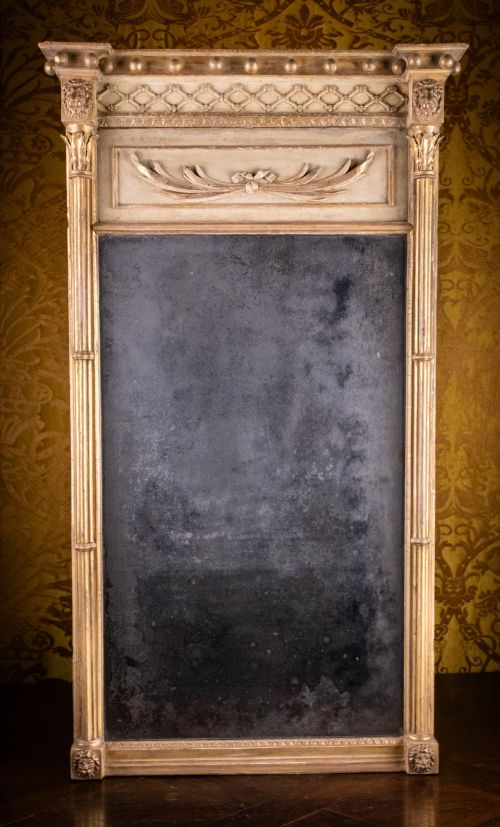
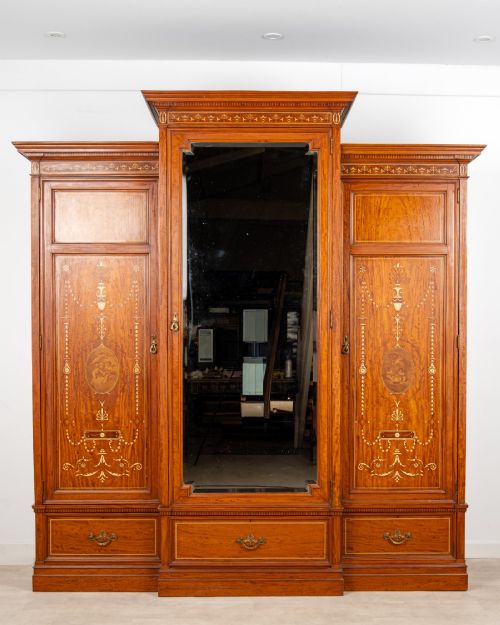
A painted classical mirror combines timber frames with applied ornament and decorative panels to serve as a focal point in a reception room or above a fireplace. The pieces on this page span the 18th, 19th, and early 20th centuries, drawing heavily on Regency, Neoclassical, French Empire, and Louis XVI design vocabularies.
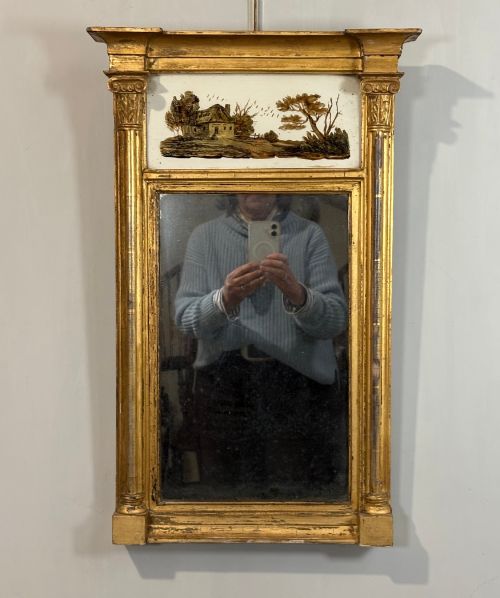
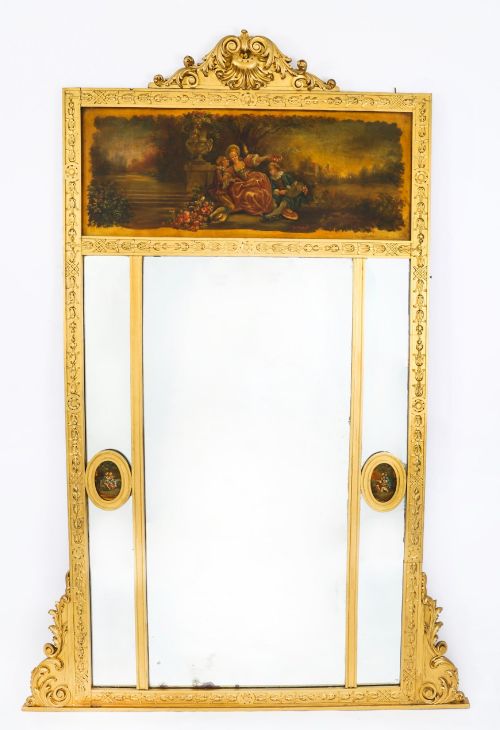
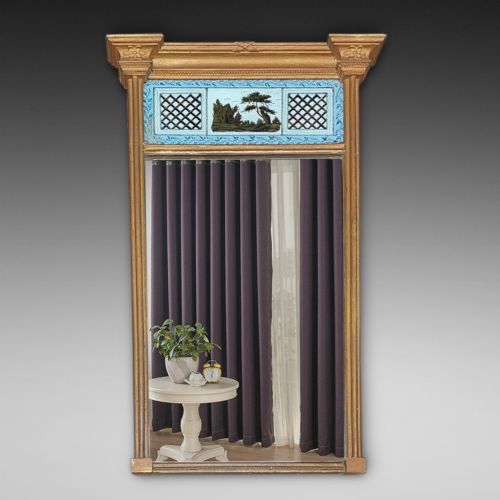
The most common forms encountered here are large wall mirrors, pier mirrors designed to hang between windows, and expansive overmantel mirrors intended for mantelpieces. Many incorporate painted finishes alongside parcel-gilt details, verre églomisé glass panels, or decorative relief work depicting classical figures.
Origins stretch across English and continental workshops, with numerous examples originating from French makers working in the trumeau tradition. These items frequently utilise carved wood and gesso substrates to support classical motifs such as columns, lion masks, and vitruvian scrolls.
How they were made
Frames are constructed from solid woods like mahogany, satinwood, or pine, which are then built up with layers of gesso to receive intricate surface carving and decorative mouldings. Artisans applied gold leaf and paint directly onto the prepared gesso grounds, frequently burnishing the gilt areas to achieve contrasting matte and reflective textures.
Specialised techniques such as verre églomisé introduced painted and gilded designs onto the reverse side of glass panels, creating deep, lustrous borders or upper sections above the main mirror plate. Traditional silvering methods on the mirror glass itself yield softer, more irregular reflections than modern float glass.
Painted Classical Mirror Retail Price Guide 2026
Typical asking prices for painted classical mirror among the pieces listed under this phrase on Sellingantiques today, from the lower quarter to the upper quarter. They describe what is for sale here now, not the wider market.
Bacchus and cherubs occasionally peer down from Empire overmantels, reminding everyone that classical decor took its wine very seriously.
What varies in quality
The refinement of the carved wooden ornament and the crispness of the gesso mouldings determine the visual strength of the frame. Superior examples display sharply defined architectural details, deeply undercut foliage, and well-proportioned classical motifs rather than soft, flat casting.
The integrity of the original painted and gilt surfaces, alongside the survival of authentic antique mirror plates and verre églomisé panels, dictates the historical character of the object. Pieces retaining their original unstripped painted finishes and hand-silvered glass command greater authority among collectors.
The Painted Classical Mirror Glossary
- Verre églomisé
- A cold-painting and gilding technique applied to the reverse of glass panels. It produces decorative borders and pictorial scenes with a distinctive metallic sheen.
- Trumeau
- A decorative wall mirror featuring an upper painted or carved panel integrated into the wooden frame. These pieces originated in French interior design to sit between windows or above fireplaces.
- Gesso
- A mixture of gypsum and binder applied to wooden frames to create a smooth base for carving, gilding, and painting. It allows for intricate relief ornament.
- Pier glass
- A tall mirror designed specifically to hang on the narrow pier of wall space between two windows. They were frequently paired with matching console tables.
- Parcel-gilt
- A decorative finish where selected portions of a painted or stained wooden object are highlighted with gold leaf. This technique emphasises specific architectural mouldings.
Painted Classical Mirror: Frequently Asked Questions
Where should I hang a pier mirror?
A pier mirror is traditionally positioned on the narrow section of wall between two windows to reflect natural light deeper into a room. Placing one above a matching console table or low sideboard creates a balanced classical arrangement.
Ensure the wall fixings are robust enough to support the weight of the timber and gesso frame, particularly on grander 19th-century examples.
What is a trumeau mirror?
A trumeau mirror is a wall glass that incorporates a decorative painted or carved panel directly above the reflective plate. This format derives from French neoclassical interiors where mirrors were built into the wood panelling of a room.
The upper panel often depicts classical figures, pastoral scenes, or architectural motifs executed in oil paint or low-relief gesso.
How do I care for antique glass?
Clean antique mirror plates gently using a soft, dry cloth to remove dust without disturbing the aged silvering behind the glass. Avoid harsh chemical cleaners or excessive moisture that might seep behind the edges and damage the original backing.
Keep the painted and gilded wooden frame away from direct heat sources and strong sunlight to prevent the gesso from drying or cracking over time.
How do I identify Regency style?
Regency style draws heavily on classical Greek and Roman motifs, featuring clean architectural lines, column supports, and gilt enrichments. Look for decorative elements such as lion masks, anthemion motifs, and verre églomisé panels.
Frames from this period often combine white or dark painted surfaces with parcel-gilt detailing to create stark, elegant contrasts.