

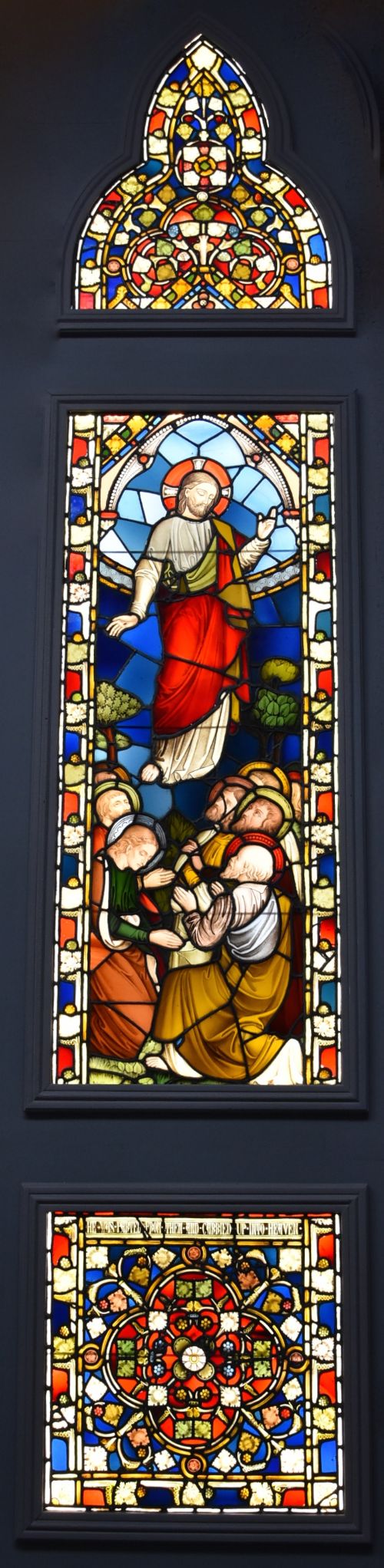


Painted Church Windows
Painted church windows are architectural fragments and mirrors that bring historic sacred glass and Gothic forms into domestic interiors.
Painted Church Windows
Painted church windows encompass salvaged religious glass, triptychs, and architectural mirrors spanning the Victorian period, 1850, 1860, 1890, and 1900. These pieces emerge from architectural salvage and Gothic Revival traditions, bringing historic ecclesiastical craftsmanship directly into modern spaces.
Buyers encountering this search phrase find stained glass panels, arched window mirrors, and large-scale triptychs framed in pine wood. The forms range from hand-painted countryside and farmhouse scenes to religious subjects set within leaded glass frameworks.
How they were made
These works rely on coloured glass assembled with lead cording to form structured geometric and pictorial compositions. Artisans applied hand-painted details depicting religious narratives, countryside views, and farmhouses directly onto the glass panels.
The glazed panels sit within robust wooden frames, notably pine and pine wood, often configured into arched shapes, square panes, or triptych structures. Mirror glass also appears integrated into architectural salvage frames, combining reflective surfaces with historical window designs.
Painted Church Windows Retail Price Guide 2026
Typical asking prices for painted church windows among the pieces listed under this phrase on Sellingantiques today, from the lower quarter to the upper quarter. They describe what is for sale here now, not the wider market.
Materials recorded across the inventory include lead, glass, stained glass, wood, mirror glass, pine, pine wood, and paint.
What varies in quality
Quality rests upon the intricacy of the hand-painted detail within the glass and the scale of the composition. Large triptychs and pieces featuring detailed countryside or religious scenes demonstrate greater artistic ambition than simpler geometric configurations.
The integrity of the leadwork and the matching quality of the timber framing distinguish superior examples. Pieces retaining their original architectural proportion, such as arched church tops and balanced pairs, command stronger visual presence.
The Painted Church Windows Glossary
- Triptych
- A picture or relief carving on three panels, hinged together side by side and folded open as an altarpiece or decorative screen. In these listings, it denotes large-scale multi-panel stained glass compositions.
- Leaded glass
- Individual pieces of glass held together by strips of lead called cames. This technique creates the structural grid of church windows.
- Architectural salvage
- Building materials rescued from demolition or alteration for reuse in interior design. This category includes church windows and arched frames.
- Gothic Revival
- An architectural movement beginning in the mid-nineteenth century that drew inspiration from medieval design. It influences the pointed arches and religious motifs seen in these panels.
- Arch top
- A window or mirror frame featuring a curved upper section. This silhouette echoes traditional ecclesiastical architecture.
Painted Church Windows: Frequently Asked Questions
How do I hang a heavy church window mirror?
Secure heavy timber-framed mirrors directly into wall studs using heavy-duty mirror brackets or a French cleat system rated for the weight.
Consult a professional installer to ensure the wall structure safely supports the combined weight of the wood, lead, and glass.
Can these stained glass windows be used outdoors?
Most salvaged church windows are designed for interior display as wall art or decorative mirrors rather than exterior weatherproofing.
Exposing historic lead and painted glass to exterior elements can degrade the fragile pigments and weaken the structural lead cames.
How do I date a Victorian church window?
Examine the timber construction, the style of the lead cames, and any documented provenance pointing to the nineteenth century.
Gothic Revival design traits and specific painting techniques help narrow the creation date between 1850 and 1900.
Are painted church windows fragile?
The combination of lead cames and historic glass requires careful handling to prevent flexing and stress fractures.
Support the entire frame when moving pieces, and avoid pressing against the centre of the glass panels.