

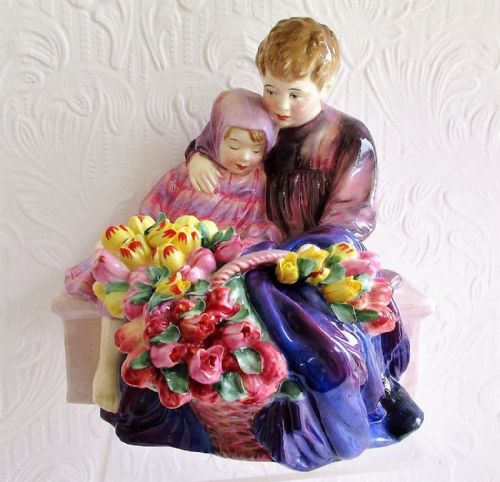
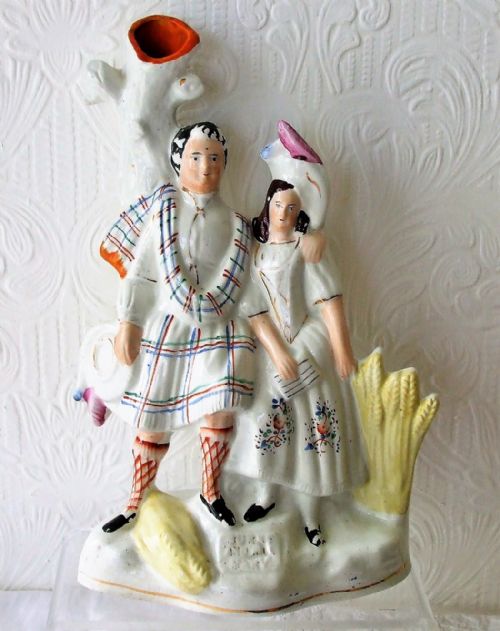
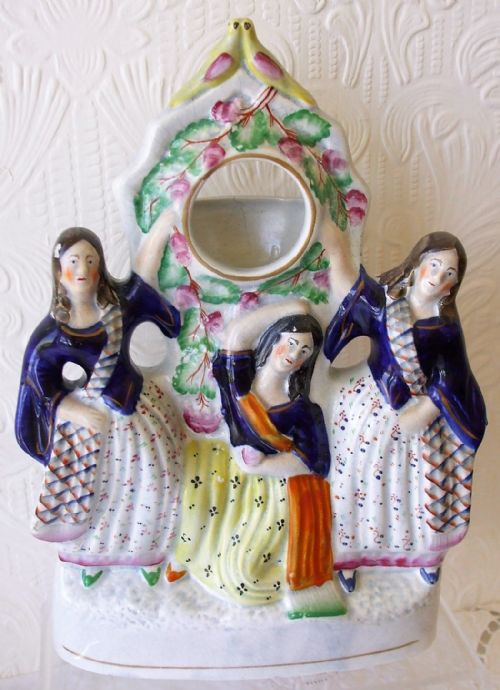
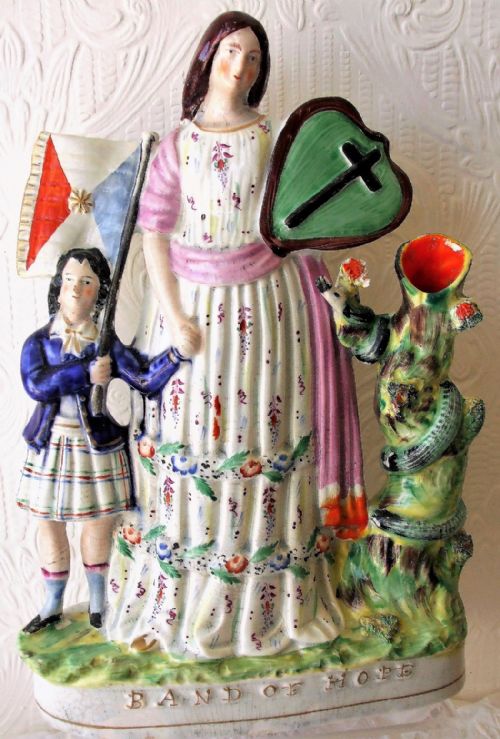
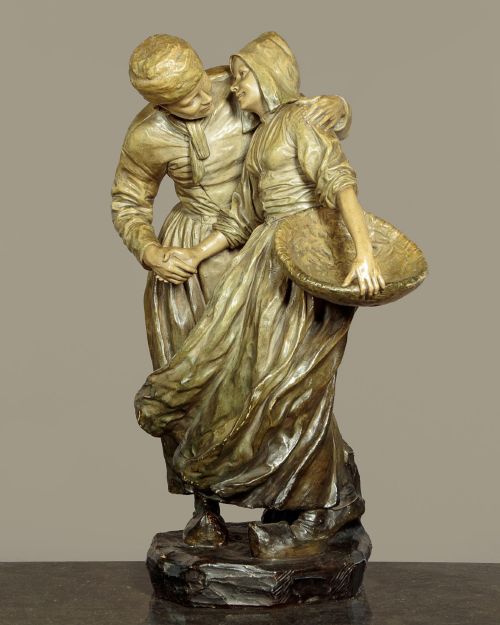


Painted Ceramic Figure Group
A painted ceramic figure group captures historic narratives, pastoral scenes and literary characters in solid form.
Painted Ceramic Figure Group
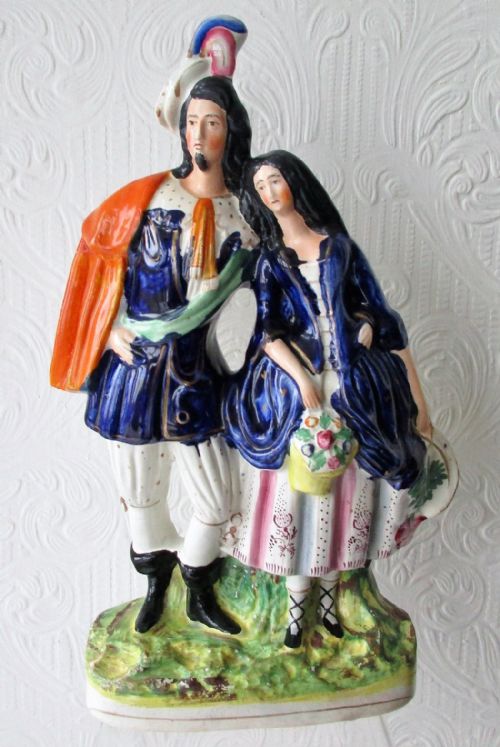
A painted ceramic figure group brings together multiple figures or narrative elements on a single base, portraying literary characters, romantic pairs, allegorical themes and historical scenes. When searching for a painted ceramic figure group, buyers encounter everything from early English Staffordshire earthenware flatbacks to elaborate continental porcelain creations.
The selection ranges across several centuries, showing distinct regional tastes such as Staffordshire pottery earthenware made for domestic mantelpieces and intricate porcelain groups modelled in German and French factories. Common configurations include couples, family groups, musicians with bocage, and decorative spill vases that combine sculpture with utility.
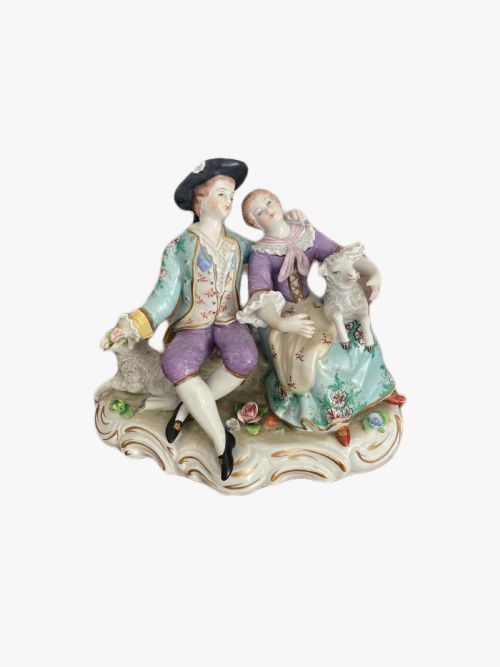
Makers and factories represented span from eighteenth-century English works like Derby to nineteenth-century continental enterprises including Meissen, Volkstedt and Carl Thieme. These pieces preserve social history through their depictions of contemporary events, famous figures, and traditional trades.
Materials and production techniques
Makers utilised earthenware, porcelain, terracotta and bisque, applying hand-painted enamels, glaze and occasional gold leaf or gilt highlights to finish the surface. Staffordshire earthenware pieces relied on lead glaze and vibrant underglaze or overglaze colours suited to sturdy domestic pottery.
Porcelain groups required skilled modelling and firing, often incorporating delicate applied details such as lace, floral bocage and intricate musical instruments. Bisque porcelain remained unglazed to emphasise the sculptural form, while factories like Meissen and Derby utilised precise moulds followed by meticulous hand painting.
Painted Ceramic Figure Group Retail Price Guide 2026
Typical asking prices for painted ceramic figure group among the pieces listed under this phrase on Sellingantiques today, from the lower quarter to the upper quarter. They describe what is for sale here now, not the wider market.
Father Time clips Cupid's wings in an eighteenth-century porcelain group, proving domestic disputes transcend even mythological immortality.
Measures of quality
Quality depends on the crispness of the modelling and the precision of the hand painting, where finer examples display careful facial expressions, detailed costume rendering and subtle shading in the enamel. Superior porcelain groups maintain clean, well-defined applications of lace or foliage without clumsy excess.
Royal Doulton·Goldscheider·Bourdois & Bloch·Meissen·Carl Thieme·Derby·Volkstedt·Eugene Clauss·Ludwigsburg
The Painted Ceramic Figure Group Glossary
- Flatback
- A Staffordshire pottery figure designed to be viewed from the front only, with an unpainted or partially finished flat reverse. This technique saved clay and made the pieces cheaper to produce for mantelpiece display.
- Bocage
- An intricate background of applied ceramic foliage, leaves and flowers wrapping around a figure group. It appears frequently on eighteenth-century and nineteenth-century porcelain and pottery candlesticks and pastoral scenes.
- Bisque
- Unglazed porcelain fired once to vitrify the body, resulting in a matte, tactile white surface resembling marble. It became popular for neoclassical and sentimental figure groups.
- Spill vase
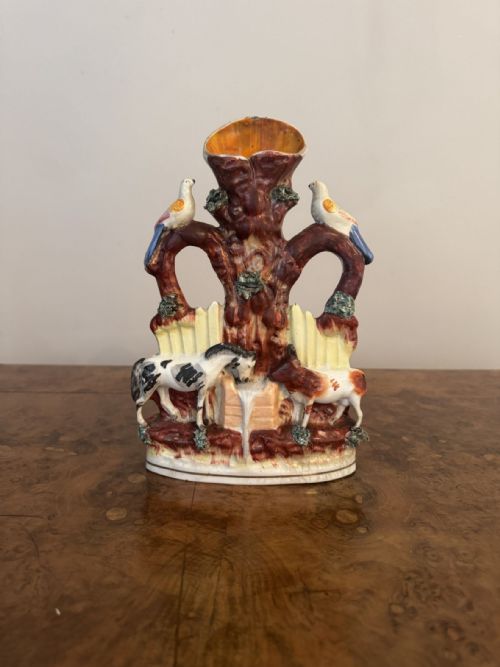
- A hollow vertical tube incorporated into a figure group, designed to hold wooden spills used for lighting fires or candles. They combine practical domestic utility with narrative sculpture.
- Fairing
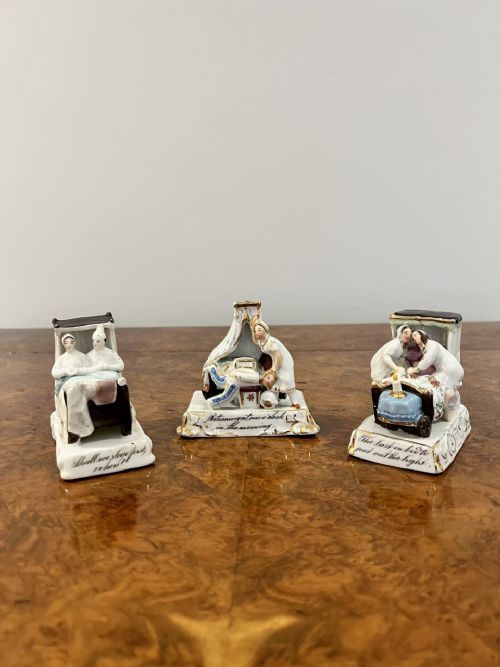
- A small, humorous or topical porcelain ornament produced in large numbers during the nineteenth century. These items were typically sold at country fairs and often depicted contemporary domestic or political satires.
Painted Ceramic Figure Group: Frequently Asked Questions
What is a painted ceramic figure group?
A painted ceramic figure group is a moulded pottery or porcelain sculpture depicting two or more people, animals or allegorical figures. These pieces are hand-painted with glazes and enamels to illustrate stories, historical events or domestic scenes.
They range from simple earthenware Staffordshire pottery made for everyday homes to delicate porcelain sculptures created in European factories for display in cabinets.
How were Staffordshire figures displayed?
Staffordshire pottery figures and flatbacks were primarily made to sit on mantelpieces, dressing tables and sideboards in nineteenth-century homes. Their flat backs allowed them to sit flush against a wall.
Because they were designed to be viewed from the front, collectors traditionally placed them on high shelves where the painted details caught the light of the room.
How do I care for antique porcelain?
Antique porcelain and earthenware require gentle handling and a stable environment away from direct sunlight and damp conditions. Dusting should be done carefully with a soft, dry brush.
Avoid using water or cleaning agents on painted enamel surfaces, as historic glazes and gold leaf highlights can degrade over time with harsh treatment.