






Painted Bombe Commode
A painted bombe commode brings serpentine curves and decorative pigment together, offering substantial storage alongside striking decorative presence.
Painted Bombe Commode
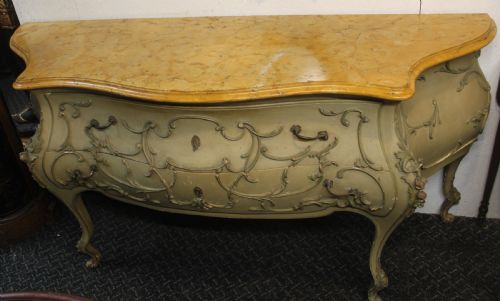
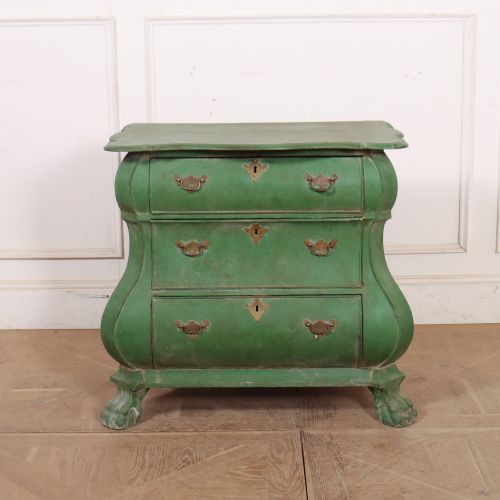
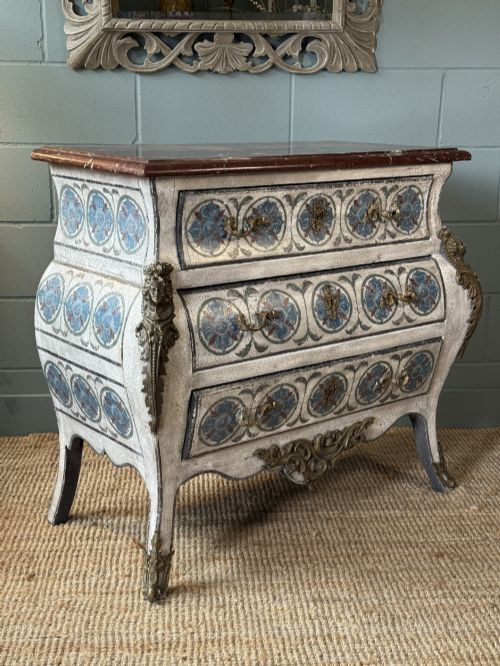
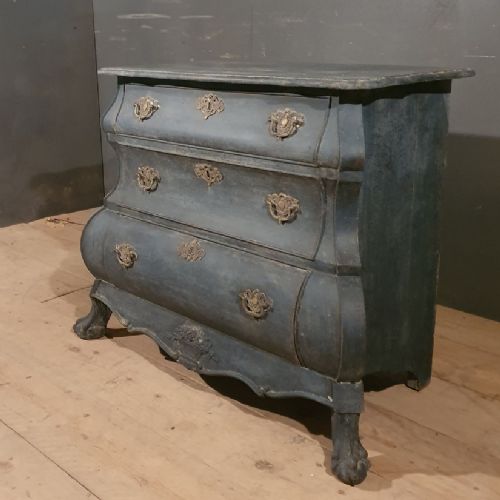
A painted bombe commode presents a distinctly swelling profile, featuring sides and fronts that curve outward before sweeping inward toward the base. These statement pieces emerge primarily across the eighteenth and nineteenth centuries, spanning French, Dutch, and Italian origins.
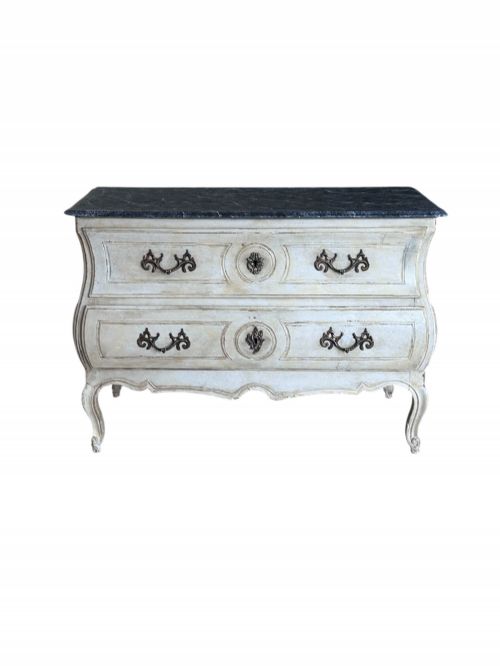
The versions encountered on this page range from modest two-drawer examples to larger storage cabinets and sideboards. Regional variations appear distinctly, from Dutch baroque interpretations to Venetian scenes and French Louis XV revival designs.
Materials and construction
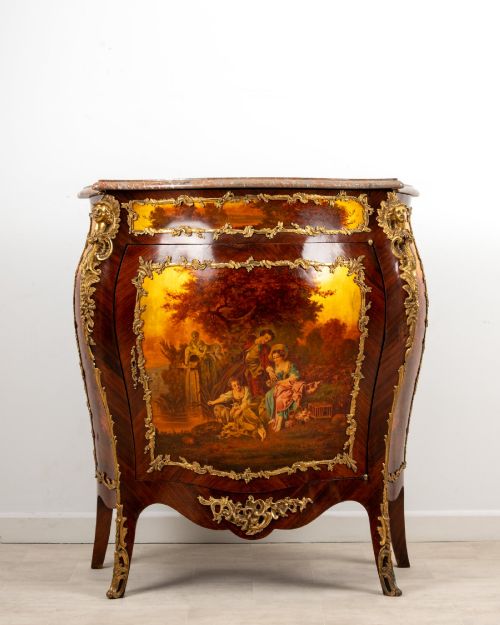
Construction relies upon shaped wooden carcases built to accommodate the challenging outward swell of the bombe form. Wood surfaces receive painted decoration, sometimes incorporating Vernis Martin techniques or detailed regional scenes.
Mounts of ormolu, gilt bronze, and brass frequently accent the corners, handles, and feet, complementing the pigmented surfaces. Marble tops appear frequently, adding weight and a finished utilitarian surface above the storage drawers.
Painted Bombe Commode Retail Price Guide 2026
Typical asking prices for painted bombe commode among the pieces listed under this phrase on Sellingantiques today, from the lower quarter to the upper quarter. They describe what is for sale here now, not the wider market.
Some chests hide intricate Venetian scenes within their swelling curves, bringing a touch of canal-side theatre straight into the hallway.
Judging quality
Quality rests upon the harmony of the swelling proportions and the crispness of the underlying carpentry. The execution of the painted surface, whether depicting delicate Venetian scenes or layered pigments, dictates the visual success of the piece.
The integration of metal mounts demonstrates the maker's hand, where cast ormolu or gilt bronze follows the contours of the wood precisely. Original marble slabs and well-fitted drawer construction distinguish the finest examples.
The Painted Bombe Commode Glossary
- Bombé
- A swelling, outward-curving contour found on the sides and fronts of case furniture. This dramatic shape requires specialised carpentry to achieve the characteristic rounded silhouette.
- Commode
- A low chest of drawers or cabinet developed in France during the seventeenth century. It serves as both storage furniture and a decorative surface.
- Ormolu
- Gilt bronze mounts applied to furniture for decorative accent and edge protection. The finish is achieved through the application of a mercury-gold amalgam to bronze.
- Vernis Martin
- A simulated Japanese or Chinese lacquer developed by the Martin brothers in eighteenth-century France. This technique uses successive layers of varnish to create translucent, highly polished painted finishes.
Painted Bombe Commode: Frequently Asked Questions
Where were these commodes made?
The pieces listed here originate from several European centres, with significant representation from France, the Netherlands, and Italy. Each region developed distinct characteristics in its painted decoration and overall silhouette.
French makers favoured refined mounts and lacquer techniques, while Dutch and German examples often emphasised robust proportions and deep swells. Italian workshops frequently incorporated figurative scenes onto the painted surfaces.
How do I care for a painted surface?
Painted wood surfaces require gentle maintenance to preserve the pigments and protective varnishes over time. Dusting with a soft, dry cloth prevents the accumulation of abrasive particles without risking moisture damage.
Keep these cabinets away from direct sunlight and sources of heat to prevent the wood beneath from expanding and the paint from cracking. Wax should be used sparingly and only on sealed wooden areas.
Are marble tops original?
Marble tops frequently accompany these commodes, providing a durable and decorative surface above the drawers. Many period pieces were designed specifically to support heavy stone slabs.
Examining the fit between the stone and the wooden frame helps indicate originality. The edges of the marble often follow the subtle contours of the commode beneath.