
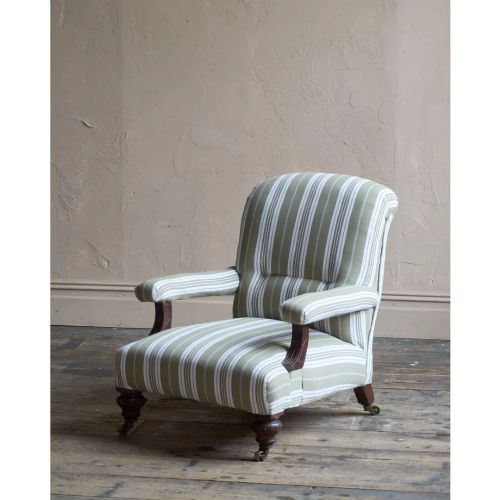
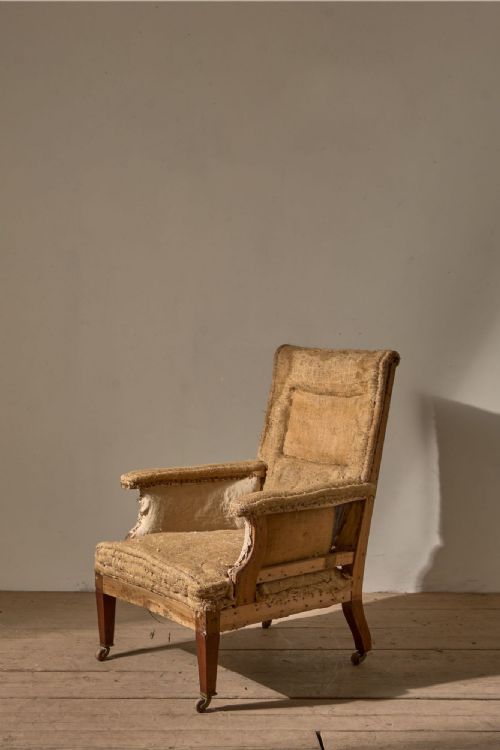
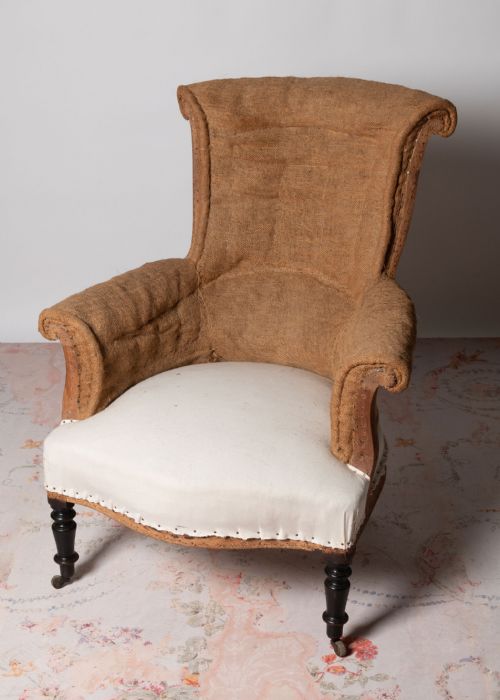


Padded Lounge Armchair
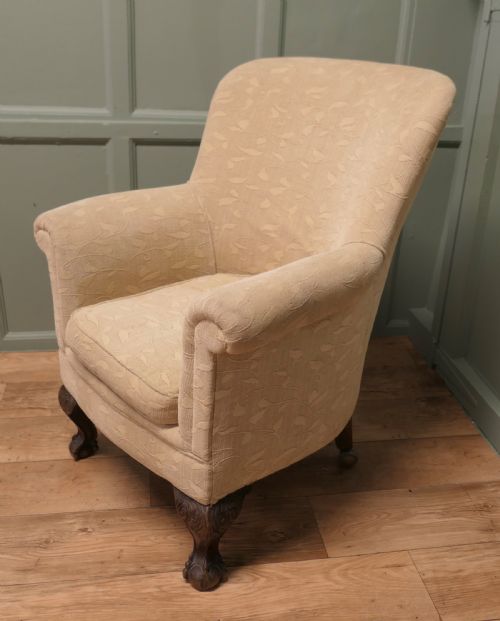
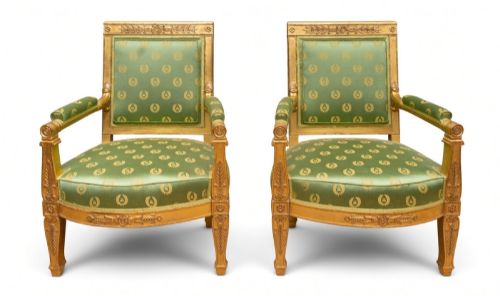
These padded lounge armchair examples deliver deep comfort through traditional sprung frames and soft upholstery, making them ideal for any relaxed interior scheme.
Padded Lounge Armchair
A padded lounge armchair brings together generous cushioning and supportive framing, originating across periods from the nineteenth century into the twentieth century. These seats appear in styles such as Victorian, Edwardian, and Arts and Crafts, alongside specific forms like the Bridgewater armchair and the gentleman's chair.
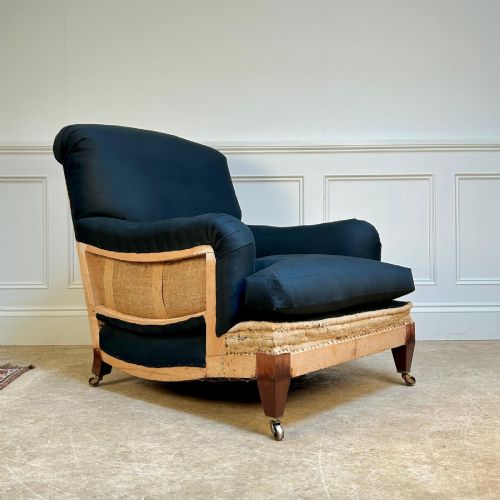
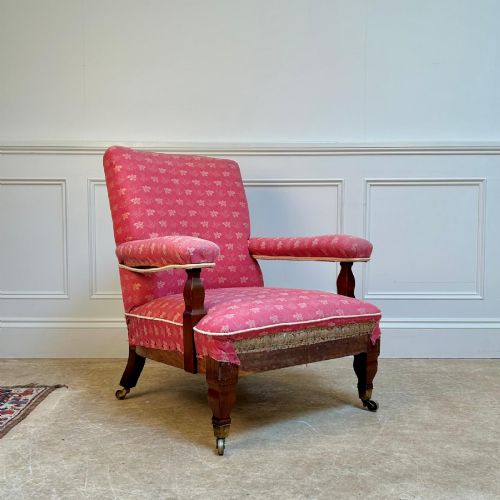
The most common examples on this page date from the Victorian and Edwardian eras, often showing deep seats and sprung backs designed for prolonged sitting. Makers range from large commercial workshops to notable designers, resulting in variations from simple open armchairs to oversized club chairs.
How they were made
Makers built the structural frames of these armchairs using sturdy timbers such as mahogany, walnut, and general hardwood, often leaving the timber exposed as a show frame. Brass components and hidden hessian webbing provided additional internal reinforcement for the heavy sprung interiors.
Upholstery relied on traditional stuffing covered in fabrics including cotton, velvet, and various heavy textiles to create the padded finish. Button back detailing and tailored seams required careful hand stitching to secure the thick padding across the arms and back.
Object types seen here focus exclusively on armchairs, ranging from salon chairs to oversized club armchairs.
What varies in quality
The standard of a padded lounge armchair rests upon the integrity of its wooden framework and the density of its internal padding. Fine timber selection in the legs and arms indicates a superior build, distinguishing standard commercial output from pieces by prominent makers.
Fabric choice and upholstery execution dictate the visual refinement of the seating. Examples retaining original stamped castors or documented maker signatures demonstrate higher craftsmanship and historical interest.
Jacob-Desmalter·Morris & Co·Howard and Sons·J.Mills
The Padded Lounge Armchair Glossary
- Show frame
- A wooden structure left visible around the padded upholstery. This exposes the carved mahogany or walnut timber beneath the cushions.
- Button back
- An upholstery technique where depressions are formed in the padding using tight stitches or buttons. This secures the filling evenly across the backrest.
- Cabriole leg
- A furniture leg that curves outward and then tapers inward. It appears frequently on Victorian and revival seating designs.
- Open armchair
- A seat featuring unpadded or partially upholstered wooden armrests. These contrast with fully enclosed club or lounge chairs.
Padded Lounge Armchair: Frequently Asked Questions
How do I identify a Howard and Sons armchair?
Look for stamped maker marks on the wooden legs, brass castors, or underside webbing. These chairs often feature characteristic low profiles and deep, sprung comfort.
Compare the upholstery style and leg timber against documented examples from the period to confirm authenticity.
How should I care for vintage upholstery?
Protect the fabric from direct sunlight to prevent fading and vacuum the padded surfaces regularly using a soft brush attachment. Professional cleaning is recommended for delicate velvet or antique cotton textiles.
Check the internal webbing and springs periodically to ensure the seat retains its proper support.
Are these armchairs suitable for daily use?
Many nineteenth and twentieth century padded lounge armchairs are built with robust hardwood frames and resilient springs designed for regular seating. Their deep proportions make them practical for modern living spaces.
Ensure the internal padding remains stable before heavy daily use to protect the underlying construction.