

Overmantle Glass
An overmantle glass sits above a fireplace, anchoring the room with generous proportions and reflective depth.
Overmantle Glass
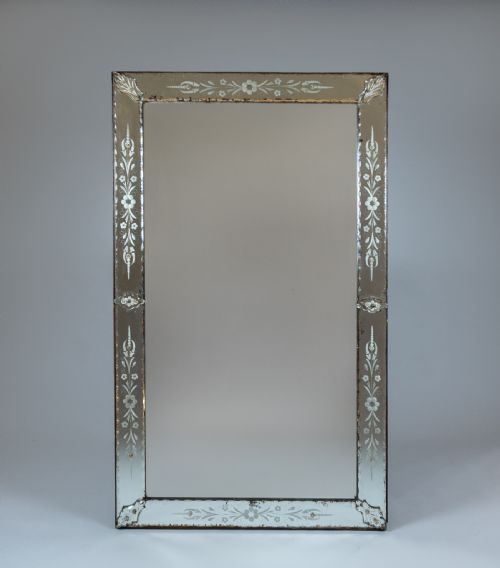
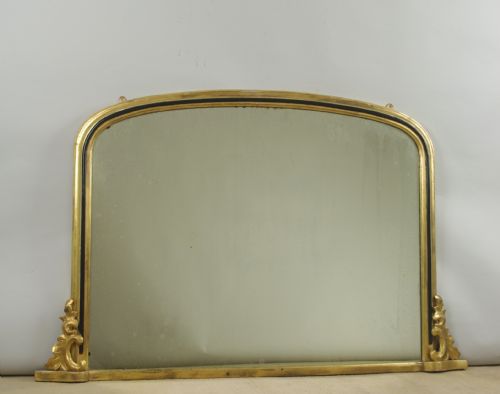
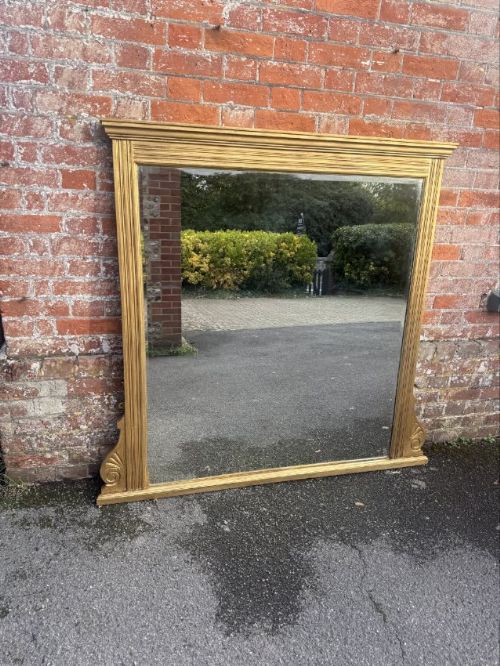
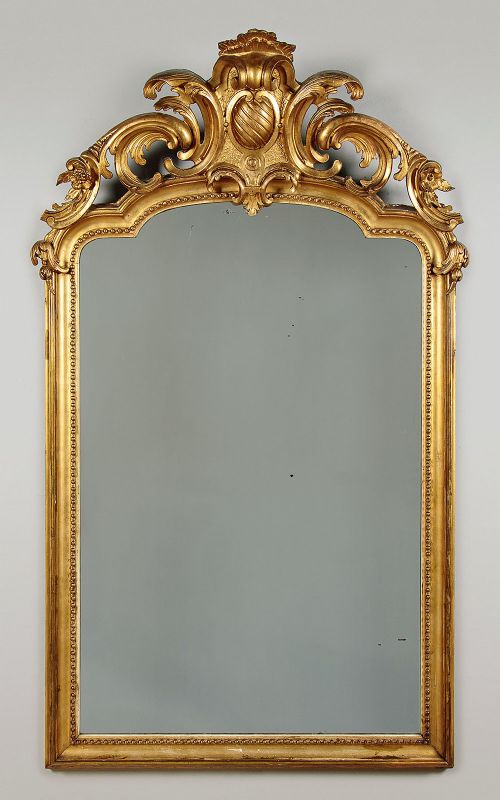
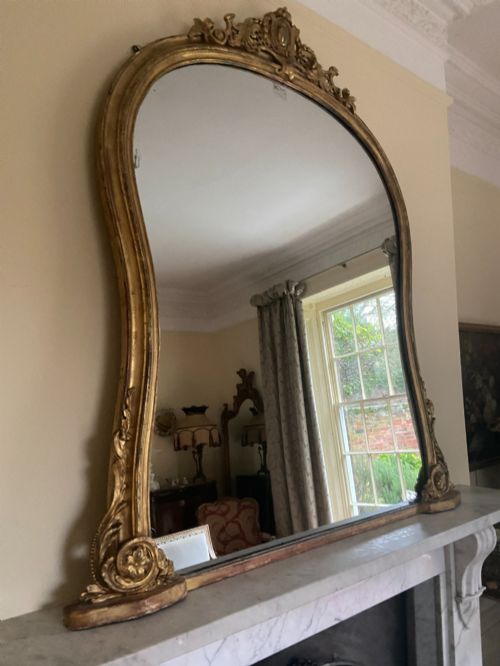
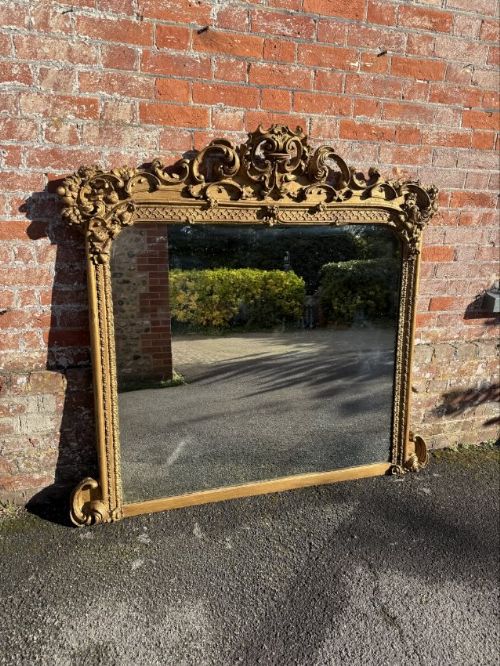
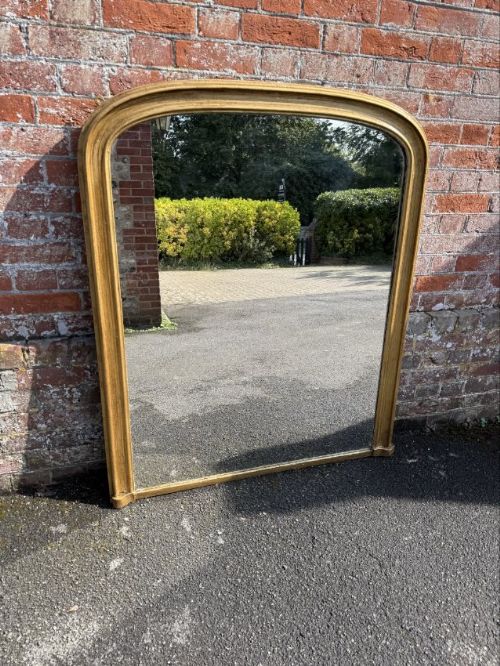
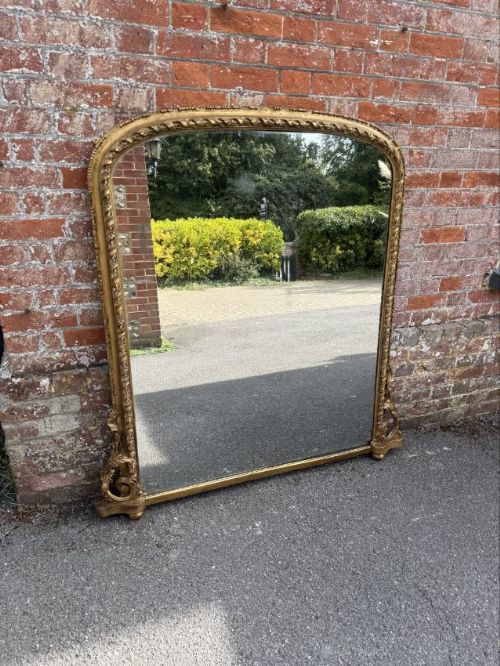
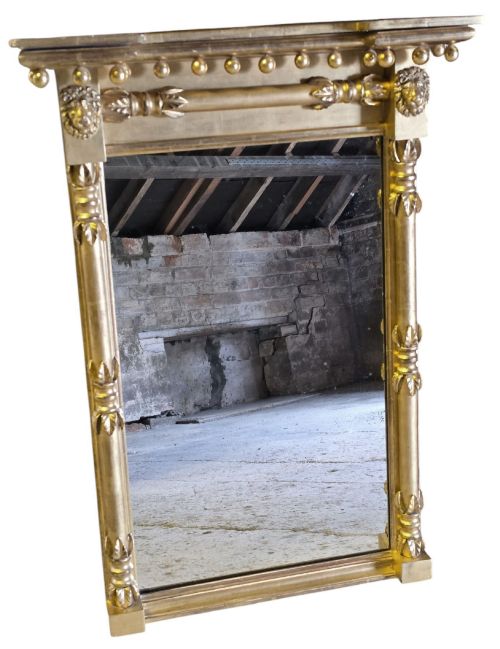
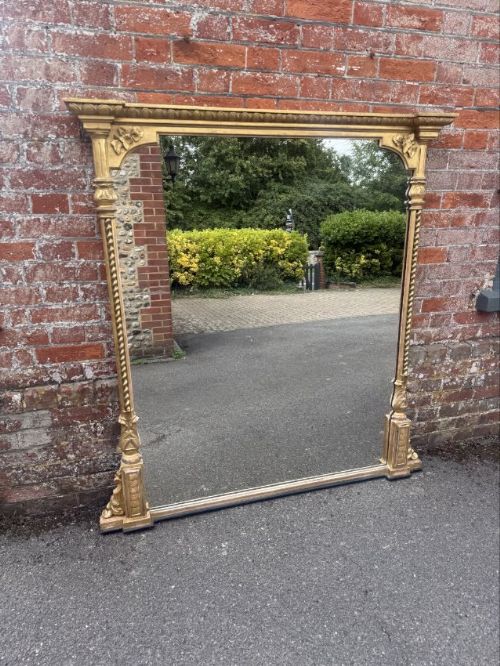
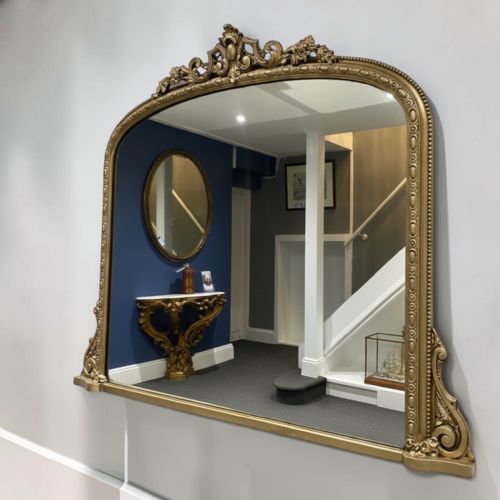
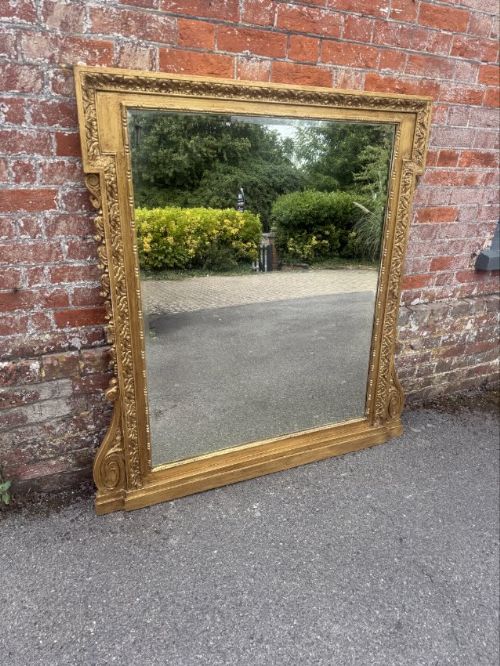
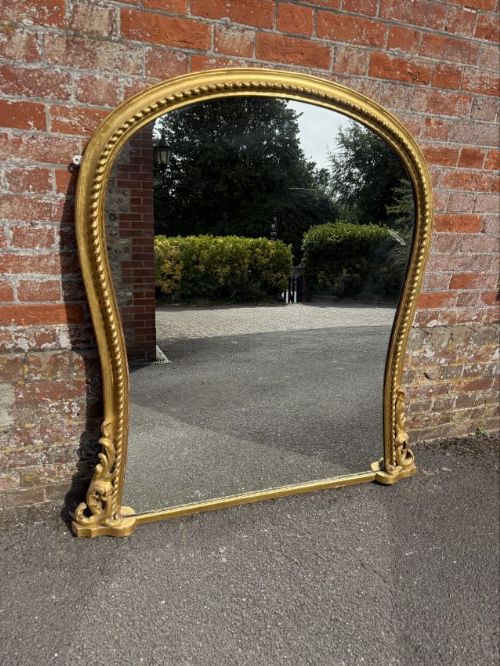
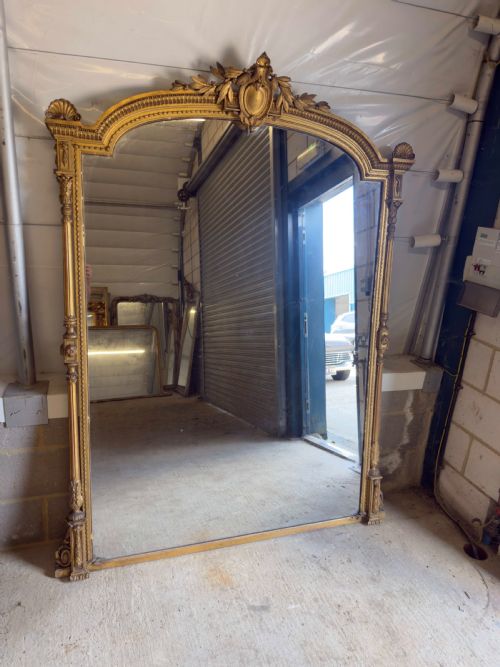
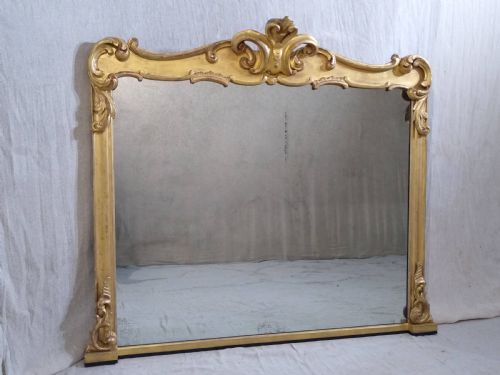
An overmantle glass is a large wall mirror designed specifically to hang on the chimney breast above a fireplace mantel. When you search for overmantle glass, you encounter substantial rectangular, arched, and waisted forms that reflect light and expand the sense of space in a room.
The pieces appearing on this page span the nineteenth and early twentieth centuries, drawing heavily from Victorian and Regency periods. You will regularly find grand giltwood frames, carved wood and gesso constructions, and occasional dark wood veneers like mahogany and rosewood.
These mirrors served a practical and decorative purpose in period interiors, placed to bounce the flickering light of hearth fires around the parlour or drawing room. Their proportions remain well-suited for traditional chimney breasts and living spaces today.
Materials and construction
Makers built the structural frames of these mirrors using timber such as pine, oak, mahogany, or rosewood, often applying layers of gesso to build up intricate surface ornament. Carved wood and composition mouldings were shaped into rope twists, ribbed columns, and pediments before receiving coats of gold leaf or paint.
Giltwood and parcel-gilt finishes dominate the selection, applied over a prepared gesso base to achieve a brilliant metallic sheen. Glass plates were set securely into the heavy frames, sometimes showing natural age such as light foxing across the reflective surface.
Overmantle Glass Retail Price Guide 2026
Typical asking prices for overmantle glass among the pieces listed under this phrase on Sellingantiques today, from the lower quarter to the upper quarter. They describe what is for sale here now, not the wider market.
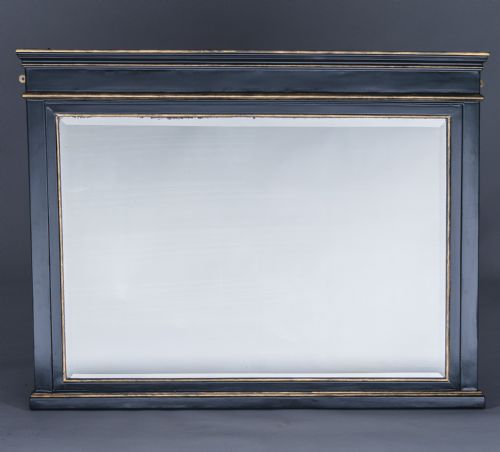
Listings feature frames finished in giltwood, gesso, ebonised wood, mahogany, rosewood, and painted parcel-gilt.
Distinctions in quality
Quality in an overmantle glass rests upon the crispness of the carved detail and the integrity of the underlying wooden frame. Finer examples display deeply cut gesso ornamentation and carefully proportioned architectural elements like pediments and columns rather than flat, repetitive moulding.
The preservation of the original gilt surface or parcel-gilt paintwork significantly influences the character of the piece. Frames that retain their original gilding without excessive modern repair demonstrate greater authenticity and visual depth.
The Overmantle Glass Glossary
- Gesso
- A plaster-like mixture applied to wooden frames as a base for gilding or painting. It allowed craftsmen to carve intricate relief decorations.
- Giltwood
- Timber that has been coated with gold leaf or metallic powder. This finish provides a bright reflective quality suited to formal reception rooms.
- Pediment
- The triangular or arched architectural crown placed at the top of a mirror frame. It draws inspiration from classical building facades.
- Foxing
- Small dark spots or cloudy patches that develop on mirror glass over decades as the silver backing oxidises. It indicates genuine age in antique glass.
- Waisted
- A frame design curving inward along the vertical sides before flaring outward again. This profile offers a distinct silhouette compared to straight rectangular mirrors.
Overmantle Glass: Frequently Asked Questions
How do I hang a heavy overmantle mirror safely?
These mirrors carry substantial weight due to their dense wooden frames and thick glass plates. Secure fixings must be anchored directly into the structural brickwork or wall studs of the chimney breast rather than relying on standard plasterboard hooks.
Professional mirror fixings or heavy-duty metal brackets designed to take the specific load of the piece are essential for safe installation above a fireplace.
Did overmantle mirrors always stay fixed above fireplaces?
While originally conceived to occupy the prominent wall space above a hearth, many of these large mirrors were also hung on principal drawing-room walls to reflect light from windows.
Their broad horizontal or vertical proportions make them versatile enough for large wall spaces in hallways and reception rooms, far from any actual fireplace.
How can I tell a Victorian overmantle from a Regency one?
Regency mirrors tend to feature cleaner architectural lines, classical column details, and restrained gilding influenced by neoclassical taste. Victorian examples frequently embrace heavier ornamentation, including elaborate arched tops, rope twists, and exuberant revival styles.
Examining the construction methods, backboards, and fastener types helps confirm the manufacturing era of the frame.