

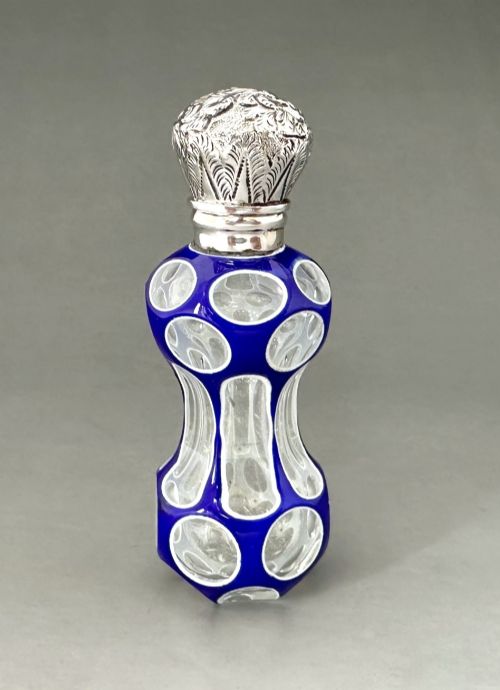
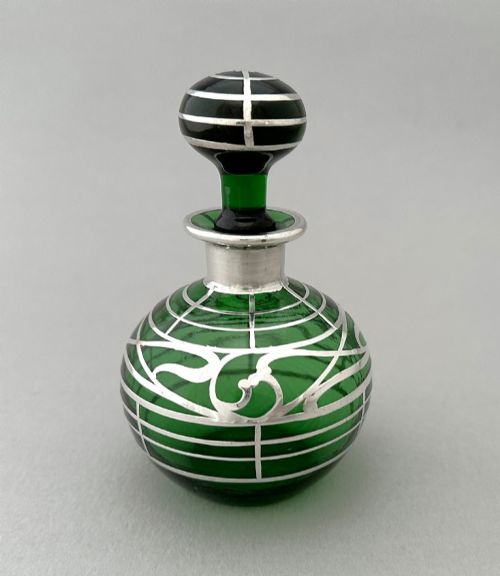
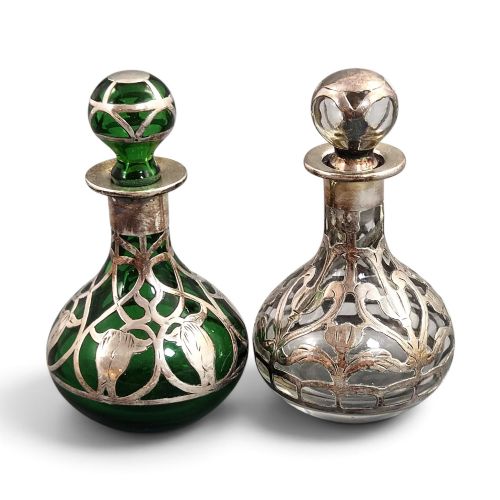


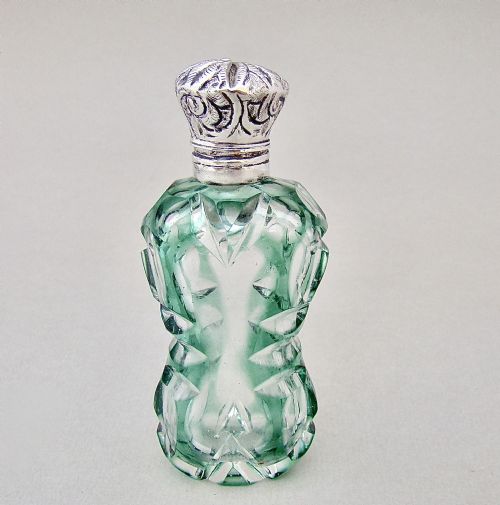
Overlay Glass Perfume Flask
These overlay glass perfume flask examples combine coloured glass with silver mounts, offering a tactile piece of Victorian dressing table history.
Overlay Glass Perfume Flask
An overlay glass perfume flask is a portable container designed for scent, combining a glass body with decorative metal elements. Buyers searching for an overlay glass perfume flask encounter pieces primarily dating from the Victorian and Edwardian eras, spanning the nineteenth century up to around nineteen hundred.
The forms on this page include scent bottles and chatelaine scent bottles designed to be carried or displayed. Origins represented in the evidence include English, French, and Bohemian makers working in styles such as Art Nouveau and French Chateau.
Green glass, amethyst glass, mercury glass, and cranberry glass form the coloured foundations of these vessels. They are frequently encased in silver or sterling silver mounts, creating the characteristic layered appearance.
How they were made
Glassmakers produced the coloured glass bodies using techniques appropriate for cranberry, green, amethyst, and mercury glass. Molten batches took on rich hues before being shaped into scent bottles and perfume bottles.
Metalworkers then applied silver or sterling silver mounts to the glass vessels. Some examples utilise triple overlay techniques to build up dense layers of material on the body of the flask.
Overlay Glass Perfume Flask Retail Price Guide 2026
Typical asking prices for overlay glass perfume flask among the pieces listed under this phrase on Sellingantiques today, from the lower quarter to the upper quarter. They describe what is for sale here now, not the wider market.
Listings span the Victorian and Edwardian periods, featuring sterling silver alongside green, cranberry, amethyst, and mercury glass.
What varies in quality
Quality rests in the depth and complexity of the glass layering, such as triple overlay work, combined with the crispness of the silver or sterling silver mounts. Art Nouveau and French nineteenth century pieces demonstrate varied artistic ambition in their metalwork designs.
The choice of coloured glass, from standard green and amethyst to mercury and cranberry glass, alters the visual weight of the vessel. The integration between the glass body and the silver collar or cap dictates the overall success of the piece.
Gorham
The Overlay Glass Perfume Flask Glossary
- Overlay glass
- Glass vessels featuring two or more distinct layers of different colours, where portions of the outer layer are cut away to reveal the contrasting colour beneath.
- Mercury glass
- A blown double-walled glass filled with a silvering liquid and sealed, producing a mirror-like reflective finish.
- Sterling silver
- An alloy of silver containing ninety-two point five percent silver by mass and five point five percent other metals, commonly used for the mounts.
- Chatelaine scent bottle
- A small perfume flask equipped with a chain or hook to suspend it from a chatelaine belt clip.
- Cranberry glass
- A rich pinkish-red transparent glass coloured with gold chloride, popular in nineteenth century glassware.
Overlay Glass Perfume Flask: Frequently Asked Questions
What is an overlay glass perfume flask?
An overlay glass perfume flask is a nineteenth century scent container made from layered coloured glass and fitted with silver mounts. These pieces were used to hold liquid fragrances on dressing tables or suspended from chatelaine belts.
Collectors prize them for the interplay between the glass colours, such as cranberry, green, and amethyst, and the decorative metalwork applied to the exterior.
How do I date an overlay glass perfume flask?
Dating relies on stylistic markers like Art Nouveau curves or Victorian proportions, alongside the hallmarks found on the silver and sterling silver mounts. Most examples on this page date from the nineteenth century up to around nineteen hundred.
Makers and origins, including French and Bohemian workshops, also guide the dating process when combined with material evidence like mercury or cranberry glass.
Were these flasks meant to be carried?
Certain perfume bottles feature chatelaine fittings designed to hang from a belt, allowing the owner to carry scent throughout the day. Other larger scent bottles remained static on a dressing table or vanity.
The inclusion of a secure silver cap or stopper determined whether a particular flask suited daily transit.
What colours of glass are common?
The evidence shows green glass, amethyst glass, mercury glass, and cranberry glass as the primary hues for these scent bottles. Some examples utilise multiple layers in a technique known as overlay or triple overlay.
These colours were chosen to contrast sharply with the bright finish of the silver or sterling silver mounts encasing the glass body.