


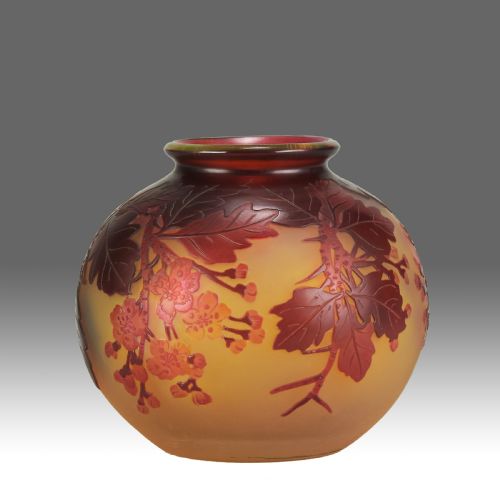


Overlaid Glass Floral Vase
An overlaid glass floral vase brings together layered glasswork and botanical motifs, offering tactile relief and rich colour to any collection.
Overlaid Glass Floral Vase
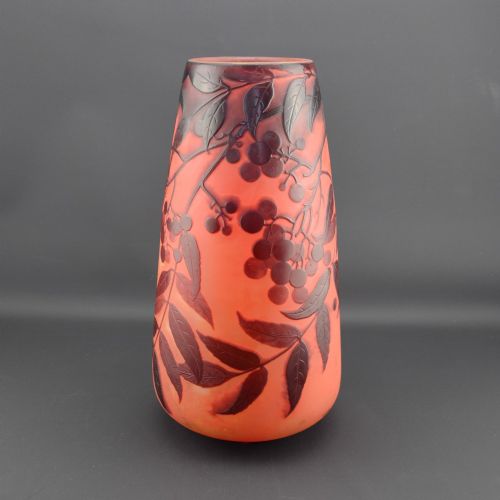
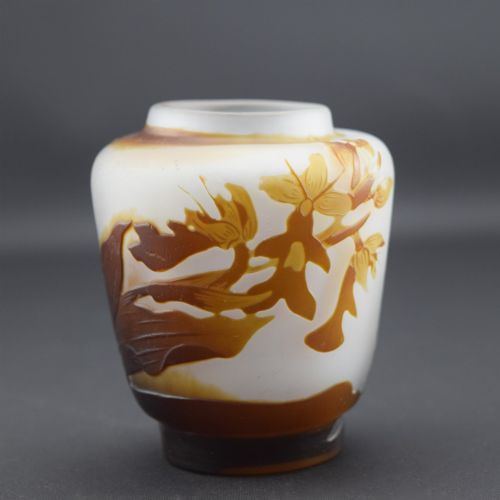
An overlaid glass floral vase is a decorative vessel featuring botanical motifs rendered through layered glass techniques or applied metal overlay. Collectors encounter examples spanning the Victorian period through the early twentieth century and into later studio glass.
The selections on this page encompass various forms including tall vases, conical vessels, and matching vanity glassware. These pieces display distinct stylistic traits ranging from Victorian Bohemian and French Art Nouveau to later twentieth century studio glass.
Makers represented in these categories include celebrated figures such as Emile Gallé, Johann Loetz, and Thomas Webb & Sons. Each piece demonstrates the specific decorative vocabulary of its period, prioritising floral and aquatic plant subjects.
Materials and construction
Makers utilised cameo glass, frosted glass, and iridescent glass as the foundation for multi-layered effects. Acid-etched glass techniques cut back the surface layers to reveal contrasting colours beneath.
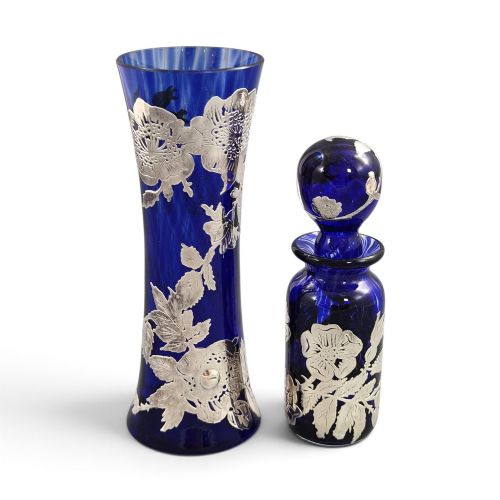
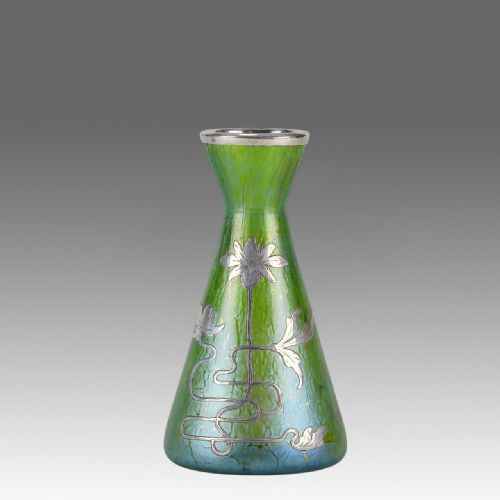
Applied metal elements such as sterling silver overlay and pewter overlay provide structural contrast against the vibrant glass bodies. Gold leaf and silvered glass treatments add reflective depth to the finished surfaces.
Overlaid Glass Floral Vase Retail Price Guide 2026
Typical asking prices for overlaid glass floral vase among the pieces listed under this phrase on Sellingantiques today, from the lower quarter to the upper quarter. They describe what is for sale here now, not the wider market.
Certain cobalt glass vases wear their sterling silver overlay like a delicate metal trellis climbing up toward the rim.
Factors of quality
The depth and precision of the cameo carving determine the visual impact of the botanical relief. Finer pieces exhibit crisp delineation of petals and stems against the background layer.
The integration of the metal overlay with the glass body distinguishes masterwork vessels from simpler production. Superior examples feature secure, finely pierced metalwork that complements the underlying form.
Emile Gallé·Johann Loetz·Thomas Webb and Sons·Baccarat·Laugharne Glass
The Overlaid Glass Floral Vase Glossary
- Cameo glass
- Glass vessels created by fusing two or more distinct layers of coloured glass and carving away the exterior layer to form a raised design. This technique requires considerable skill to avoid cutting through the background.
- Acid-etched glass
- Glass decorated by applying acid to eat away exposed areas of the surface, creating frosted designs or removing top layers. It allowed makers to achieve intricate floral patterns efficiently.
- Silver overlay
- Sterling silver or other silver alloys applied to the exterior of a glass vessel, often in organic floral patterns. The metal grips the glass securely while providing a metallic sheen.
- Iridescent glass
- Glass treated with metallic salts to produce a rainbow-like sheen that shifts in the light. This finish became particularly popular during the Art Nouveau period.
Overlaid Glass Floral Vase: Frequently Asked Questions
How do I clean an overlaid glass floral vase?
Wash the glass gently using lukewarm water and mild soap, taking care around any applied metal overlay. Avoid submerging pieces with metal components for extended periods to protect the junctions.
Dry the vessel thoroughly with a soft cloth to prevent water spots on the glass and tarnishing on the silver or pewter elements.
Where were most cameo glass vases made?
Many notable cameo glass vases originated in France, particularly around Nancy where makers like Emile Gallé worked. Bohemia and British glasshouses also produced significant quantities.
French pieces often lean towards botanical and aquatic subjects executed in multi-layered acid-etched cameo glass.
How can I tell Art Nouveau glass from Victorian pieces?
Art Nouveau examples typically feature fluid, asymmetrical lines and stylised natural motifs such as irises, cornflowers, and poppies. These pieces often embrace the iridescent and cameo techniques popularised around nineteen hundred.
Victorian pieces frequently display more structured ornamentation and heavier applied metalwork, sometimes combining cobalt glass with intricate pewter or silver overlays.
Can I use these vases for fresh flowers?
While these vessels were originally designed as decorative objects, many can hold water for fresh flowers if handled with care. Inspect the interior first to ensure there are no historical cracks or vulnerabilities.
Given the delicate nature of cameo layers and metal overlays, hand washing is essential, and moisture should not be left trapped beneath silver mounts.