




Oval Walnut Card Table
An oval walnut card table brings nineteenth-century drawing rooms alive through rich burr veneers and clever fold-over tops.
Oval Walnut Card Table
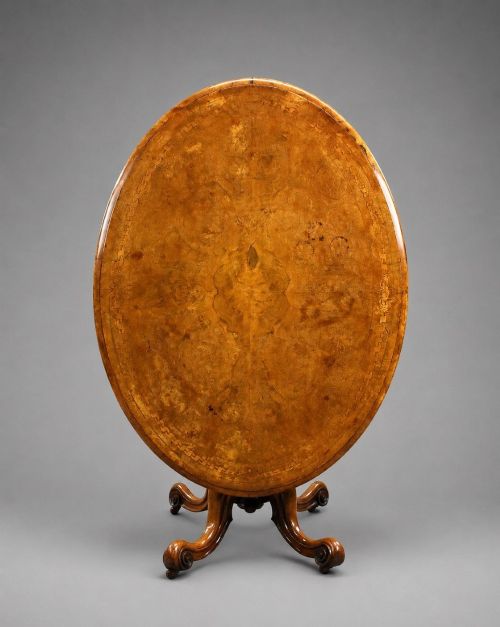
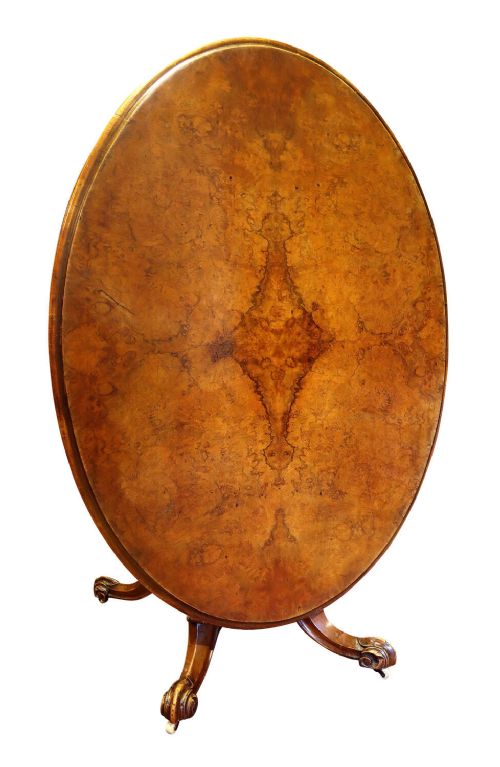
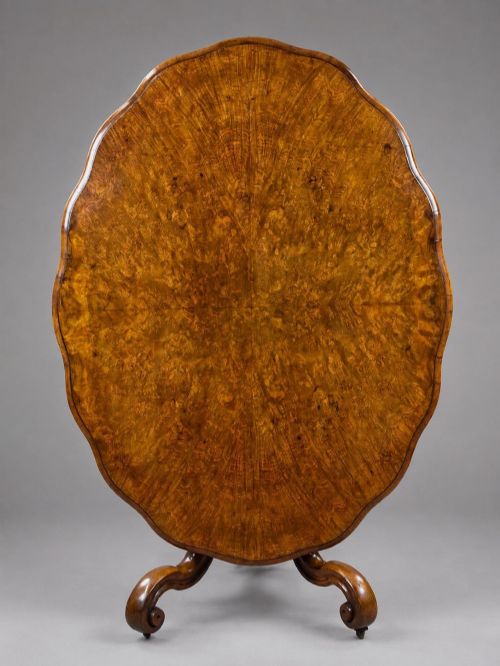
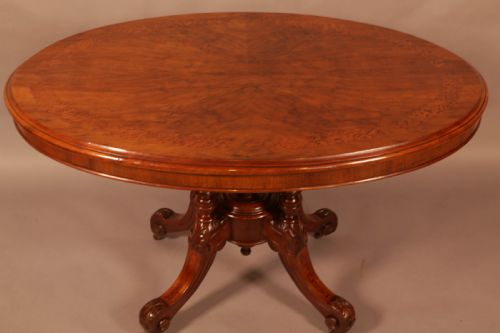
An oval walnut card table is a form of nineteenth-century gaming or centre table defined by its rounded top and rich timber grain. Buyers seeking an oval walnut card table will encounter Victorian examples predominantly fashioned from burr walnut veneer.
The pieces listed here span the mid to late nineteenth century, including specific dates such as eighteen fifty, eighteen sixty, and eighteen seventy. Most of these tables function as loo tables or gaming tables designed for parlour use.
How they were made
Cabinet makers utilised solid walnut and burr walnut veneer over secondary timbers to create patterned surfaces on the top. Boxwood inlay and brass elements often highlight the dark grain of the walnut.
Interiors and playing surfaces frequently feature baize linings to cushion cards during games. Carved details appear on the structural supports of nineteenth-century examples.
Some nineteenth-century card tables feature secret compartments hidden beneath the folding top for stashing stray counters and winning pennies.
What varies in quality
The choice of timber creates the primary distinction between standard examples and finer pieces. Highly figured burr walnut veneer and crisp boxwood inlay elevate the visual presence of a table.
The precision of the carving on the base and the condition of the wooden surfaces distinguish superior Victorian workmanship from simpler production.
Howard & Sons
The Oval Walnut Card Table Glossary
- Burr Walnut
- A decorative timber veneer taken from the warted growths of walnut trees, prized for its swirling grain patterns. This material defines the appearance of many nineteenth-century gaming tables.
- Baize
- A coarse woollen fabric, traditionally green, used to line the playing surfaces of card and games tables. It provides a soft, durable cover for card playing.
- Loo Table
- A Victorian round or oval table originally used for the popular card game of loo. These tables often feature tilt-top mechanisms for storage.
- Boxwood Inlay
- Contrasting pale wood set flush into the darker walnut surface to create geometric or floral patterns. This technique showcases high cabinet-making skill.
- Centre Table
- A freestanding table designed to be viewed from all sides and placed in the middle of a room. Many nineteenth-century examples double as card or loo tables.
Oval Walnut Card Table: Frequently Asked Questions
What is an oval walnut card table used for?
These tables served nineteenth-century households as versatile furniture for parlour games, card playing, and social gatherings. The fold-over or tilt mechanisms allowed them to function both as display pieces and active gaming surfaces.
Today, they suit living rooms and studies as striking centre tables that retain their original nineteenth-century character and practical surface area.
How do I date an oval walnut card table?
Dating relies on examining the timber veneers, construction methods, and stylistic cues typical of the Victorian era. Pieces from this period frequently employ burr walnut veneer over solid carcase woods, often accompanied by boxwood inlay.
Specific construction details, such as the mechanism for the folding top or tilt-top support, help align the table with manufacturing practices of the mid to late nineteenth century.
What wood is used in these tables?
Makers relied heavily on walnut, particularly burr walnut veneer, which offers distinctive swirling grain patterns across the tabletop. Secondary timbers provided internal structural support.
Additional materials such as boxwood for inlay and brass fittings frequently appear alongside baize linings on the gaming surfaces.
How should I care for a Victorian walnut table?
Protect the burr walnut veneer by keeping the table away from direct sunlight and maintaining stable room humidity. Gentle dusting with a dry cloth preserves the polished surface without damaging the historic finish.
Avoid placing damp items or harsh cleaning agents directly onto the wood or baize insert to maintain the structural and visual integrity of the piece.