




Oval Tea Table on Legs
An oval tea table on legs provides a graceful surface for entertaining, uniting centuries of cabinet-making skill in a compact form.
Oval Tea Table on Legs
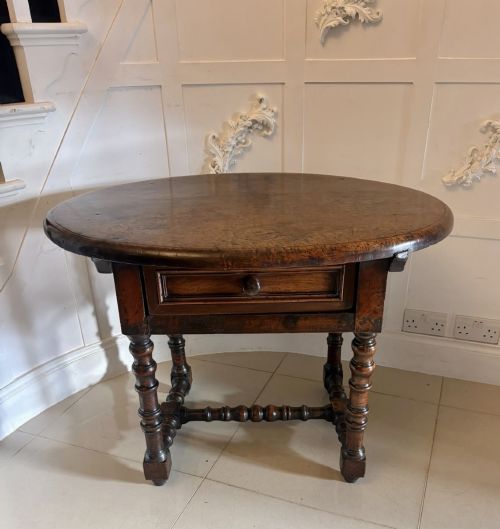
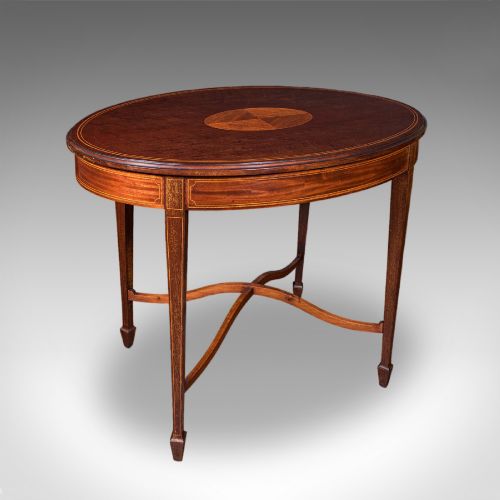
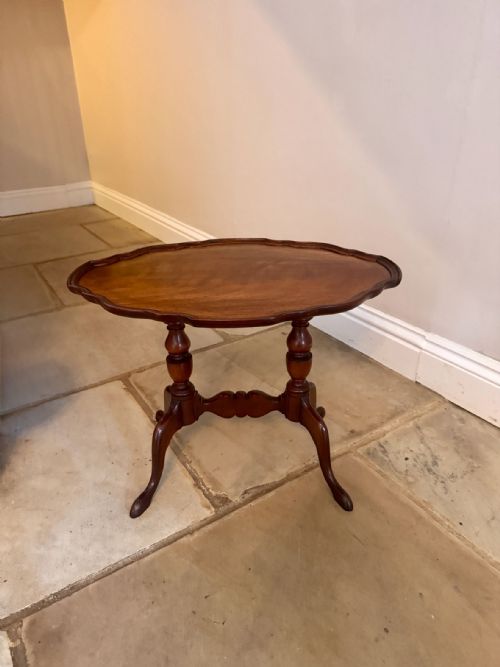
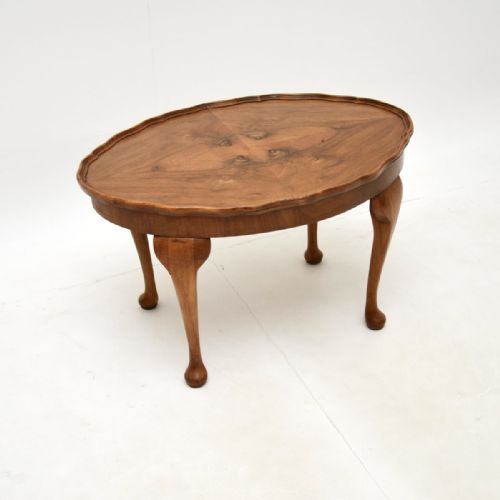
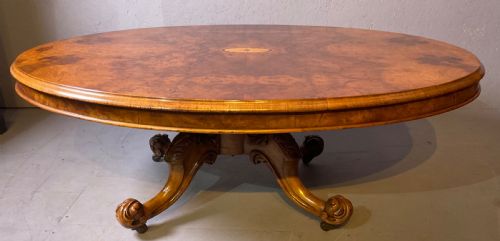
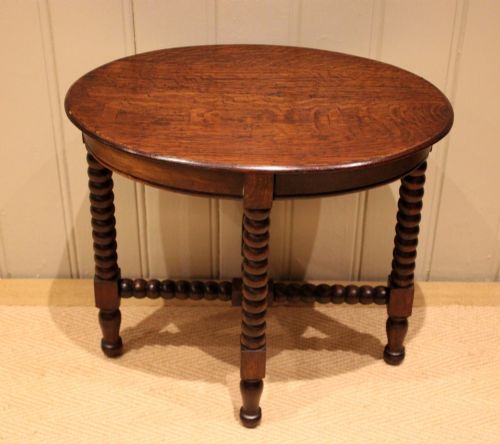
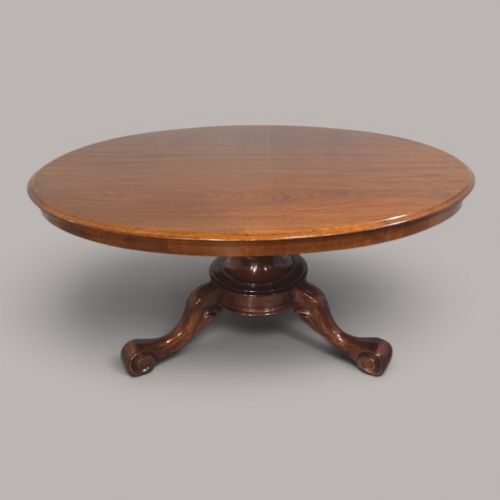
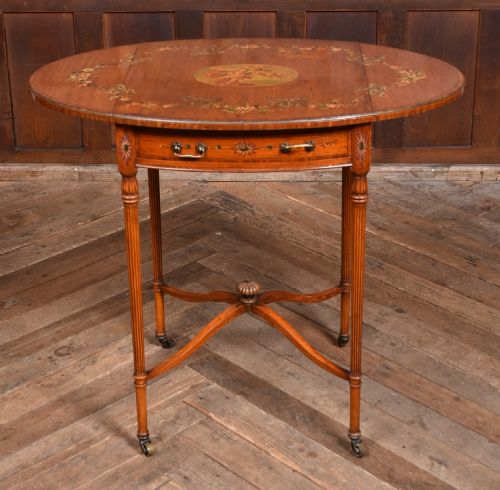
An oval tea table on legs spans several centuries of domestic furniture, appearing primarily as occasional, coffee, side, and Pembroke tables from the Georgian, Victorian, and Edwardian eras. Buyers searching for an oval tea table on legs encounter numerous walnut and mahogany examples supported by pillars, pedestals, or distinct upright legs.
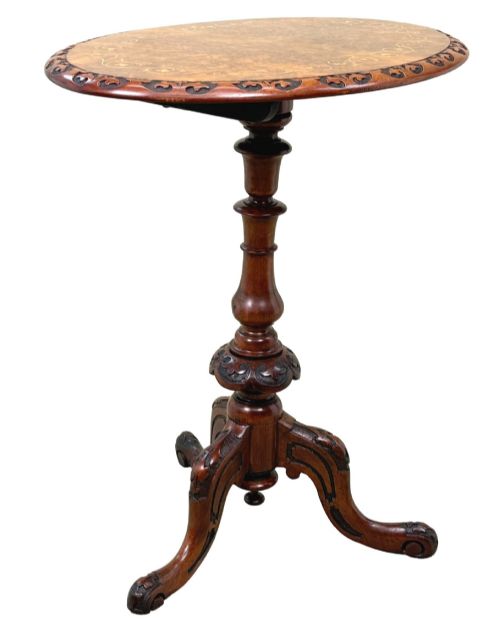
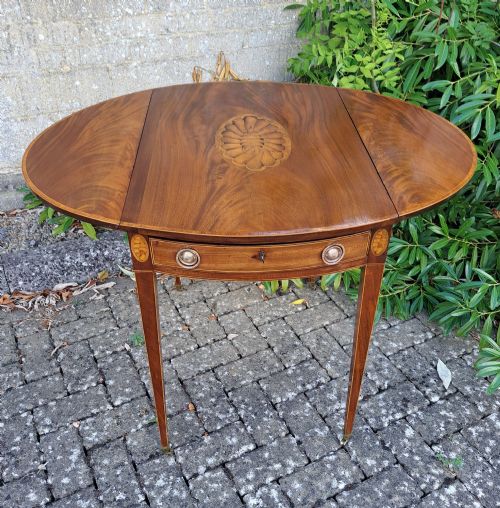
Victorian pieces frequently utilise burr walnut with inlaid surfaces, whilst Edwardian and Georgian variants often employ mahogany or satinwood with delicate drop leaves or folding tops. These tables function as centrepieces, lamp stands, or window tables within traditional rooms, balancing utility with refined proportions.
Materials and construction
Cabinet-makers constructed these tables using solid hardwoods such as mahogany, oak, and walnut, frequently applying figured veneers like burr walnut or satinwood to create decorative top surfaces. Secondary woods and framing elements provide structural stability beneath the polished exterior.
Inlay work incorporating boxwood, brass, and marquetry decorates the top surfaces of finer examples, whilst turned elements include barley twist legs, tripod supports, and pillar bases. Joinery methods range from pegged frames to traditional mortise and tenon joints.
Oval Tea Table on Legs Retail Price Guide 2026
Typical asking prices for oval tea table on legs among the pieces listed under this phrase on Sellingantiques today, from the lower quarter to the upper quarter. They describe what is for sale here now, not the wider market.
Some Victorian tables include hidden castors tucked beneath slender legs, designed to glide silently across carpets during tea service.
Judging the work
The distinction between ordinary and superior pieces rests upon the selection of timber veneers and the crispness of hand-carved or inlaid details. Figured burr walnut and carefully matched satinwood indicate higher workshop standards than plain veneer or unadorned mahogany.
Structural integrity and the retention of original finish separate exceptional survivals from heavily restored examples. Clean lines, balanced proportions, and precise turning on legs and pedestals reflect the original maker's skill.
The Oval Tea Table on Legs Glossary
- Burr walnut
- A highly figured wood grain obtained from walnut tree growths, producing intricate patterns across table tops. It was favoured by Victorian cabinet-makers for formal occasional furniture.
- Pembroke table
- A small rectangular or oval table featuring two hinged drop leaves on opposing sides. It often includes one or more small drawers and rests on four legs.
- Satinwood
- A durable, yellowish-brown timber with a lustrous sheen, frequently utilised in fine Georgian and revival pieces for marquetry and veneering. It provides a bright surface contrast in inlaid table tops.
- Tripod table
- A small freestanding table supported by a central pillar rising from three legs. This form allows the top to tilt or remain fixed depending on the hinge mechanism.
- Sutherland table
- A narrow drop-leaf table where both flaps fold down almost vertically. It stands on slender gate legs that swing outwards to support the leaves.
Oval Tea Table on Legs: Frequently Asked Questions
How do I use an oval tea table today?
These tables function well as compact coffee tables, lamp stands, or side tables in modern reception rooms. Their curved edges soften the geometry of contemporary seating arrangements.
Drop-leaf and Pembroke versions offer adjustable surface areas for smaller spaces, allowing leaves to drop when floor space is restricted.
What is the difference between an occasional table and a centre table?
Occasional tables are typically smaller, lighter pieces designed to be moved around a room as needed for lamps or drinks. They appear frequently in Victorian and Edwardian variations.
Centre tables are traditionally larger, meant to stand permanently in the middle of a room rather than against a wall.
How do I identify a Victorian walnut table?
Victorian walnut tables often display rich, dark timber tones with visible grain patterns or decorative burr walnut veneers. They frequently incorporate turned legs, pedestal bases, or inlaid boxwood details.
Construction methods from this period include solid mahogany or softwood frames beneath the walnut show-wood, reflecting mid to late nineteenth-century workshop practices.
What is a pie crust edge?
A pie crust edge is a raised, decoratively carved border running around the perimeter of a circular or oval table top. This moulding mimics pastry crimping through rhythmic curves.
Cabinet-makers carved this profile directly from solid timber blanks, adding a sculptural quality to occasional and tripod tables.