

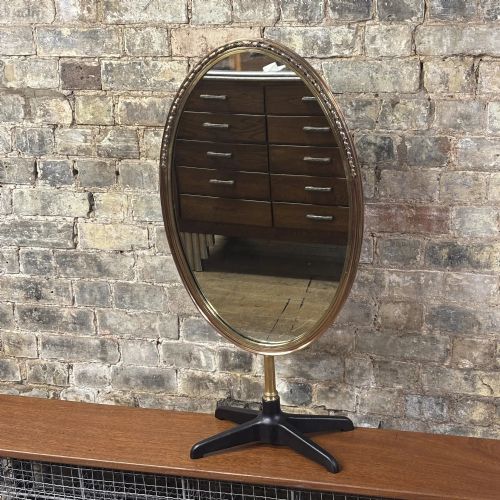
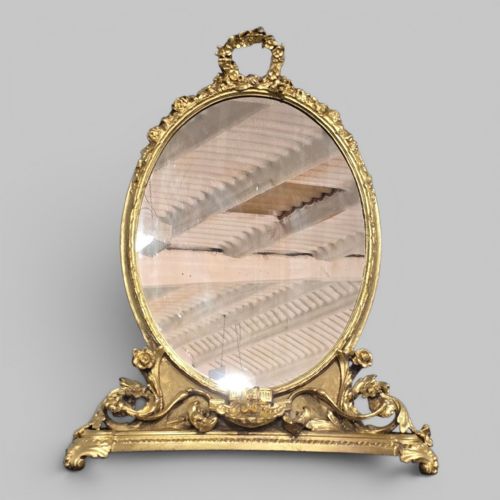


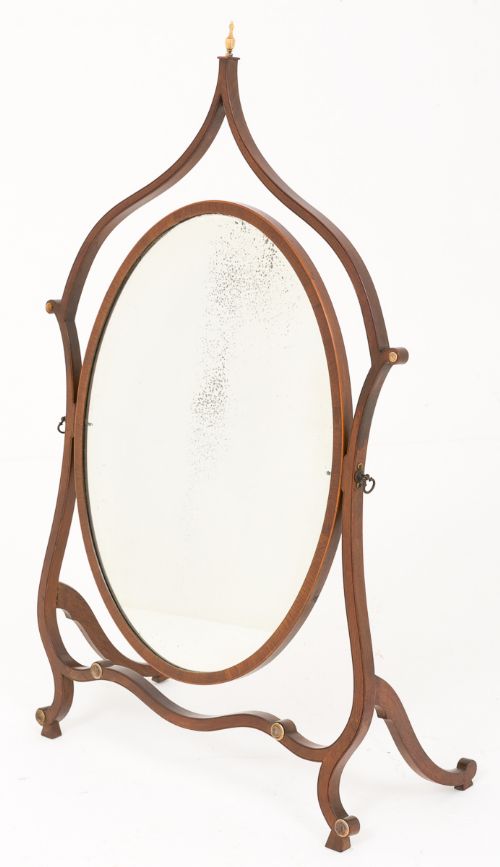


Oval Standing Mirror
An oval standing mirror brings functional elegance to a dressing room, combining pivoting glass with a stable floor or table base.
Oval Standing Mirror
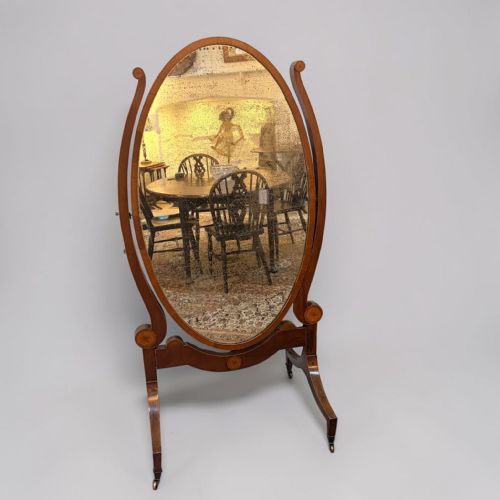
An oval standing mirror combines a tilting glass plate within a secure frame, designed for tabletop placement or full-length floor standing use as a cheval mirror. These pieces emerge across periods spanning the eighteenth century through the mid twentieth century, reflecting shifts in interior furnishings from Georgian simplicity to Victorian elaboration.
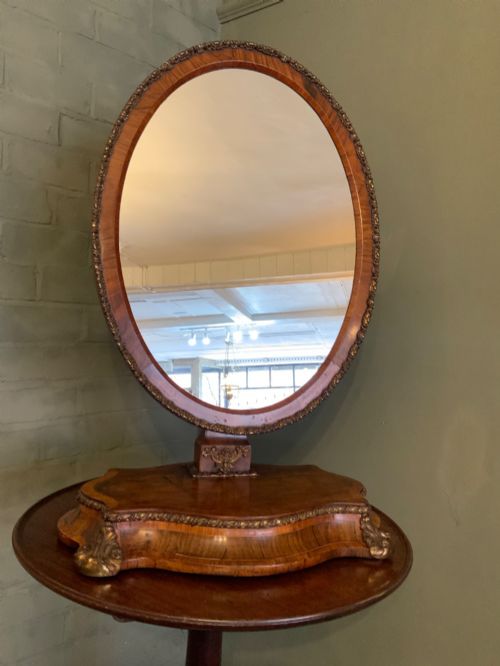
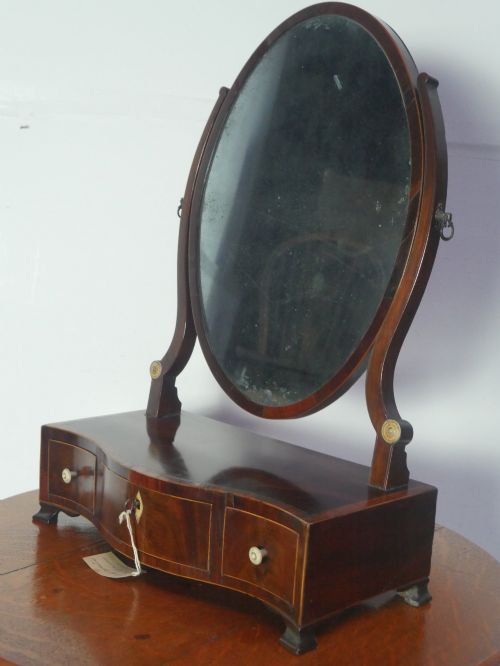
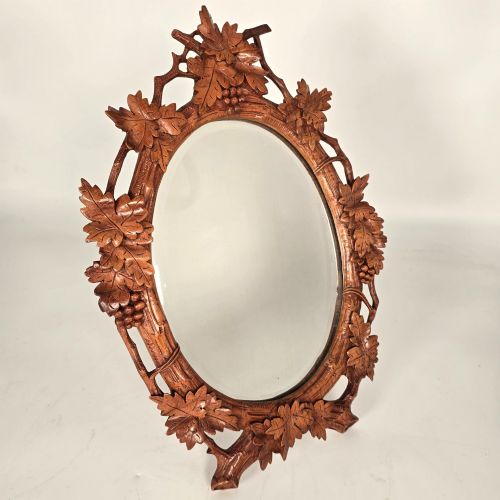
The dominant forms on this page include dressing table mirrors, toilet mirrors, and larger cheval mirrors constructed from various woods and metals. Buyers encounter distinct regional interpretations, ranging from French Napoleon III designs to Black Forest carved lime wood frames and English mahogany structures.
Materials and construction methods
Construction relies heavily on traditional timber framing, utilising mahogany, satinwood, walnut, and lime wood alongside cast or gilt bronze, brass, and ormolu mounts. Artisans employed detailed techniques such as marquetry inlay, fine hand carving, and gesso application over carved wooden bases to achieve ornate surfaces.
Glass plates are held securely within pivoting frames supported by upright arms and heavy bases, allowing the user to adjust the angle of reflection. Metal components involve champleve enamel work, chrome plating, and cast brass detailing, marking distinct manufacturing eras from Georgian joinery to twentieth-century chrome.
Oval Standing Mirror Retail Price Guide 2026
Typical asking prices for oval standing mirror among the pieces listed under this phrase on Sellingantiques today, from the lower quarter to the upper quarter. They describe what is for sale here now, not the wider market.
Some nineteenth-century dressing mirrors include tiny hidden drawers designed to keep jewellery safe while you slept.
Assessing quality in construction and finish
Quality reveals itself in the weight and stability of the supporting frame, the crispness of the wood carving or cast metal mounts, and the preservation of the original mercury or silvered glass plate. Superior examples demonstrate precise joinery, such as dovetailed drawer boxes on dressing mirror bases, and intact marquetry or gilding without heavy modern restoration.
The sophistication of the decorative elements distinguishes standard utility pieces from high-status items, particularly in the depth of hand-carved foliage, the complexity of ormolu detailing, and the integration of specialised materials like bone or champleve bronze.
The Oval Standing Mirror Glossary
- Cheval mirror
- A large freestanding floor mirror supported by four legs and a vertical frame that allows the glass to swing entirely. This form provides a full-length reflection.
- Toilet mirror
- A smaller tabletop mirror historically placed on a dressing chest or dressing table. These often feature small drawers incorporated into the base structure.
- Ormolu
- Gilded bronze mounts applied to furniture and frames for decorative enrichment. The technique was particularly favoured in French and high-style English pieces.
- Champleve
- An enamelling technique where troughs are dug into a metal surface and filled with vitreous enamel before firing. It appears on decorative metal frames from the late nineteenth century.
- Gesso
- A plaster-like mixture applied to wood as a base for painting or gilding. It allows craftsmen to carve intricate relief decoration before applying gold leaf.
Oval Standing Mirror: Frequently Asked Questions
Where should I place an oval standing mirror?
Tabletop versions suit dressing tables, chests of drawers, and sideboards where they provide a functional surface for grooming. Floor-standing cheval mirrors fit well in bedrooms and dressing rooms to offer full-length reflections.
Ensure the supporting surface is level and sturdy, particularly for heavier bronze or giltwood models that require a stable base to pivot safely.
How do I date an oval standing mirror?
Dating relies on examining the timber species, construction joints, fastening screws, and the backboards of the mirror frame. Georgian and Victorian pieces often feature hand-cut dovetails and older plate glass, while twentieth-century examples utilise modern fasteners and chrome.
Stylistic cues such as Rococo curves, Adam neoclassical festoons, or 1930s chrome plating also indicate the manufacturing period of the object.
Can the mirror glass be replaced?
Original glass frequently shows foxing, light oxidation, or silver loss that collectors value as proof of age. Replacement is possible if the glass is broken, but retaining the original plate preserves the historical integrity of the piece.
When replacement is necessary, a glazier can cut new mirror glass to fit the existing rabbet within the wooden or metal frame.
How do I maintain the frame and glass?
Dust wooden and gilded frames gently with a dry, soft cloth to prevent accumulation in carved recesses. Avoid commercial chemical polishes that can damage antique varnishes and gilt finishes.
Clean the glass using a microfibre cloth and a minimal amount of neutral glass cleaner applied to the cloth rather than sprayed directly onto the mirror, protecting the surrounding frame.