
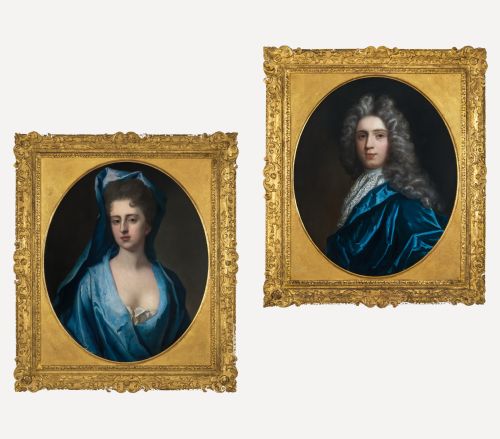
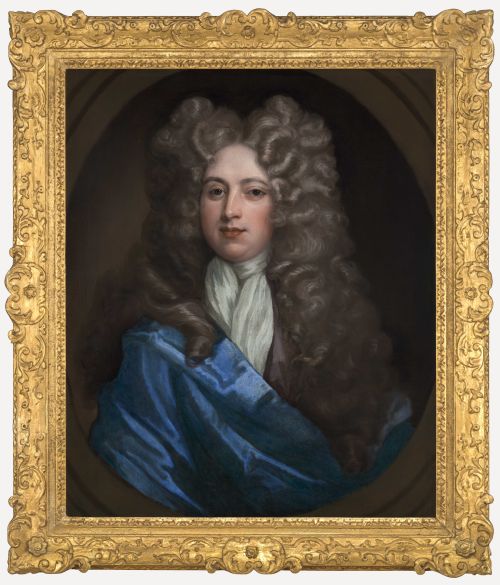
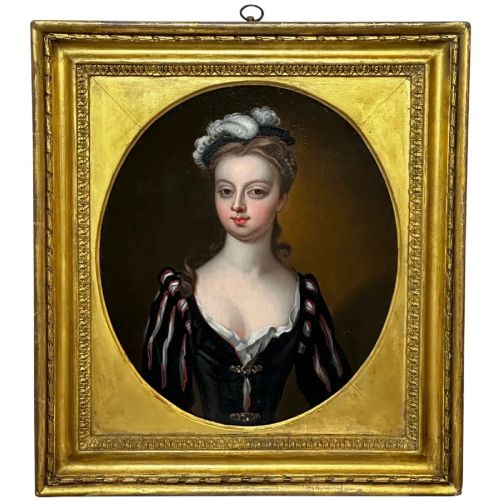
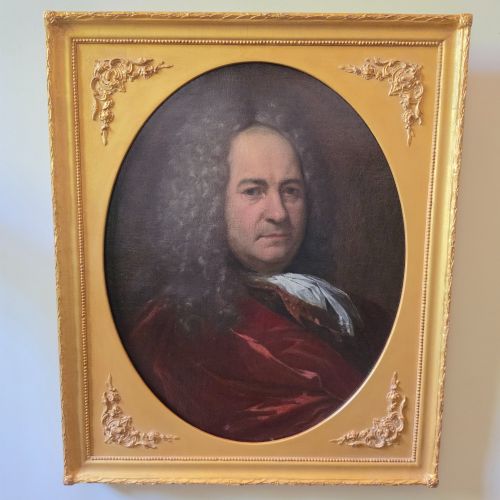
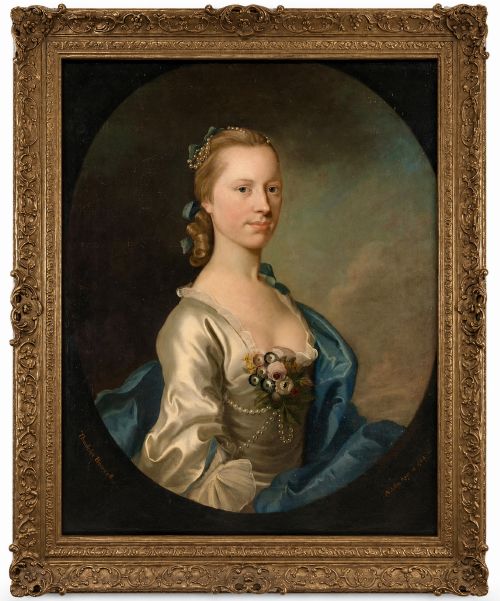
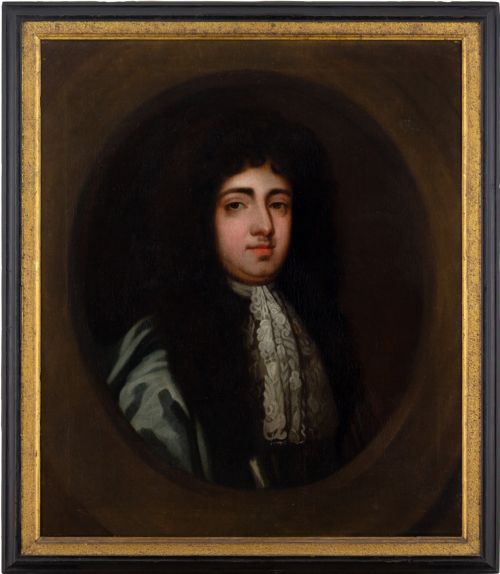


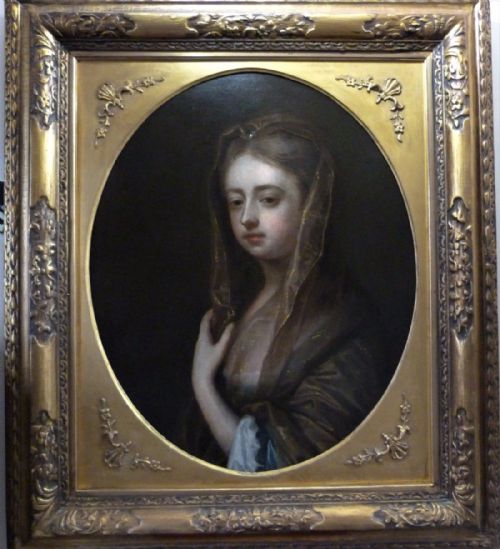

Oval Spandrel Portrait Frame
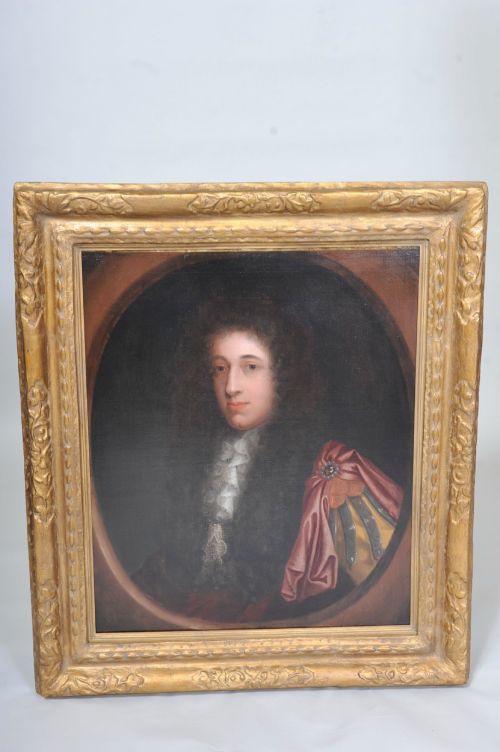
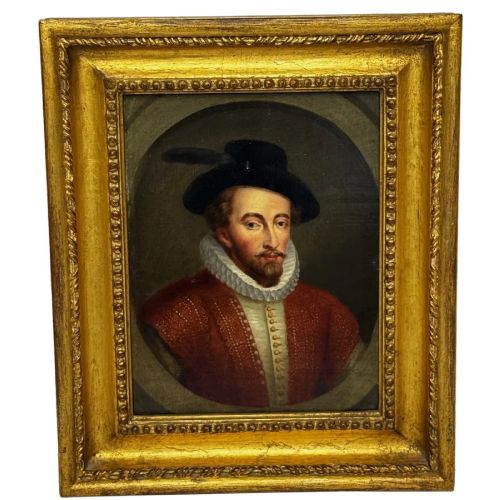
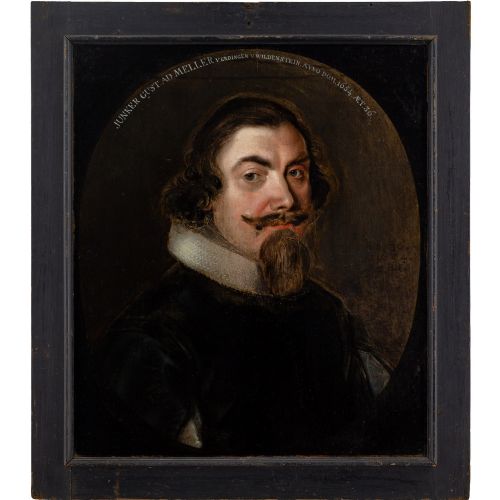
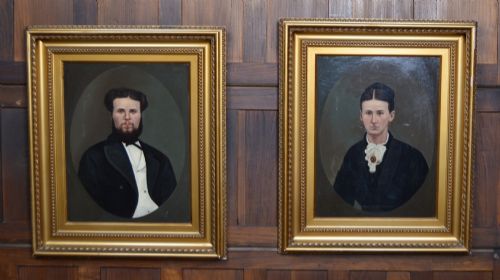
An oval spandrel portrait frame bounds historical likenesses in oil on canvas across the seventeenth and eighteenth centuries.
Oval Spandrel Portrait Frame
An oval spandrel portrait frame encloses oil paintings depicting sitters from the seventeenth century, the eighteenth century, and the Edwardian period. These works encompass British Baroque, Georgian, and German Baroque styles, alongside Renaissance Revival examples.
The objects combine oil paint on canvas with carved or moulded surrounds, presenting subjects ranging from named baronets and ladies to anonymous gentlemen and religious compositions after Raphael. Buyers encounter works from British and German schools, attributed to specific circles or followers of notable portraitists.
Materials and construction
Makers utilised oil on canvas to render portraits, applying paint to stretched textile grounds. These canvases were then housed within surrounds shaped as oval spandrel frames.
Surrounds incorporate giltwood, wood, gold leaf, and gesso. Artisans carved or built up these materials to create the architectural mouldings and decorative corners characteristic of the period.
Styles represented across these portrait frames include British Baroque, Georgian, German Baroque, and Renaissance Revival.
Assessing quality
Quality depends upon the skill of the brushwork within the oil painting and the crispness of the carving in the giltwood or gesso surround. Finer execution in both the portrait and the frame distinguishes superior examples from simpler studio productions.
The depth of provenance and closeness of attribution to established artists or circles elevate specific pieces. Evidence of period materials, such as genuine gold leaf on early wood mouldings, sets certain works apart.
Michael Dahl·Thomas Murray·John Vanderbank·Allan Ramsay·John Riley·Sir Godfrey Kneller·Thomas Hudson·Angelica Kauffman
The Oval Spandrel Portrait Frame Glossary
- Spandrel
- The triangular space between the curved edge of an arch and the rectangular frame enclosing it. In portraiture, it refers to the corners painted or carved around an oval composition.
- Giltwood
- Wood that has been coated with gold leaf or gold paint. This finish provides a reflective, ornate border common in period frames.
- Gesso
- A plaster mixture used as a base for paint or for moulding decorative details on frames. It is applied to wood before gilding.
- Circle of
- A term used when a painting is not by the master's hand but shows the distinct influence and working methods of their immediate studio or followers.
Oval Spandrel Portrait Frame: Frequently Asked Questions
What is an oval spandrel portrait frame?
An oval spandrel portrait frame is an enclosing structure designed to present a painted oval portrait within rectangular dimensions. The spandrels fill the corners between the curve and the edge.
These pieces primarily house oil paintings from the seventeenth and eighteenth centuries. They give historical portraits a distinct architectural boundary.
How do I date these frames?
Dating relies on the construction techniques of the wood and gesso, alongside the style of the oil portrait it holds. Seventeenth and eighteenth-century examples display distinct moulding profiles compared to later revivals.
Examining the canvas preparation and the materials used for gilding also helps determine the period. Comparative study of known portrait circles provides further chronological context.
Where should I hang one?
These portraits suit spaces with traditional interior schemes, mounted at eye level on panelled or painted walls. Adequate wall space allows the giltwood and gesso to catch natural light without competition.
Avoid placing them in areas with high humidity or direct sunlight to protect the canvas and the gold leaf. Stable indoor temperatures preserve both the oil paint and the wooden structure.
Are these works original?
The listings comprise period oil paintings from the seventeenth century onwards, executed on canvas. Many are attributed to specific schools or circles of historical portrait painters.
Materials such as gesso, giltwood, and oil paint reflect the period of creation. Each piece offers a tangible link to historical portraiture traditions.