









Oval Spandrel Gilt Frame
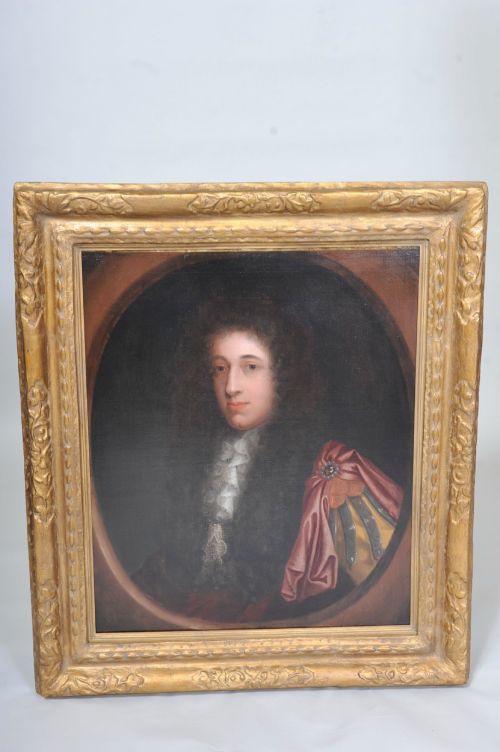
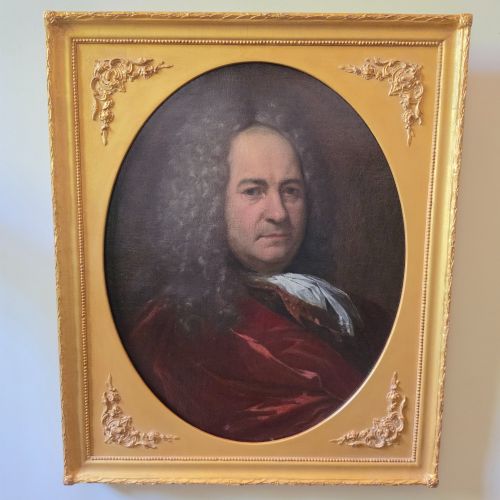
An oval spandrel gilt frame encloses a portrait with carved wooden corners that draw the eye inward to the subject.
Oval Spandrel Gilt Frame
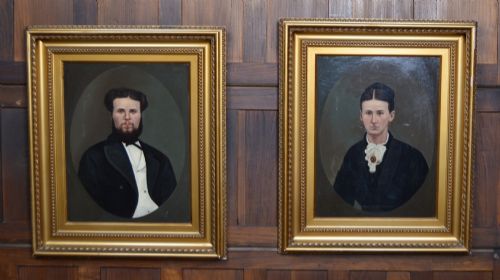
An oval spandrel gilt frame provides a distinctive curved aperture for historical oil paintings, transforming a rectangular canvas into a focused oval composition. These pieces appear predominantly in portraits dating from the seventeenth and eighteenth centuries, housing depictions of gentlemen, ladies, and nobility.
The format uses triangular corner infills, known as spandrels, within a rectangular perimeter to create the illusion of an oval window. Buyers looking at this page encounter British Baroque and Georgian examples that reflect the portraiture conventions of their respective eras.
Makers designed these surrounds to complement oil paintings on canvas, frequently pairing deep moulding profiles with gilded surfaces. The resulting object serves both as a structural support for the artwork and as a decorative wall art piece in its own right.
Materials and Construction
Craftsmen built the core structure from wood, carving the intricate profiles and corner spandrels directly into the timber base. This wooden foundation required stability to support tensioned canvas and layers of preparation without warping over centuries.
Surfaces received an application of gesso, a plaster-like mixture that provided a smooth bed for subsequent gilding. Artisans then applied gold leaf to the prepared ground, burnishing sections to achieve a reflective metallic finish that caught candlelight in period interiors.
Listings span periods from the seventeenth century through the Edwardian era, predominantly featuring oil on canvas portraits housed in giltwood and gesso.
Assessing Quality and Execution
Depth and crispness of the carved detail separate standard mouldings from finer examples, particularly in the execution of the spandrel corners. Superior frames exhibit sharp transitions and well-defined profiles that retain their geometric integrity.
The handling of the gold leaf and the preservation of the underlying gesso layer dictate the visual richness of the surface. Frames retaining their original gilding demonstrate superior material integrity compared to those with later overpainting.
Michael Dahl·Thomas Murray·John Vanderbank·Allan Ramsay·John Riley·Sir Godfrey Kneller·Thomas Hudson·Angelica Kauffman
The Oval Spandrel Gilt Frame Glossary
- Spandrel
- The triangular space between the curved edge of an oval opening and the rectangular outer frame. These corners are typically carved from wood and gilded to match the main moulding.
- Giltwood
- Timber that has been coated with gold leaf over a prepared gesso ground. It provides the signature metallic sheen seen on period frames.
- Gesso
- A fine plaster mixture applied to wood frames to create a smooth surface for gilding. Its application precedes the laying of gold leaf.
- Baroque
- An artistic style spanning the seventeenth and early eighteenth centuries, characterised by ornate detail and dramatic forms. Frames from this period often feature robust, deep profiles.
- Oil on canvas
- A painting technique using pigment suspended in drying oil applied to stretched fabric. This medium constitutes the primary artwork housed within these frames.
Oval Spandrel Gilt Frame: Frequently Asked Questions
What is an oval spandrel gilt frame?
An oval spandrel gilt frame is a wooden wall art enclosure designed to present rectangular oil paintings through a curved oval aperture. The surrounding wooden corners fill the space between the oval opening and the rectangular edge.
These surrounds are most commonly associated with seventeenth and eighteenth-century British portraiture. They combine carved wooden moulding with a gilded surface to highlight the painted subject.
How do I date these frames?
Dating relies on the profile of the wooden moulding, the style of carving in the spandrels, and the physical characteristics of the associated oil painting. Baroque examples from the seventeenth century often feature deeper profiles and bolder carving.
Later Georgian iterations tend to show refined proportions reflecting shifts in interior decoration tastes. Examining the construction of the wooden corners provides further chronological clues.
Can I change the painting inside?
These frames are constructed specifically to house the oil on canvas paintings they currently contain. Altering the contents disturbs the historical relationship between the artwork and its surround.
Collectors generally keep the painting and frame together as a single historical object. The dimensions and spandrel cuts are tailored to the specific canvas format.
How do I care for giltwood?
Giltwood requires a stable indoor environment away from direct sunlight and excessive moisture fluctuations. Dusting should be done gently with a soft, dry brush to protect the delicate gold leaf layer.
Avoid using liquid cleaners or polishes on the gilded surface. Proper placement prevents the underlying gesso and wood from drying out or cracking.