



Oval Silver Gallery Tray
An oval silver gallery tray is a practical serving piece defined by its raised openwork border, built to hold drinks or tea with elegance.
Oval Silver Gallery Tray
When you search for an oval silver gallery tray, you encounter serving pieces designed primarily for tea, cocktails, and decanters. The pieces here span the Victorian, Edwardian, and interwar periods, originating largely from English workshops alongside continental examples.
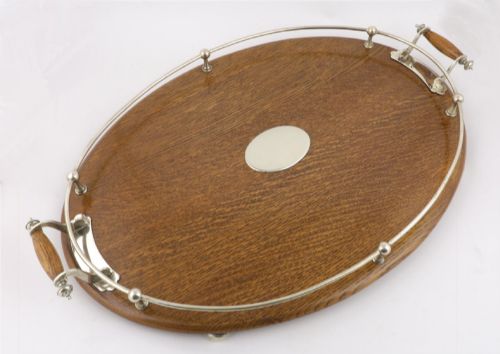
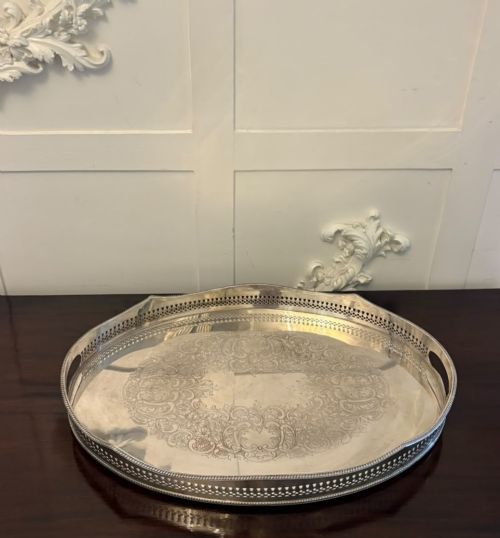
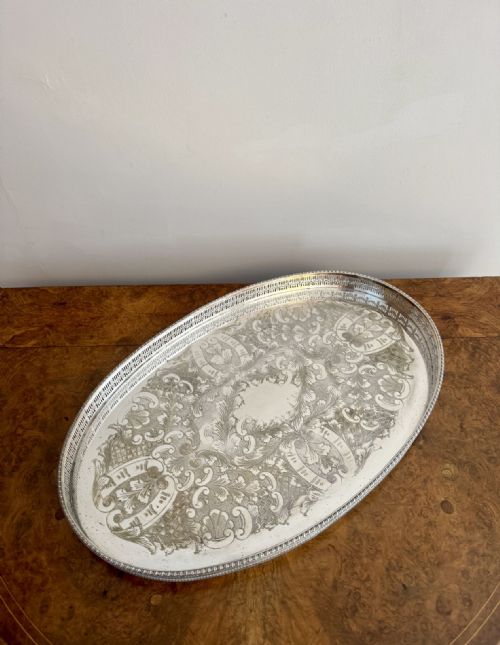
You are most likely to meet silver-plated versions from the Edwardian era, often featuring engraved surfaces and pierced vertical galleries. Oak frames paired with silver plate or sterling mounts also appear frequently among the serving trays and barware.
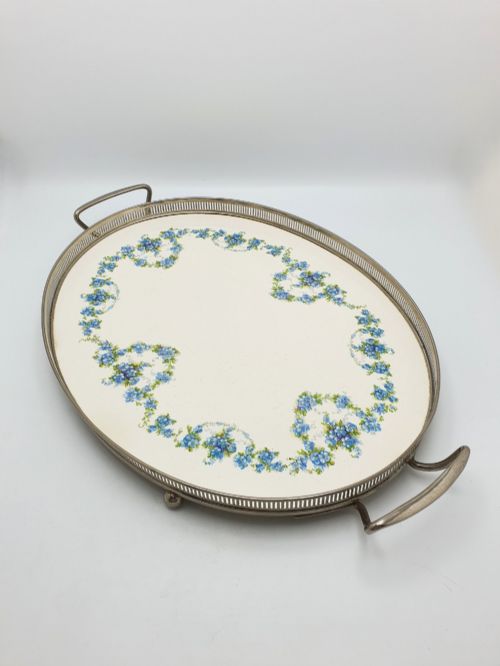
The forms range from compact tea service bases to monumental cocktail trays fitted with sturdy handles. Continental decorative pieces introduce variations such as blue ceramic floral centres within metal mounts.
How they were made
Makers constructed these pieces using silver plate, electroplated nickel silver, and sterling silver applied over base metal foundations. Oak and mahogany served as structural timbers for heavy drinks and bar trays, providing rigid support beneath metal galleries.
Borders were pierced or formed into ball and rail designs, soldered or screwed to the base plates. Engraving, embossing, and applied scrolls decorated the flat central surfaces of the silver plate.
Oval Silver Gallery Tray Retail Price Guide 2026
Typical asking prices for oval silver gallery tray among the pieces listed under this phrase on Sellingantiques today, from the lower quarter to the upper quarter. They describe what is for sale here now, not the wider market.
Some trays feature ball and rail galleries that resemble miniature Victorian balcony fences.
What varies in quality
Quality rests in the weight of the metal and the crispness of the pierced gallery work. Thicker silver plate resists wear over decades of use, while substantial oak frames prevent warping under heavy decanters.
Hand-engraved detail and intricate embossed scrolls distinguish finer workshop production from plainer commercial serving trays. The integration of handles and the rigidity of the gallery rail determine structural endurance.
Mappin & Webb·John Grinsell
The Oval Silver Gallery Tray Glossary
- Gallery
- A raised, pierced or openwork border surrounding the edge of a tray to prevent items from sliding off. These railings are often ornamented with pierced vertical slats or turned balls.
- EPNS
- Electroplated nickel silver, a common base metal composition coated with a thin layer of silver. It formed the durable body of most Edwardian serving pieces.
- Ships style
- A heavy tray design featuring a robust gallery and stable base originally suited for use at sea. These often incorporate sturdy wooden decks with metal railings.
- Pierced
- Cut through metal to create decorative open patterns along the gallery wall. This technique lightens the visual weight of the border.
Oval Silver Gallery Tray: Frequently Asked Questions
How were oval silver gallery trays used originally?
These trays served tea, coffee, and spirits in formal reception rooms and dining spaces. The raised gallery kept decanters and glassware secure while servants carried them.
Larger versions functioned as cocktail or bar trays in Edwardian and interwar homes. Their sturdy handles accommodated heavy service pieces during gatherings.
How do I clean an antique silver plated tray?
Use a soft cloth and a specialised silver polish formulated for plated items. Avoid harsh scrubbing that can thin the silver layer over the base metal.
For trays with wooden bases, take care to keep moisture away from the oak or mahogany panels during cleaning.
What is the difference between Edwardian and Victorian trays?
Victorian examples from the late nineteenth century tend to be monumental and heavily embossed. They often feature dense engraving across the central surface.
Edwardian trays typically display lighter pierced galleries and refined proportions. Oak and silver plate combinations became particularly widespread during this later period.
Can these trays still be used for serving drinks?
Modern owners regularly use them for serving cocktails, cordials, or afternoon tea. The raised galleries remain as functional today as they were in the nineteenth century.
Placing felt pads underneath heavy decanters helps protect the engraved silver surface from daily wear.