



Oval Parlor Table
An oval parlor table brings proportion and presence to a room, offering a softer perimeter than a square or rectangle.
Oval Parlor Table
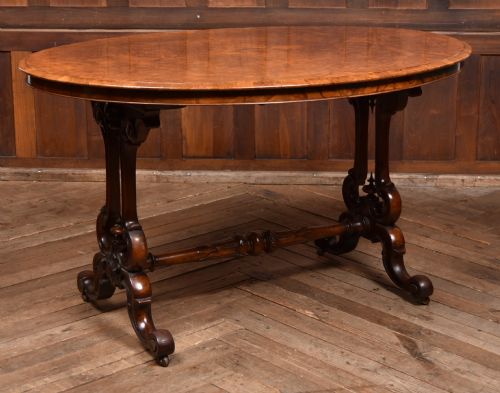
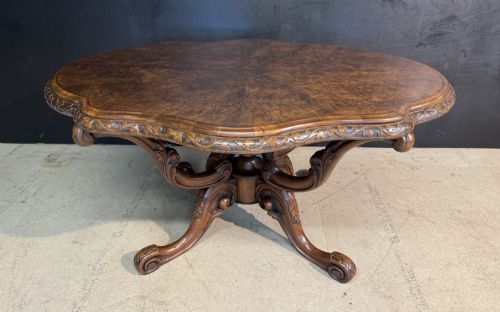
An oval parlor table serves as a focal point in a reception room, frequently appearing as a centre table or an occasional table. These pieces emerge from periods spanning the Victorian era through to the Edwardian years and the early twentieth century.
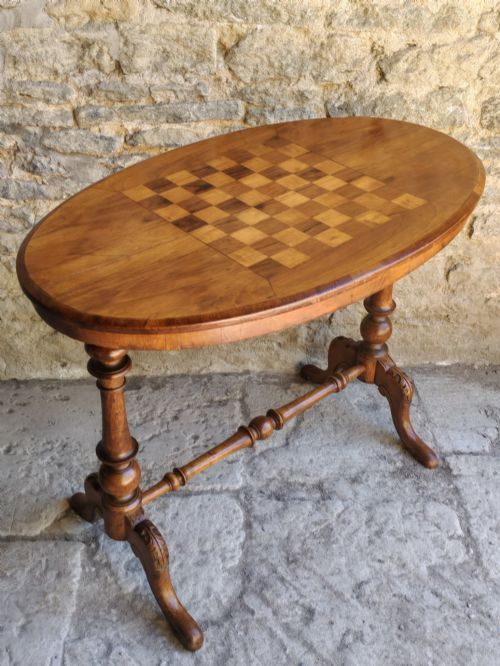
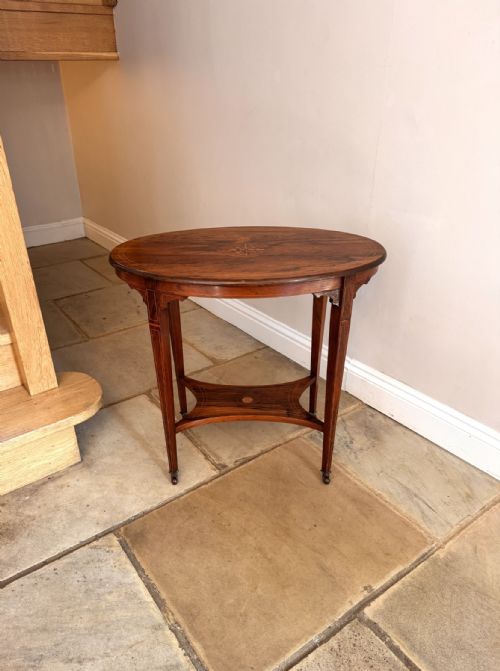
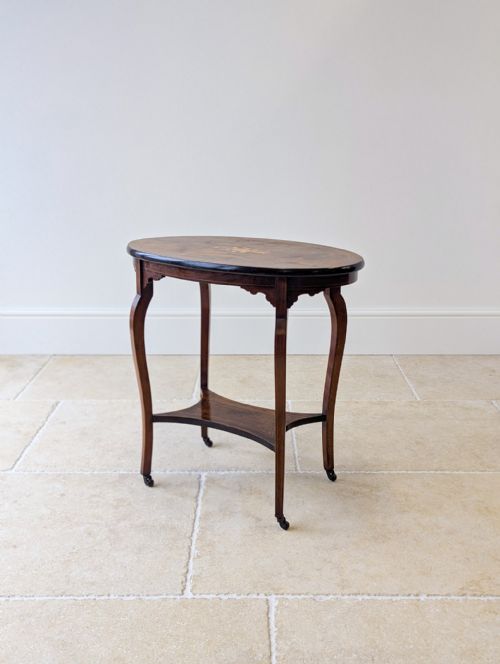
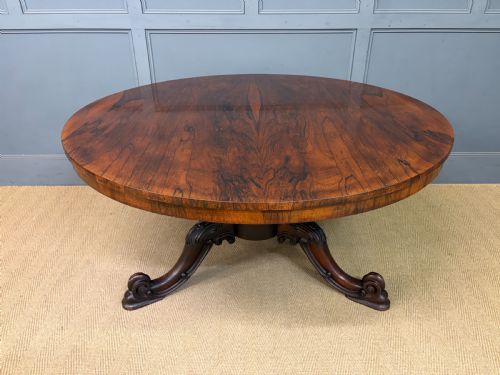
The form encompasses diverse expressions including loo tables, window tables, and tiered occasional tables. Walnut, burr walnut, mahogany, and rosewood dominate the physical evidence across these Victorian and Edwardian examples.
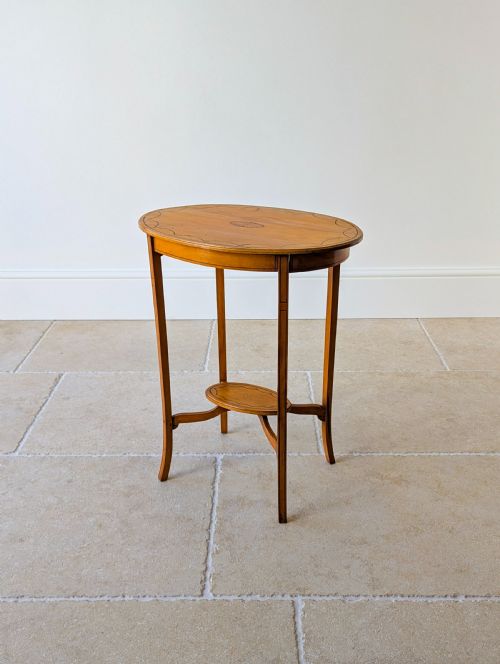
Proportion and scale define the category, with shapes ranging from compact occasional pieces to large freestanding centre tables. Marquetry inlay, boxwood stringing, and hand-carved foliate tops distinguish specific iterations within the broader group.
How an oval parlor table was made
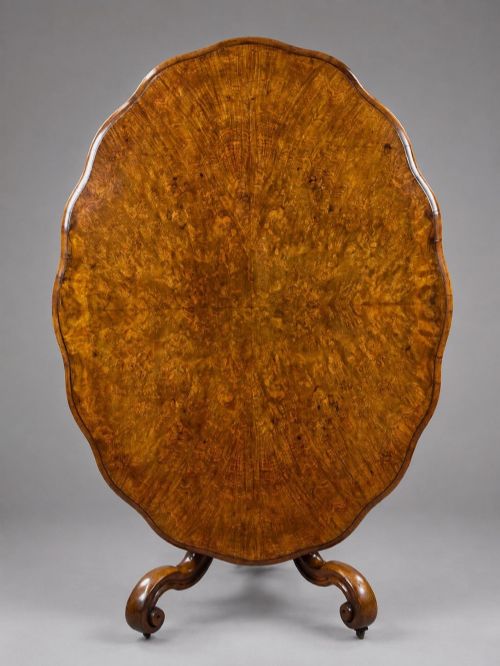
Cabinet makers utilised solid timbers alongside veneers, applying burr walnut and figured walnut to tabletops to create striking grain patterns. Mahogany and rosewood form the structural foundation of numerous examples, supported by intricate boxwood inlay and satinwood banding.
Specialised joinery underpins the construction, from pedestal bases with basket supports to four-legged occasional frames. Inlaid marquetry and contrasting boxwood stringing require precise hand-cutting and fitting into the primary wood surface.
Oval Parlor Table Retail Price Guide 2026
Typical asking prices for oval parlor table among the pieces listed under this phrase on Sellingantiques today, from the lower quarter to the upper quarter. They describe what is for sale here now, not the wider market.
Tilt-top loo tables were cleverly designed to hide against the wall like giant wooden shields when the card game ended.
What varies in quality
The selection of timber grain dictates much of the visual impact, particularly where highly figured burr walnut or rich rosewood is chosen for the top. Subtle variations in the crispness of hand-carved foliate details and the precision of boxwood inlay separate standard examples from finer works.
Structural complexity influences distinction, seen in the transition from simple occasional frames to elaborate freestanding basket bases and multi-tiered tables. The harmony between the turned or carved supports and the shaped oval top determines the overall resolution of the piece.
The Oval Parlor Table Glossary
- Centre table
- A freestanding table designed to be viewed from all sides rather than pushed against a wall. These pieces typically anchor the middle of a Victorian parlor or drawing room.
- Loo table
- A large Victorian tilt-top table originally intended for the card game loo. When not in use, the top could be tilted vertically to save space.
- Occasional table
- A small, light table intended for general use in a reception room. Edwardian examples frequently incorporate multiple tiers for display or storage.
- Burr walnut
- Timber taken from the warted growth on a walnut tree, yielding a highly swirled and mottled grain pattern. Cabinet makers prized this veneer for tabletops.
- Marquetry
- Decorative woodwork in which pieces of tinted wood, satinwood, and boxwood are fitted into a veneer to form pictorial or geometric patterns.
Oval Parlor Table: Frequently Asked Questions
What is an oval parlor table?
An oval parlor table is a nineteenth or early twentieth-century reception room table shaped with curved ends, functioning as a centrepiece or occasional stand.
These pieces reflect Victorian and Edwardian tastes, utilising timbers like walnut, mahogany, and rosewood.
How were loo tables used?
Loo tables served as dining or card tables during Victorian gatherings, particularly for the popular card game of loo.
Their tilt-top mechanism allowed the heavy timber surface to pivot vertically when not in service, saving floor space.
How do I identify an Edwardian table?
Edwardian tables generally date from around 1900 to 1910, often displaying lighter timbers like satinwood and mahogany alongside delicate boxwood stringing.
They frequently take the form of occasional or two-tier tables rather than heavy Victorian pedestal designs.
Where should I place a centre table?
A centre table belongs in the middle of a room as a freestanding object rather than against a perimeter wall.
This placement allows the carved details, figured walnut veneer, or inlaid top to be appreciated from all angles.