
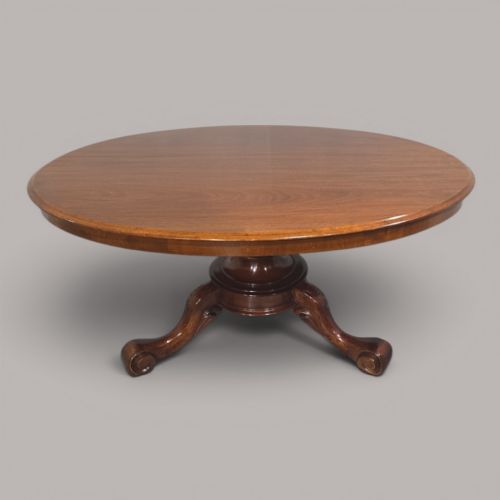
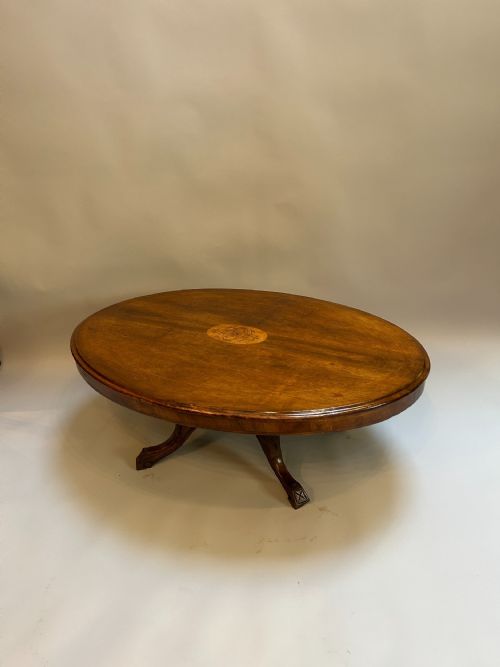


Oval Low Table
An oval low table brings intimate scale and gentle curves to a room, offering practical surface space without dominating the floor plan.
Oval Low Table
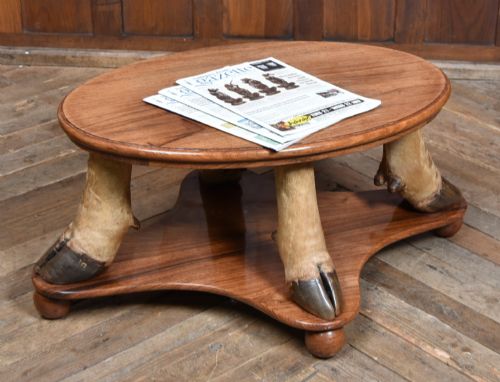
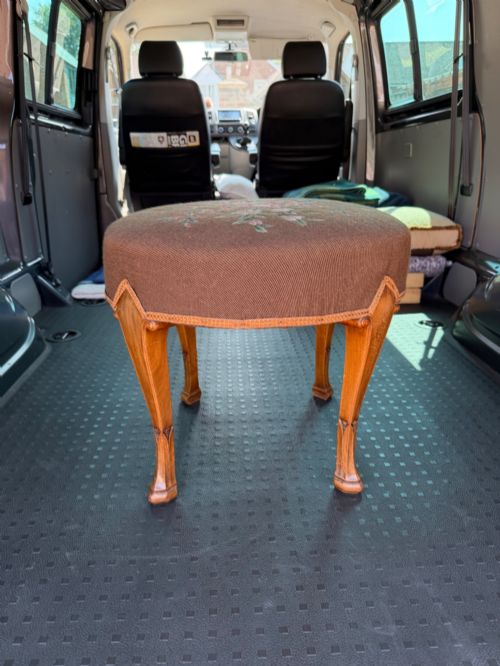
When you search for an oval low table, you encounter a distinct variety of low furniture forms designed for domestic seating areas and reception rooms. The selection encompasses coffee tables, centre tables, occasional tables, and low stools adapted for modern living.
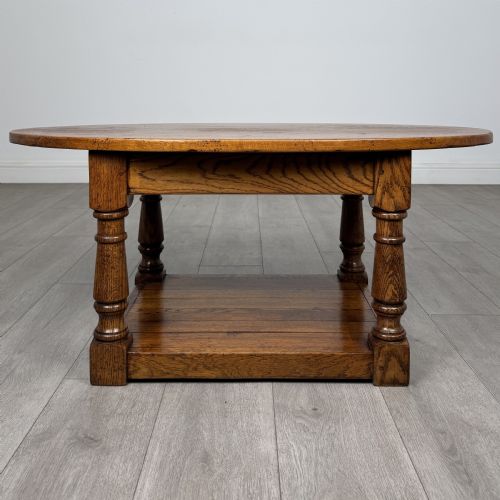
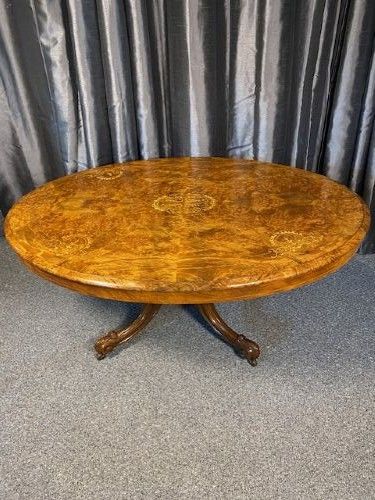
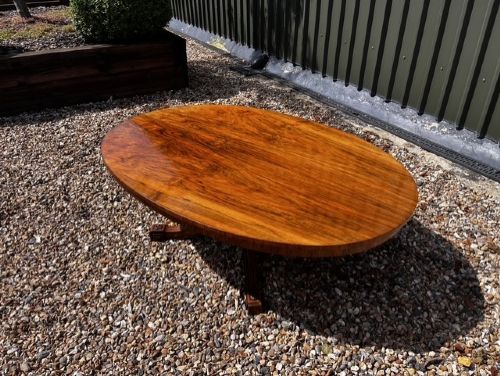
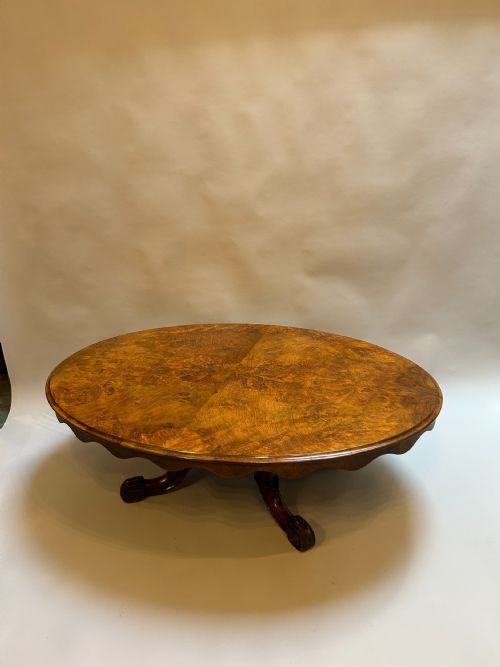
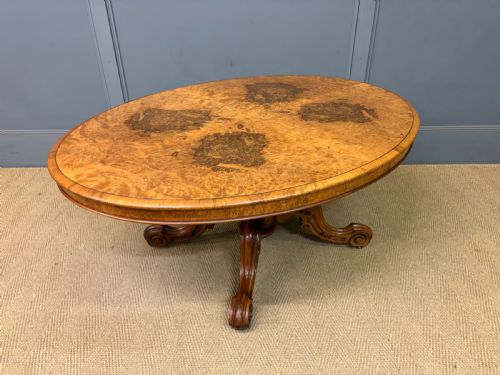
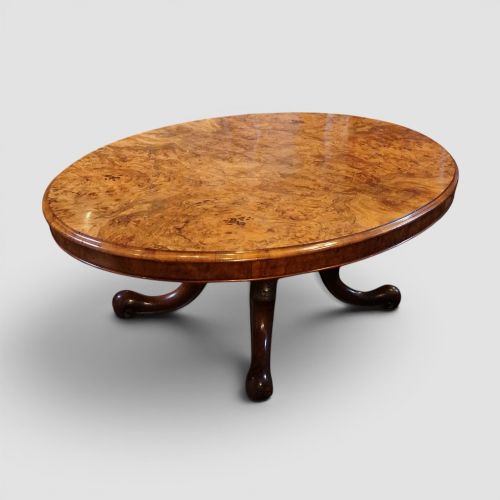
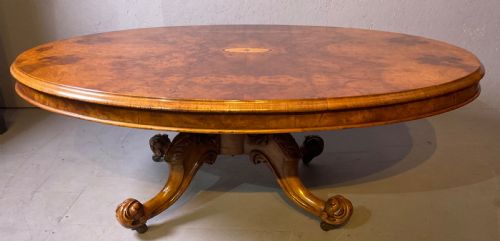
Victorian examples dominate the available pieces, frequently rendered in burr walnut with rich grain patterns and inlaid decoration. Alongside these, early twentieth-century interpretations in mahogany, satinwood, and oak appear regularly across the listings.
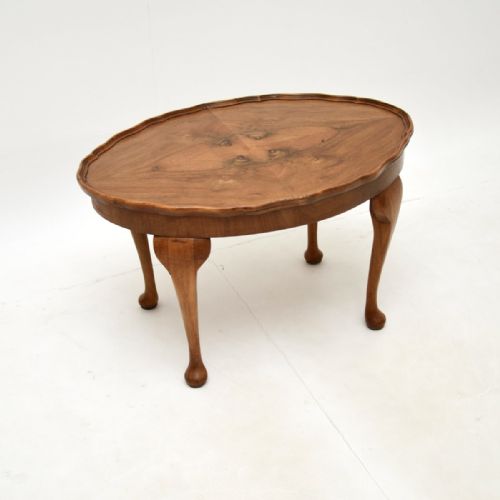
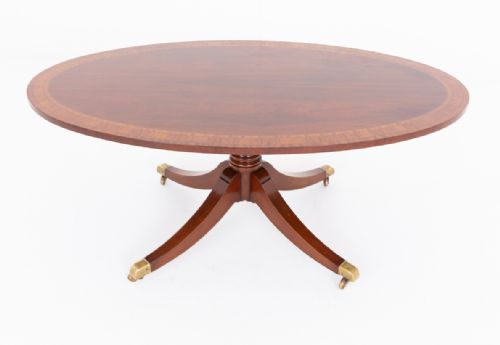
The forms range from traditional four-legged frames and tripod bases to gate-leg designs and marquetry-topped surfaces. Buyers will also find specific stylistic revivals including Sheraton, Queen Anne, and Jacobean influences.
Materials and construction
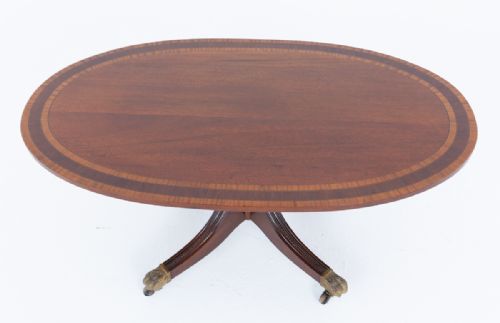
Cabinetmakers relied heavily on figured hardwoods, using burr walnut, flame mahogany, and solid oak for their strength and decorative grain. Inlays of satinwood and delicate wood marquetry provided contrasting borders and central motifs on tabletop surfaces.
Structural integrity relied on traditional joinery, hand-carved wooden bases, and occasional brass mounts or cast-iron tripod supports. French polishing and clear varnishes were applied to protect the timber while enhancing the natural warmth of the walnut and mahogany.
Listings feature pieces spanning from the nineteenth century through the 1930s, utilising walnut, mahogany, oak, and satinwood.
Factors of quality
Excellence in these tables rests upon the selection of timber veneers and the precision of the marquetry inlay. Superior pieces display book-matched burr walnut or finely executed floral motifs that remain crisp and securely seated within the surrounding wood.
Hand-carving on the bases and legs distinguishes workshop-produced furniture from simpler utilitarian items. The stability of the frame and the retention of original surface finishes further divide standard production from exceptional examples.
Holland & Sons Of London·Edwards and Roberts of London
The Oval Low Table Glossary
- Burr walnut
- A prized timber harvested from the wart-like growths on walnut trees, yielding swirling, highly decorative grain patterns. It was favoured by Victorian cabinetmakers for tabletop veneers.
- Marquetry inlay
- The art of applying small pieces of veneer to a structure to form decorative patterns or pictures. Craftsmen used contrasting timbers like satinwood and ebony.
- Pie crust table
- A small table featuring a raised, carved, and scalloped edge resembling pastry work. This decorative moulding was typical of finer period tea and coffee tables.
- Gate-leg table
- A table with hinged drop leaves supported by legs that swing outward like a gate. This design allowed surfaces to be folded down when not in active use.
- Tripod base
- A central pillar support resting upon three radiating feet. It provides steady elevation for circular and oval table tops without cluttering floor space.
Oval Low Table: Frequently Asked Questions
What rooms suit an oval low table?
These tables fit comfortably in front of low sofas or within intimate seating groups where sharp corners would interrupt movement. Their curved profiles soften rigid room layouts.
Lower heights encourage relaxed gathering, making them well suited for living rooms and spacious studies.
How do I identify a Victorian piece?
Victorian examples often feature rich burr walnut veneers, hand-carved wooden bases, or intricate marquetry inlay work. The timber choice and construction weight signal nineteenth-century origin.
Looking beneath the top reveals traditional joinery methods and patination consistent with age.
Are these tables sturdy enough for daily use?
Solid hardwood construction and sturdy frame designs ensure these tables handle everyday living. Timbers like mahogany and oak provide dependable structural strength.
Careful placement and basic maintenance keep the polished surfaces protected against daily wear.
What is the difference between revival styles?
Revival styles draw inspiration from earlier historical periods, such as the curved elegance of Queen Anne or the refined symmetry of Sheraton design. Makers in the nineteenth and twentieth centuries reinterpreted these classic aesthetics for contemporary homes.
Details like tapered legs or specific inlay motifs point directly to the particular revival influence.