


Oval Low Centre Table
An oval low centre table brings low surface utility and rich timber grain to a room, offering an intimate focal point.
Oval Low Centre Table
When searching for an oval low centre table, a buyer looks for low-slung, elliptical surfaces intended for central placement in a reception room. These pieces function primarily as coffee tables or occasional tables, bridging traditional height formats and modern domestic living layouts.
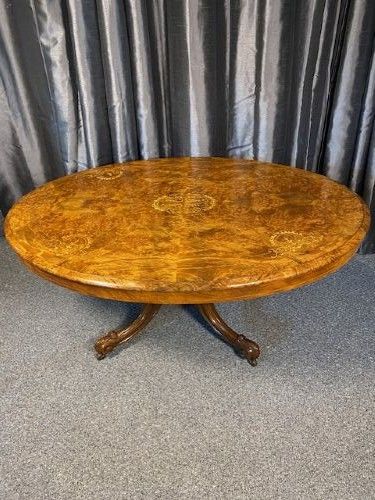
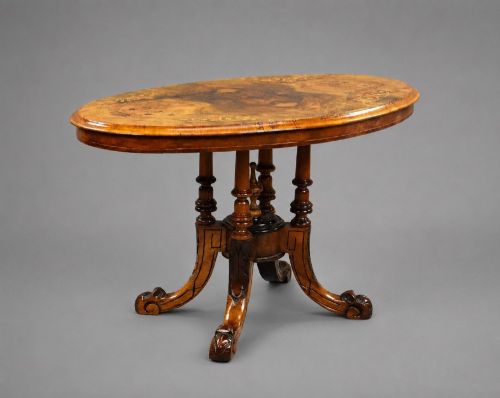
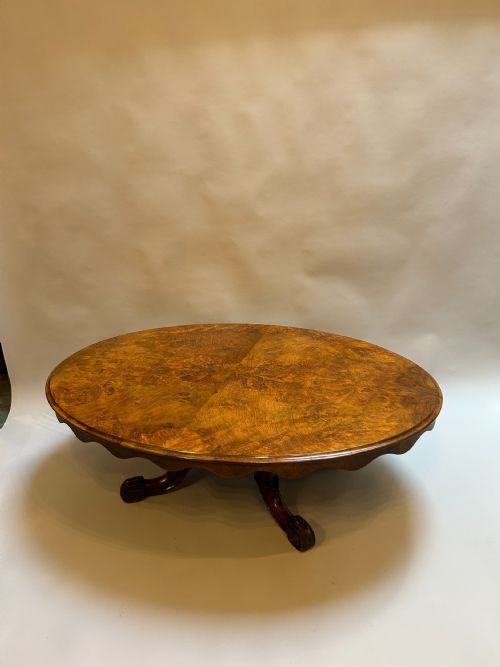
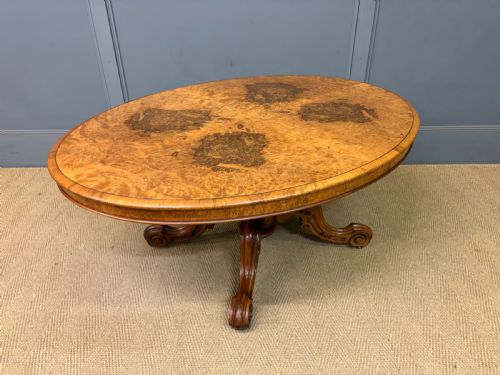
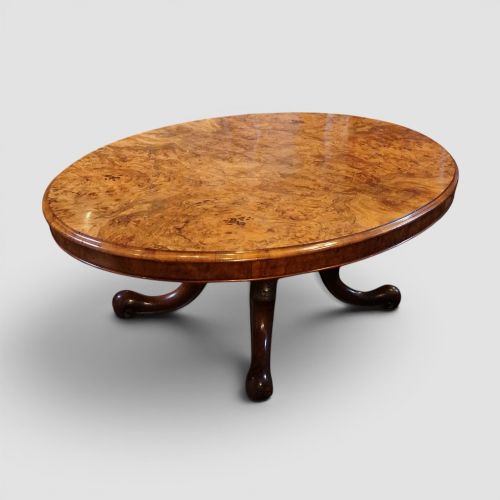
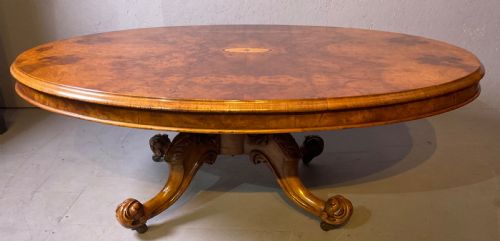
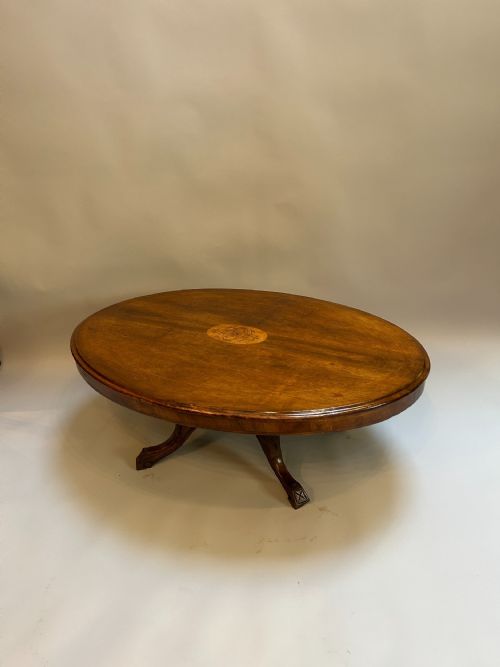
The version most commonly met on this page is the Victorian burr walnut piece, often featuring marquetry or boxwood inlay upon the top. Such tables combine deep timber figures with shaped wooden or altered cast iron supports.
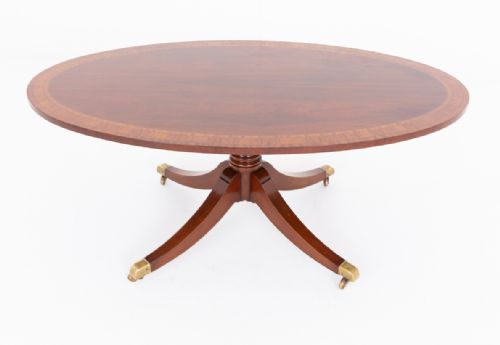
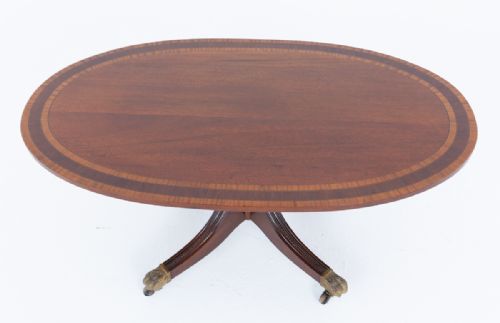
Beyond Victorian examples, the selection reaches into revival styles including Sheraton, Regency, and Louis XVI formats utilising mahogany, satinwood, and oak. Occasional variants introduce carved elements or rattan panels, broadening the range of nineteenth and early twentieth-century domestic furnishings.
Materials and construction
Construction relies heavily on native and exotic timbers, notably burr walnut, flame mahogany, and satinwood selected for pronounced grain patterns. Cabinetmakers applied these decorative veneers over solid timber carcases, often framing the perimeter with contrasting boxwood stringing or intricate marquetry inlay.
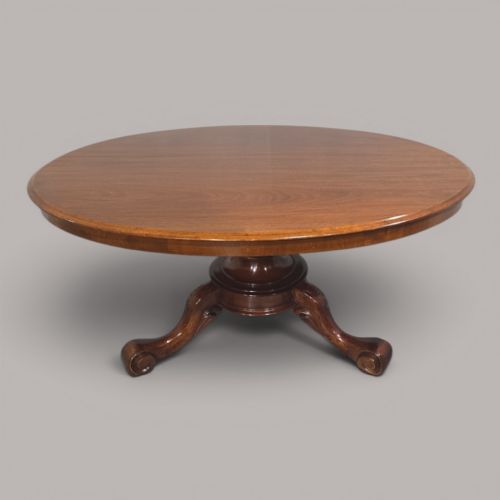
Supporting structures utilise turned wooden pedestals, hand-carved bases, or tripod configurations. Where a piece originates from a later adaptation, metal components such as modern cast iron tripod bases appear beneath period tabletops.
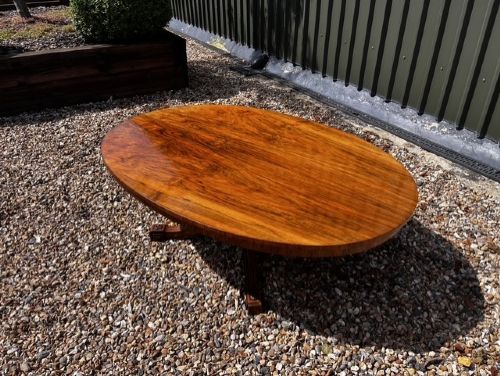
One unexpected table pairs a formal Victorian burr walnut top with a modern cast iron tripod base.
Judgements of quality
Quality separates through the selection and matching of timber veneers, where symmetrical burr walnut or flame mahogany displays superior depth and grain continuity across the oval top. Finer examples exhibit meticulous hand-cut marquetry and crisp boxwood inlay rather than plain surfaces.
Structural integrity and joinery define the lower tiers of the range. Tables possessing substantial hand-carved wooden bases or documented cabinetmaker attribution stand apart from simpler frames or those joined with modern metal supports.
Holland & Sons
The Oval Low Centre Table Glossary
- Burr Walnut
- A figured timber taken from the excrescences of walnut trees, prized for its swirling, highly decorative grain patterns.
- Marquetry
- The art of applying pieces of veneer to a structure to form decorative patterns and pictorial designs.
- Boxwood Inlay
- Fine lines or contrasting segments of pale boxwood embedded into the primary timber surface to create geometric borders.
- Tripod Base
- A three-legged support structure commonly employed beneath pillar tables to ensure stability on uneven floors.
- Sheraton Revival
- A late nineteenth-century design movement inspired by the neoclassical furniture forms of George Sheraton, favouring lighter timbers and delicate inlay.
Oval Low Centre Table: Frequently Asked Questions
What is an oval low centre table used for?
These tables provide a low horizontal surface positioned centrally in a sitting room to hold small objects, books, or drinks. Their rounded elliptical shape avoids sharp corners in busy domestic spaces.
Historically, many examples began life as taller centre tables or occasional tables before being reduced in height to serve modern coffee table requirements.
How do I identify a Victorian walnut table?
Victorian walnut tables generally display rich, dark timber tones with visible grain variation, frequently enhanced by burr walnut veneers across the top. Look for handcrafted elements such as turned pedestals or carved wooden bases.
Many period pieces also incorporate boxwood stringing, marquetry, or inlaid borders that reflect nineteenth-century decorative preferences.
What is Sheraton Revival furniture?
Sheraton Revival pieces date from the late nineteenth or early twentieth century, drawing direct inspiration from the neoclassical designs popular in the eighteenth century. They typically employ lighter hardwoods like satinwood or mahogany.
These items emphasise refined proportions, subtle stringing, and classical symmetry rather than heavy, dark ornamentation.
How should I care for a veneered table?
Veneered surfaces require protection from excessive moisture, direct sunlight, and heat sources that can dry out old timbers or lift historical glue. Regular dusting with a soft, dry cloth preserves the finish without damaging the polish.
Applying occasional appropriate wax helps maintain the lustre of nineteenth-century walnut and mahogany grains.