

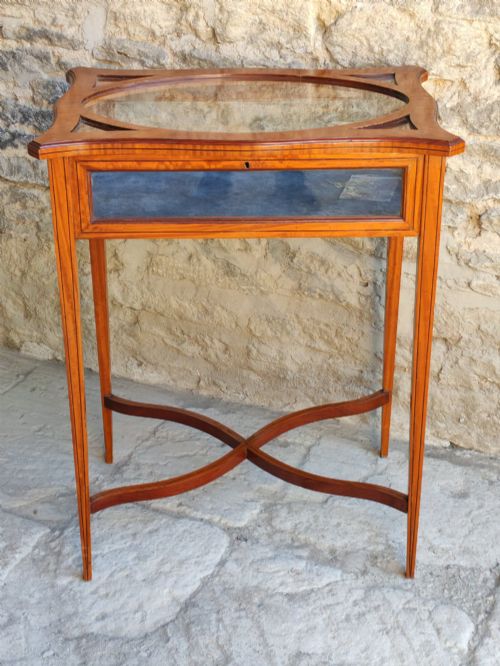
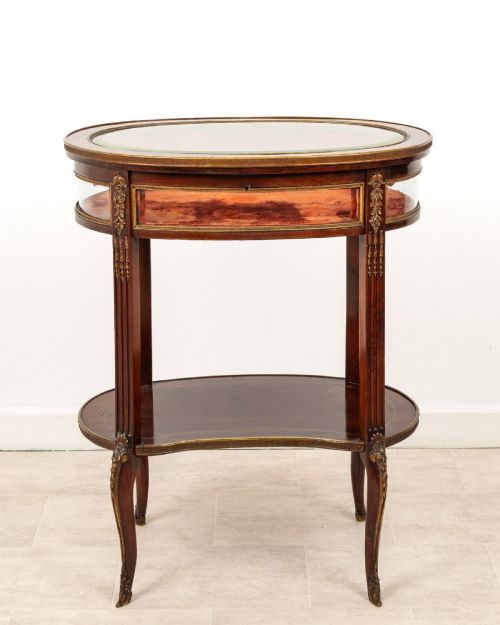


Oval Glazed Display Table
An oval glazed display table puts your collection in clear view, pairing mahogany or satinwood frames with glass tops to show off small treasures.
Oval Glazed Display Table
An oval glazed display table brings together glass-topped furniture designed to exhibit small collections, ornaments, and jewellery within domestic spaces. These pieces span the late nineteenth century into the Edwardian period, drawing on Victorian and French Louis XVI styles.
The most common examples on this page take the form of bijouterie tables and cabinets featuring mahogany or satinwood construction. You will also find walnut pieces and occasional marquetry inlay alongside French mounts and colonial variants.
How they were made
Makers built these tables primarily using mahogany and satinwood, frequently incorporating walnut and detailed marquetry inlay for decorative effect. Glass forms the primary viewing surface across the top and sides to protect the contents while keeping them visible.
Metalwork played a key role in finishing many pieces, with brass and ormolu mounts fitted to edges, legs, and hinges. Fabric linings such as velvet often covered the internal base where collectors laid out their items.
Oval Glazed Display Table Retail Price Guide 2026
Typical asking prices for oval glazed display table among the pieces listed under this phrase on Sellingantiques today, from the lower quarter to the upper quarter. They describe what is for sale here now, not the wider market.
Many of these tables feature velvet-lined interiors that were originally intended to keep delicate trinkets from sliding about when the lid opened.
What varies in quality
The refinement of the woodwork dictates much of the distinction between pieces, particularly where satinwood inlay or intricate marquetry is present. Hand-cut veneers and precise joinery separate standard production from superior cabinet work.
Metal mounts also influence overall standard, with cast ormolu and quality brass fittings showing sharper detail than simpler hardware. The integration of the glass and the stability of the framing determine the success of the construction.
The Oval Glazed Display Table Glossary
- Bijouterie table
- A specialised glazed table designed specifically for displaying small valuable items, trinkets, or jewellery. These pieces lift the collection to eye level while protecting the contents under glass.
- Ormolu
- Gilt bronze mounts applied to furniture for decorative enrichment. This technique is frequently found on French-influenced display tables from the nineteenth century.
- Marquetry
- Decorative woodwork where thin pieces of veneer are fitted together to form geometric or floral patterns. It appears across Edwardian and late nineteenth-century table surfaces.
- Satinwood
- A lustrous timber native to India and Ceylon prized for its pale yellow colour and fine grain. It serves as a primary wood and a contrasting inlay material.
- Vitrine
- A glass-fronted or glass-topped cabinet or table used for exhibiting curiosities. The term often overlaps with display cabinets and bijouterie tables.
Oval Glazed Display Table: Frequently Asked Questions
What is an oval glazed display table?
An oval glazed display table is a piece of furniture featuring a glass top and often glazed sides designed to exhibit small collections, jewellery, and curiosities.
These tables emerged in various forms during the nineteenth and early twentieth centuries, combining practical storage with a clear view of the items inside.
How were these tables used originally?
Originally, these tables served as a parlour showcase where hosts could display their collection of small valuables, medals, or fine trinkets to guests.
The glass top protected delicate items from dust and handling while allowing them to remain visible as a focal point in the room.
How do I date an antique display table?
Dating relies on examining the timber species, construction methods, hardware, and stylistic influences such as Edwardian inlay or French Louis XVI mounts.
Comparing the specific combination of mahogany, satinwood, or ormolu against known periods helps narrow down the decade of manufacture.
Where should I place a display table?
These tables fit well in drawing rooms, hallways, or studies where their glass tops can catch natural light and showcase the items arranged inside.
Keep them away from direct sunlight to protect both the timber finish and any sensitive fabric lining placed at the base.