


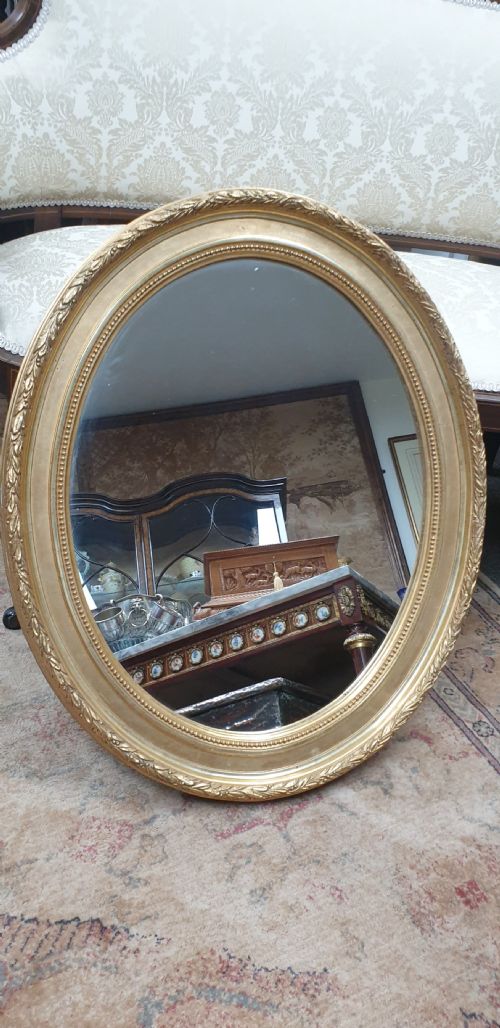

Oval Gilt Accent Mirror
These oval gilt accent mirror examples bring bright reflection and classic proportion to a room, spanning Victorian and Regency revivals.
Oval Gilt Accent Mirror
An oval gilt accent mirror delivers decorative wall presence through polished glass and gilded framing. When searching for an oval gilt accent mirror, a buyer encounters pieces originating from the Victorian era, the Edwardian period, and Regency styles. Wall mirrors dominate the selection, functioning as compact hanging accents or larger decorative room elements.
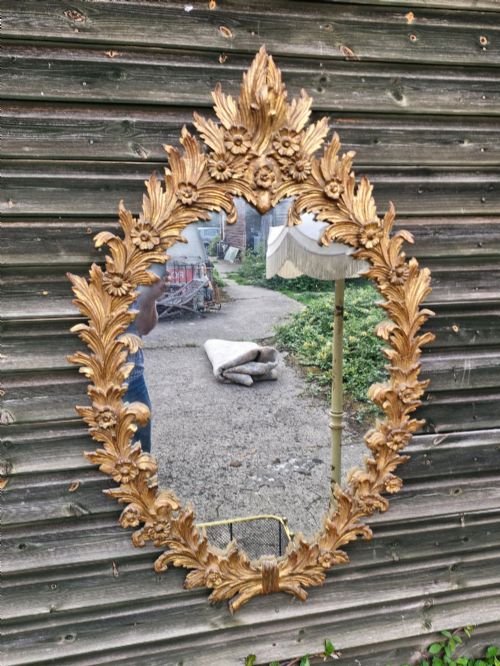
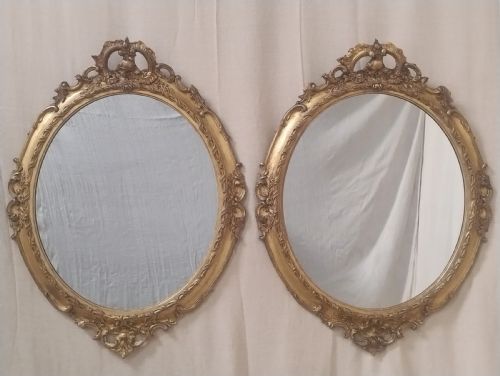
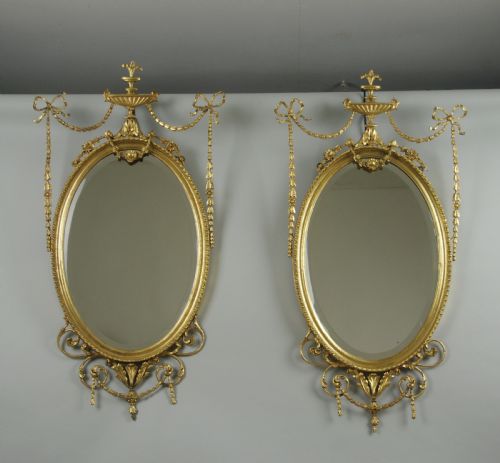
The most common examples on this page are Victorian and Edwardian interpretations, often incorporating Revival aesthetics. French Rococo and Louis XVI influences appear alongside Adam style compositions. These pieces combine reflective glass with ornate wooden or composite frames designed for interior placement.
Materials and construction
Frames rely upon timber, giltwood, and gesso or composition moulded details finished in gold leaf. Carved wooden structures provide the primary support for mirrored glass panels. Gilding techniques apply metallic leaf over prepared grounds to create a luminous surface.
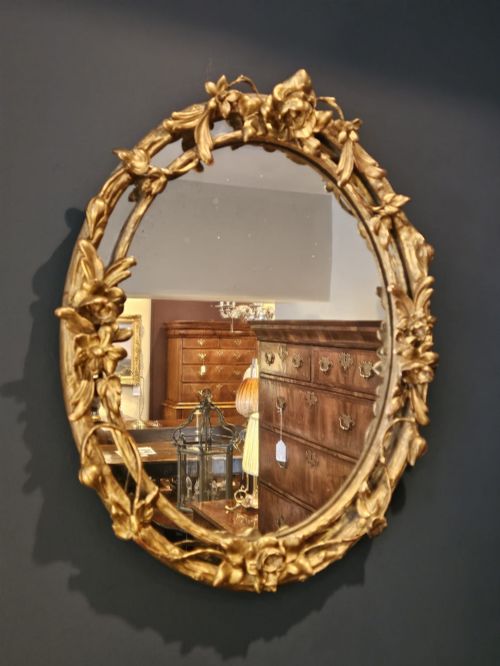
Makers shaped composite materials and plaster to form intricate relief decoration such as ribbons, bows, and vine motifs. Parcel gilt finishes combine exposed mahogany or other wood grains with gilded highlights.
Factors of quality
The crispness of the carved or moulded detail distinguishes finer frames from simpler production. Deeply undercut carving in solid giltwood represents a higher standard than surface-moulded composition work. Preservation of the original gold leaf surface adds significant character.
The clarity and depth of the mirrored glass contribute to the overall standard. Early glass retains subtle imperfections and silvering variations that contrast with uniform modern replacements.
The Oval Gilt Accent Mirror Glossary
- Giltwood
- Wood that has been coated with gold leaf or powder. This finish creates a warm metallic sheen across the frame.
- Gesso
- A plaster-like mixture applied to wooden frames as a base for gilding. It allows craftsmen to carve intricate relief ornaments.
- Composition
- A moulded material made from whiting, resin, and glue. It is pressed into decorative shapes for picture and mirror frames.
- Parcel Gilt
- A decorative treatment where portions of the wood remain visible alongside gilded areas. This technique highlights specific carved details.
- Adam Style
- A neoclassical design vocabulary characterised by symmetrical ornamentation. Motifs often include ribbons, swags, and classical urns.
Oval Gilt Accent Mirror: Frequently Asked Questions
How do I hang an antique oval wall mirror?
These mirrors require secure wall fixings suited to the weight of timber and plaster frames. Professional picture hangers utilise appropriate brackets attached to the structural wall rather than relying solely on decorative rings.
Ensuring the hanging wire or integrated mounts are sound protects the antique frame from accidental strain or falls.
Are these mirrors suitable for bathrooms?
Historic giltwood and gesso surfaces are sensitive to high humidity and moisture fluctuations. Placing them in damp environments risks damaging the delicate gold leaf and underlying composition material.
Dry interior rooms such as hallways, sitting rooms, and bedrooms provide a safer climate for preservation.
What distinguishes Regency style from Victorian mirrors?
Regency design draws heavily on strict classical and neoclassical proportions with restrained ornamentation. Victorian pieces frequently embrace exuberant revivals including Rococo scrolls and heavy floral carving.
Examining the depth of relief work and the specific motifs helps clarify the design period of the piece.