







Oval Embroidery Frame
An oval embroidery frame houses delicate needlework pictures and maps created across the Georgian, Regency, and Victorian eras.
Oval Embroidery Frame
When you search for an oval embroidery frame, you encounter historical textile art set within curved wooden surrounds, ranging from map samplers to pictorial woolwork scenes. These pieces date from the eighteenth century through the nineteenth century, encompassing Georgian and Regency styles alongside later Victorian examples.
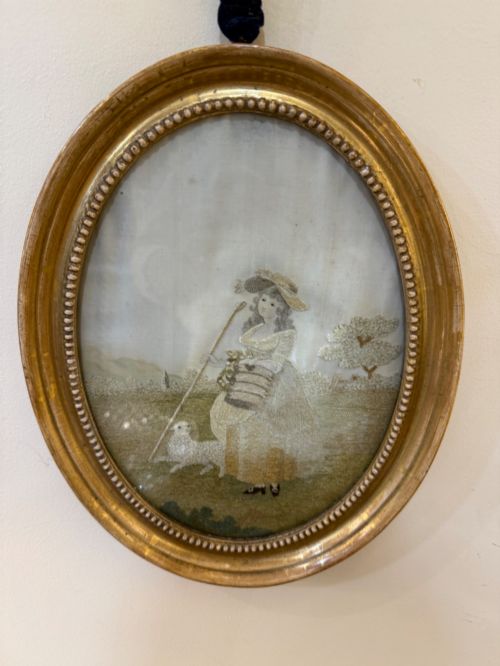
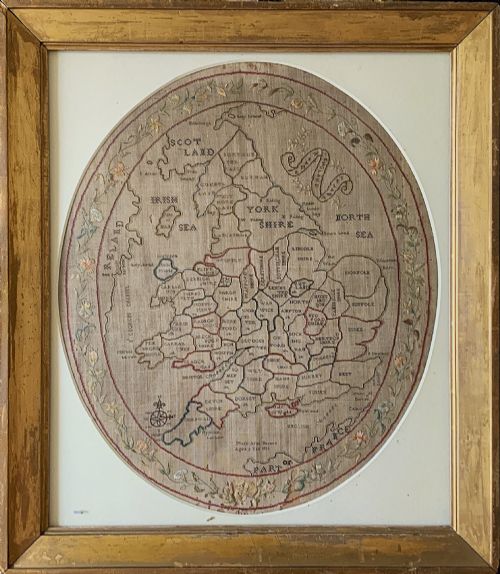
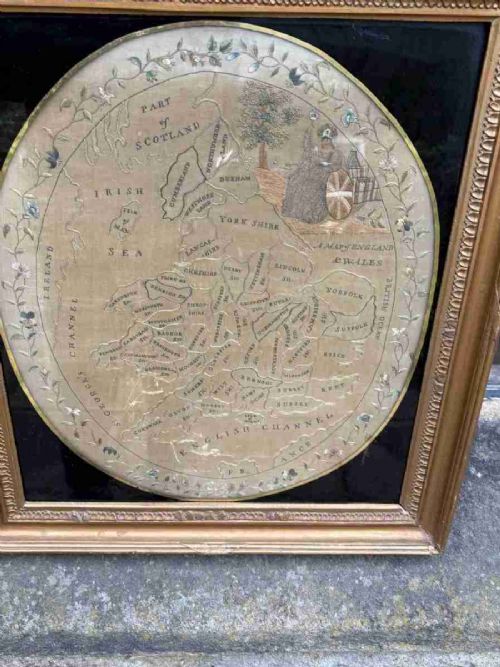
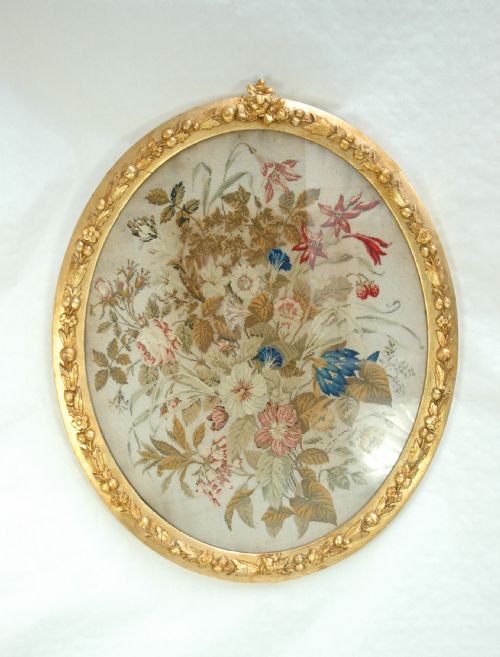
The objects combine fabric creations with protective surrounds, often featuring silk work, woolwork, or needlepoint housed in giltwood frames or glass mounts. Subjects span geographical maps, religious scenes, figures in gardens, and urban views such as Abingdon.
You are most likely to meet Georgian and Regency silk embroideries or woolwork pictures on this page, frequently framed by original gilt wood or black glass borders. The selection also includes map samplers and tapestry pictures reflecting the domestic needlework of past centuries.
How they were made
Maker construction relies on textiles such as silk, wool, linen, and silk thread worked into canvas or fabric grounds to form pictorial or cartographic designs. Artisans executed these pieces using needlepoint, embroidery, and watercolour techniques.
The surrounds employ wood and giltwood, frequently finished with gold leaf or water gilding to accentuate the oval shape. Certain pieces incorporate glass, including verre églomisé frames and mezzotint black glass borders.
Oval Embroidery Frame Retail Price Guide 2026
Typical asking prices for oval embroidery frame among the pieces listed under this phrase on Sellingantiques today, from the lower quarter to the upper quarter. They describe what is for sale here now, not the wider market.
Object forms include needlework samplers, textile art, framed map pictures, and woolwork scenes.
What varies in quality
Quality depends on the crispness of the needlework execution and the preservation of the delicate threads, silk work, and woolwork over time. Superior examples maintain vibrant colouring in the textiles and clean definition in the pictorial or map details.
The surrounding frame contributes significantly to the overall merit, with original gilt wood surrounds, water gilded surfaces, and verre églomisé glass panels elevating the piece above standard replacements.
The Oval Embroidery Frame Glossary
- Verre églomisé
- A process of applying gold or silver leaf to glass along with painting and engraving to create a decorated border. This technique often frames Regency and nineteenth century works.
- Needlepoint
- A type of canvas work embroidery stitched with yarn or thread to form dense pictorial or map designs. It forms the primary medium for many eighteenth and nineteenth century samplers.
- Silk work
- Embroidery executed primarily with silk thread, prized for its lustrous sheen and fine detail. These pieces frequently depict figures, landscapes, or historical subjects.
Oval Embroidery Frame: Frequently Asked Questions
What is an oval embroidery frame?
An oval embroidery frame holds historical textile art, needlework pictures, and map samplers produced during the Georgian and Regency periods.
These pieces combine fabric panels with curved wooden or gilt surrounds, preserving early needlework traditions.
How do I date an oval embroidery frame?
Dating relies upon the style of the needlework, the materials used in the embroidery, and the construction of the surrounding frame.
Georgian and Regency examples typically feature hand-stitched silk work or map samplers housed in original water gilded or black glass borders.
How were these framed textile pictures displayed?
Historical needlework pictures were hung on interior walls as decorative artworks, much like traditional paintings or prints.
The inclusion of glass or verre églomisé borders served to protect the delicate silk and wool threads from dust and light exposure.
What subjects appear in these needlework pictures?
Common subjects include geographical maps, such as maps of England and Wales, alongside religious scenes and pastoral figures.
Other works depict domestic garden settings, local topography, or botanical studies created by skilled makers in past centuries.