

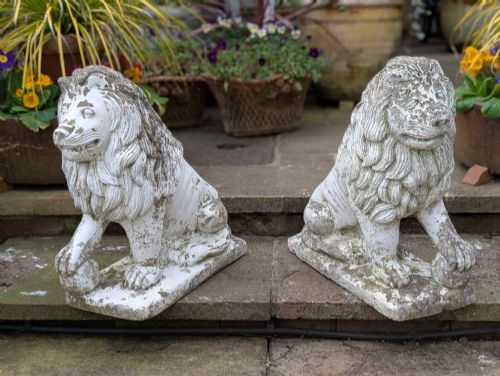
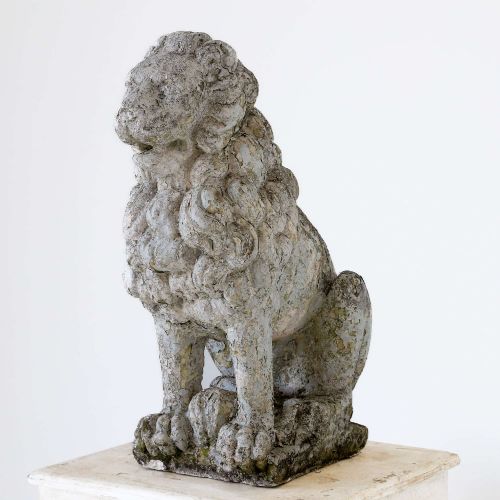


Outdoor Stone Lions
Outdoor stone lions stand sentinel at gates and drives, bringing sculptural weight and classical presence to gardens.
Outdoor Stone Lions
When searching for outdoor stone lions, buyers encounter garden statuary designed to flank entrances, paths, and garden walls. These figures serve both an architectural and decorative role in the landscape, establishing a formal boundary.
The most common examples on this page are pairs of seated or standing stone lions, often supplied with matching plinths. Pieces span various twentieth-century decades as well as the nineteenth century, reflecting enduring classical tastes.
Designs range from standard composite stone guardians to large nineteenth-century Italian marble carvings and terracotta figures. Gate finials and statues form the primary physical types encountered by collectors.
How outdoor stone lions were made
Many pieces are shaped from cast, composite, or reconstituted stone, utilising moulds to achieve consistent anatomical detail. Other examples are carved by hand from solid marble or sandstone, showing the direct intervention of the sculptor's chisel.
Certain traditional items utilise terracotta or salt-glazed pottery fired in large kilns to achieve durability outdoors. Original surface treatments sometimes include early paint layers applied to the stone or terracotta bodies.
Outdoor Stone Lions Retail Price Guide 2026
Typical asking prices for outdoor stone lions among the pieces listed under this phrase on Sellingantiques today, from the lower quarter to the upper quarter. They describe what is for sale here now, not the wider market.
Periods represented span from the nineteenth century through to the 1950s.
What varies in quality
The choice of medium alters the character of the object, with hand-carved marble and nineteenth-century terracotta offering distinct surface textures compared to later composite stone. Scale and proportion also dictate visual impact, particularly for pieces intended as gate finials or large garden guardians.
Hurlford Kilmarnock
The Outdoor Stone Lions Glossary
- Reconstituted Stone
- A manufactured material made from crushed stone or aggregate mixed with a binder to imitate natural stone. It allows for detailed moulding of garden ornaments.
- Gate Finial
- An ornamental architectural element placed on top of a gatepost or pier. These pieces often take the form of lions or urns.
- Terracotta
- A fired clay ceramic material used for garden statues and architectural elements. It develops a distinct warm reddish hue and patination over time outdoors.
- Neoclassical
- A style drawing inspiration from the classical art and culture of ancient Greece and Rome. This aesthetic heavily influences nineteenth-century garden statuary.
- Composite Stone
- A durable building material formed from stone dust and binding agents. It provides a robust alternative to carved masonry for exterior placement.
Outdoor Stone Lions: Frequently Asked Questions
Where should I place outdoor stone lions?
These figures find their traditional home flanking entrance gates, driveways, or terrace steps where they act as visual guardians.
Positioning them on stone plinths elevates their height and protects the base from damp soil and lawn maintenance equipment.
How do I clean stone garden lions?
Gentle washing with water and a soft brush removes dirt and organic growth without damaging the surface patination.
Avoid harsh pressure washers and chemical acidic cleaners that can erode composite stone, terracotta, or carved marble details.
Are outdoor stone lions frost resistant?
Most solid stone, cast stone, and salt-glazed pottery handle winter weather well if they sit above standing water.
Items made from porous materials benefit from being raised slightly off the ground during freezing periods to prevent cracking.
How do I distinguish nineteenth-century pieces?
Nineteenth-century examples often display deep weathering, hand-chiselled tool marks, or heavier terracotta bodies compared to twentieth-century alternatives.
Stylistic cues such as Neoclassical proportions and older surface paints help differentiate earlier items from modern reproductions.