



Outdoor Side Table
An outdoor side table brings enduring character to a terrace or garden, offering a practical surface shaped by 19th-century and Edwardian craftsmanship.
Outdoor Side Table
An outdoor side table encompasses a practical range of garden tables, bistro tables, console tables, and plant stands designed for exterior or conservatory use. When searching for an outdoor side table, buyers encounter durable forms originating from the 19th century, the Victorian and Edwardian eras, and the year 1920.
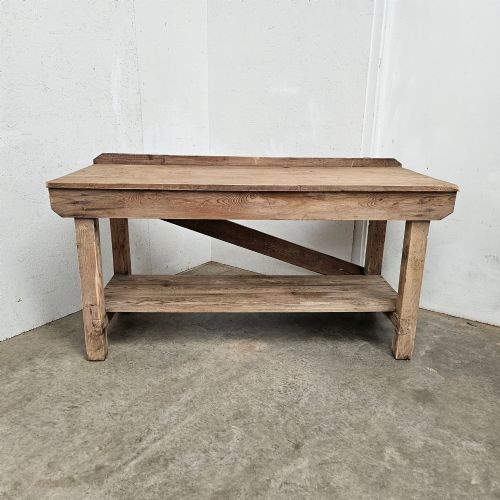
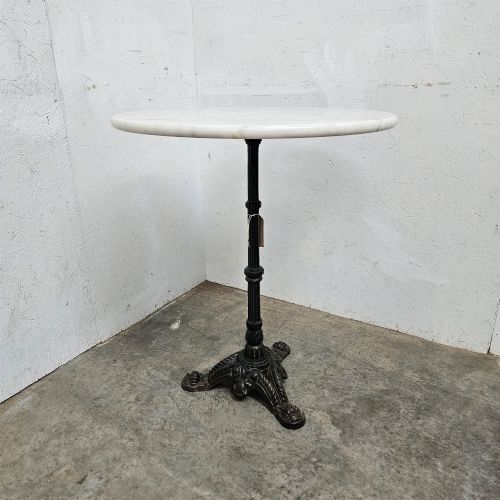
The most common versions on this page pair robust metal bases with fitted stone surfaces, reflecting French bistro traditions and domestic British garden architecture. Alongside these, utilitarian pine potting tables and folding garden tables provide functional utility for outdoor spaces.
How they were made
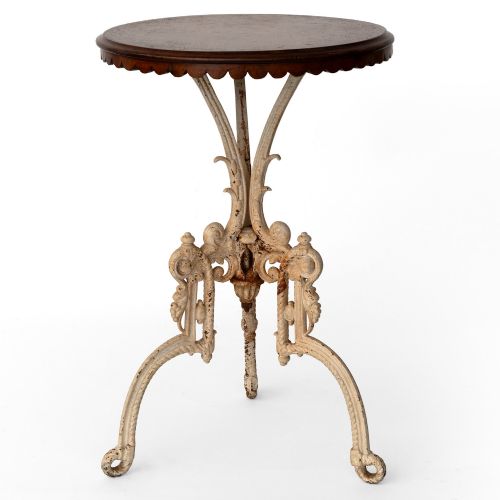
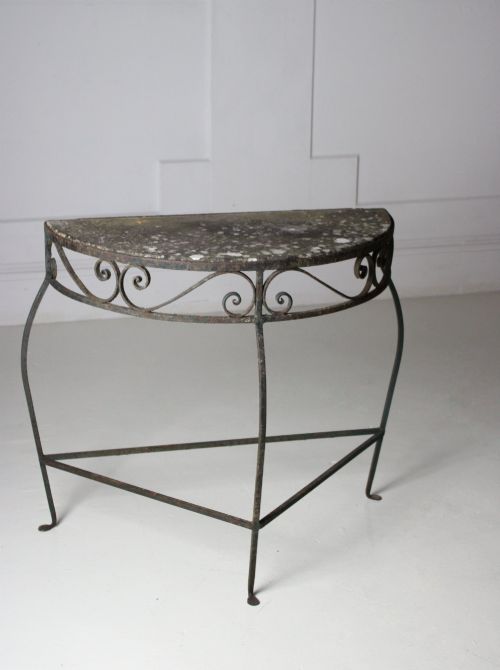
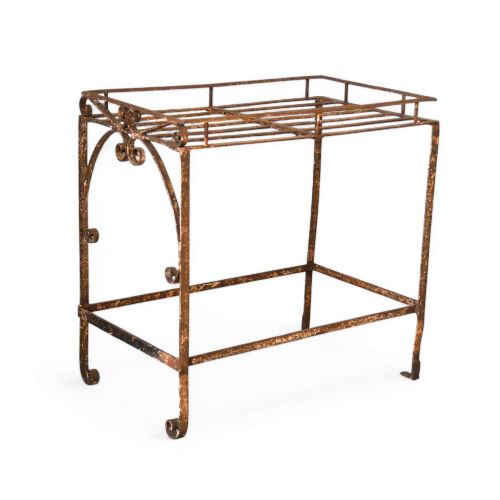
Makers constructed the structural bases of these pieces using cast iron, wrought iron, and steel, frequently employing heavy casting techniques to ensure stability in open air. Wrought iron elements show hand-forged scrollwork and strapp work, while cast iron frames incorporate decorative openwork patterns.
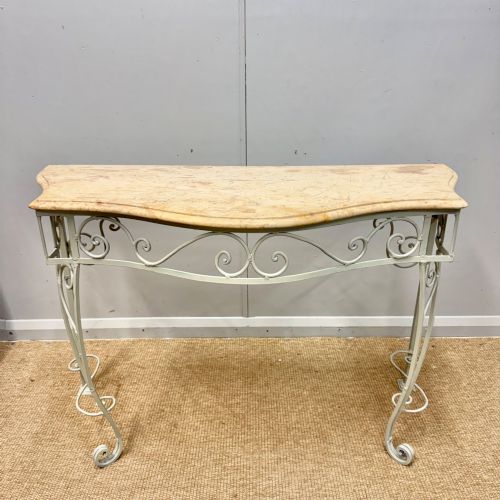
Table surfaces rely on contrasting materials, utilising smooth white marble slabs or solid pine boards secured to the metal frames. Estate-made pieces and industrial designs use sturdy timber and functional bracing to withstand heavy outdoor use.
Outdoor Side Table Retail Price Guide 2026
Typical asking prices for outdoor side table among the pieces listed under this phrase on Sellingantiques today, from the lower quarter to the upper quarter. They describe what is for sale here now, not the wider market.
Listings span the 19th century, the Victorian and Edwardian eras, and 1920, incorporating cast iron, marble, wrought iron, pine, brass, steel, and wood.
What varies in quality
The refinement of the base casting or hand-forged ironwork sets the upper tier of pieces apart from simpler utility tables. Crisp detailing in the iron scrollwork and substantial weight indicate superior workshop production.
The selection and thickness of the marble top or pine board also define quality, with heavier stone slabs and fine edge-profiling marking the distinction between standard garden furniture and finer conservatory pieces.
The Outdoor Side Table Glossary
- Cast Iron
- An iron-carbon alloy poured into moulds to create rigid, highly decorative frames and pub table bases. This technique allowed Victorian makers to produce intricate, repeating patterns with great structural strength.
- Wrought Iron
- Iron heated and hammered by hand into bespoke shapes and structural supports. This labour-intensive process results in durable garden tables featuring distinctive organic curves and scrollwork.
- Marble
- A metamorphic rock prized for smooth, cool surfaces resistant to weathering on console and bistro tables. White marble tops add a classical, refined contrast to dark iron bases.
- Potting Table
- A utilitarian wooden work table designed for gardening tasks, typically featuring a lower shelf for pots and tools. Pine versions bridge the gap between practical horticulture and rustic garden decoration.
Outdoor Side Table: Frequently Asked Questions
Can I leave my outdoor side table outside all year?
Most pieces feature weather-resistant iron or steel bases combined with stone or timber tops designed for exterior environments. However, harsh winter conditions can affect wooden surfaces and vulnerable joints.
Storing tables in a sheltered conservatory or shed during the coldest months helps preserve the materials. Regular cleaning prevents moisture buildup and protects the integrity of the ironwork.
How do I clean a marble top outdoor table?
Marble surfaces require gentle cleaning with mild soap and warm water to remove seasonal dirt and organic debris. Avoid harsh chemical cleaners that can etch or dull the polished stone finish.
Dry the surface thoroughly after washing to prevent water spotting. Applying a suitable stone sealer periodically helps protect the marble from outdoor staining.
Are these tables heavy to move around?
Many examples incorporate solid cast iron bases and thick marble slabs, which provide substantial weight to prevent tipping in the wind. This heavy construction makes them remarkably stable on uneven garden lawns or stone patios.
Lighter folding metal designs and pine potting tables offer easier portability for changing garden layouts. Two people are often needed to safely relocate heavy marble and iron console tables.
How do I identify a Victorian garden table?
Victorian pieces frequently display distinct foundry marks, heavy cast iron scrollwork, or traditional pub table engineering like the Britannia design. These tables often combine robust metalwork with classical revival motifs popular in the 19th century.
Examining the underside of the tabletop and the casting seams reveals period manufacturing methods. Edwardian and later 1920s examples often shift towards simpler lines or folding mechanisms.