



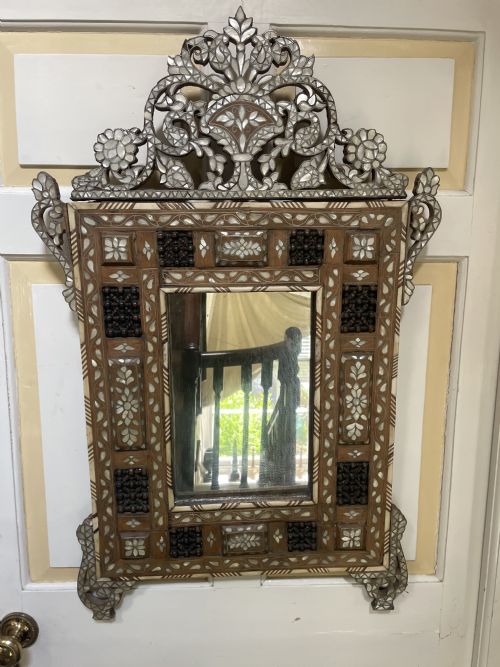

Ottoman Mother of Pearl Frame
These ottoman mother of pearl frame examples bring intricate Near Eastern joinery and shimmering nacre to a room.
Ottoman Mother of Pearl Frame
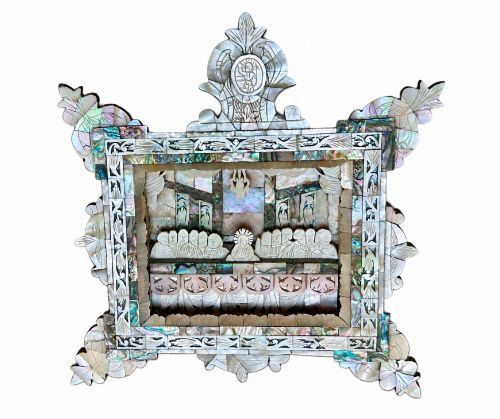
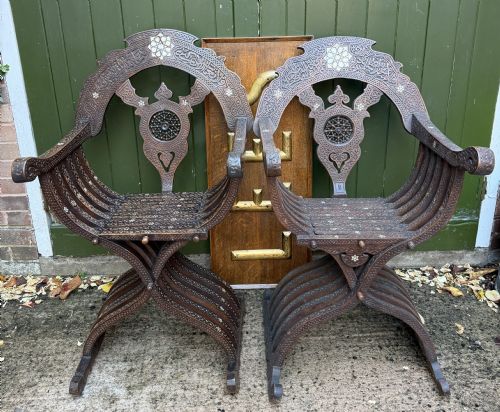
When you search for an ottoman mother of pearl frame, you encounter items shaped by Syrian, Levantine, and Islamic Revival traditions from the late nineteenth century and the early decades of the twentieth century. The selection commonly includes wall mirrors and folding chairs, alongside occasional devotional art pieces such as the Jerusalem Last Supper diorama plaque.
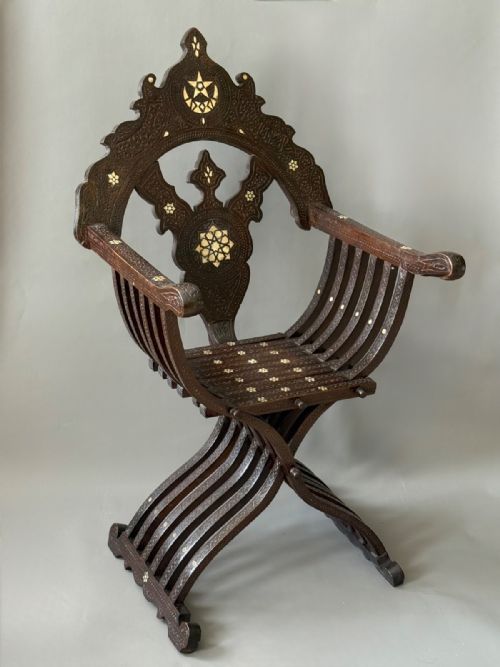
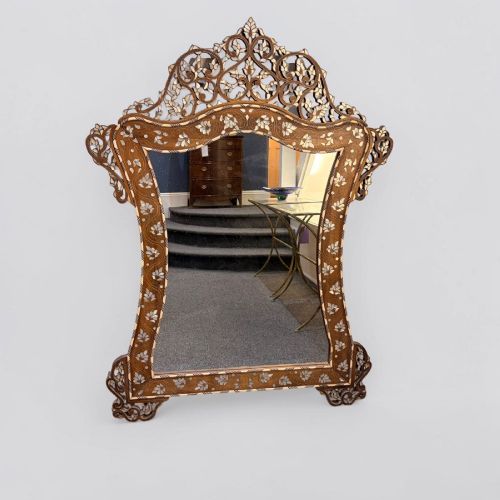
The forms span from Savonarola and X-frame armchairs to rectilinear and geometric wall mirrors constructed in walnut, fruitwood, and general hardwood. These objects reflect regional craftsmanship through dense shell inlay work, combining geometric precision with organic material.
You are most likely to meet wall mirrors and folding chairs featuring intricate mosaic patterns of shell set into dark timbers. The pieces range from straightforward Islamic influenced mirror designs to elaborate Syrian Damascus creations.
How they were made
The construction relies on hardwoods such as walnut and fruitwood, shaped into folding chair frames and rigid wall mirror surrounds. Timber components receive precise mortise and tenon joinery to support the weight of the decorative surface elements.
Surfaces are extensively inlaid with mother of pearl, abalone shell, nacre-shell, and occasional bone pieces. Artisans cut these luminous marine materials into tiny geometric polygons and set them meticulously into carved channels within the wood.
Ottoman Mother of Pearl Frame Retail Price Guide 2026
Typical asking prices for ottoman mother of pearl frame among the pieces listed under this phrase on Sellingantiques today, from the lower quarter to the upper quarter. They describe what is for sale here now, not the wider market.
Even a folding chair needs to look like a throne when it is wearing a coat of shimmering nacre.
What varies in quality
Quality depends upon the density and precision of the mosaic inlay work across the timber surface. Finer examples display tightly fitted shell tesserae with minimal filler material between the individual pieces of nacre.
The depth and complexity of the underlying woodwork also distinguish the tiers of production. Carved fruitwood or walnut with deeply articulated relief work and well-balanced proportions sits above simpler, sparsely decorated boards.
The Ottoman Mother of Pearl Frame Glossary
- Nacre
- The iridescent internal layer of mollusc shells, commonly known as mother of pearl. This material forms the primary shimmering inlay seen across Syrian and Ottoman woodwork.
- Abalone shell
- A marine mollusc shell yielding highly colourful, deep blue and green iridescent tones. It appears alongside standard mother of pearl in specific decorative highlights.
- Savonarola chair
- A type of X-frame folding chair constructed from multiple curved wooden slats. This form originated in the Italian Renaissance but was adopted by Near Eastern workshops utilising dense shell inlay.
- Diorama
- A three-dimensional scene housed within a framed enclosure. The evidence includes devotional folk art examples depicting subjects like the Last Supper.
- Fruitwood
- Dense timber sourced from fruit-bearing trees such as pear or apple. Makers favoured this smooth wood for detailed carving and secure inlay seating.
Ottoman Mother of Pearl Frame: Frequently Asked Questions
What are these frames made of?
The pieces utilise dense timbers such as walnut, fruitwood, and general hardwood as a structural base. These wooden frames are heavily ornamented with inlaid mother of pearl, abalone shell, and occasional bone.
Artisans carved channels into the timber to receive thousands of individually shaped pieces of shimmering nacre, creating intricate geometric mosaic patterns across mirrors and chairs.
How do I date an ottoman mother of pearl frame?
Dating relies on examining the timber construction, the style of the carving, and the characteristics of the shell inlay. The examples seen span the late nineteenth century through to the 1920s, encompassing Syrian Revival and Islamic Revival movements.
Earlier nineteenth-century pieces often feature heavier X-frame or Savonarola chair constructions, while later twentieth-century items include wall mirrors with refined Damascus style patterns.
How were these items used originally?
Folding chairs and armchairs served as functional seating within Levantine and Ottoman domestic interiors, often designed to be easily moved or stored. Wall mirrors functioned as decorative interior furnishings to reflect light in reception rooms.
Specific devotional pieces, such as the Jerusalem diorama plaque, were created as religious art objects for display in homes or commemorative settings.
How do I care for mother of pearl inlay?
Maintain stable humidity and temperature levels in the room to prevent the timber substrate from expanding or contracting. This stability stops the individual pieces of shell inlay from loosening within their channels.
Clean the surface gently with a dry, soft cloth to remove dust without introducing moisture that could harm the old wood and adhesive bonds.