



Ornithological Artwork
These pieces of ornithological artwork capture birds with scientific precision and painterly skill, offering buyers a window into natural history through framed watercolours, prints and engravings.
Ornithological Artwork
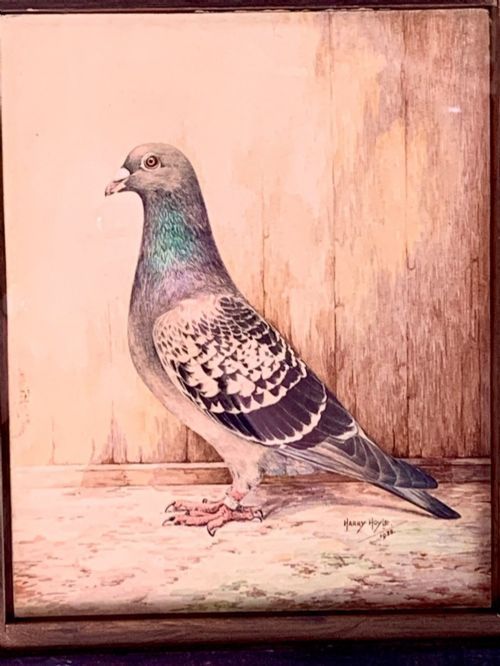
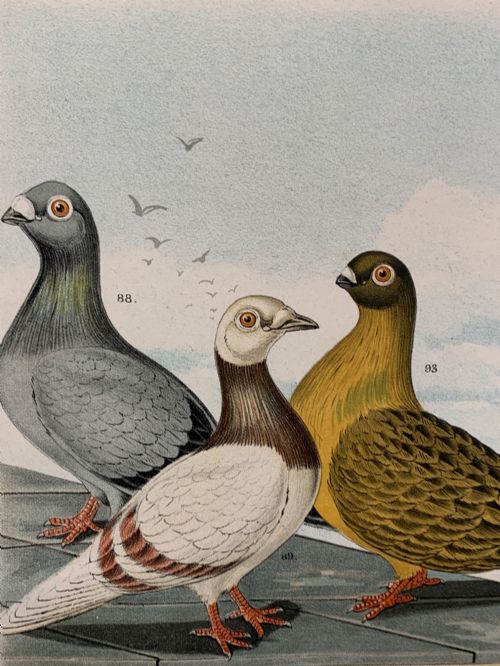
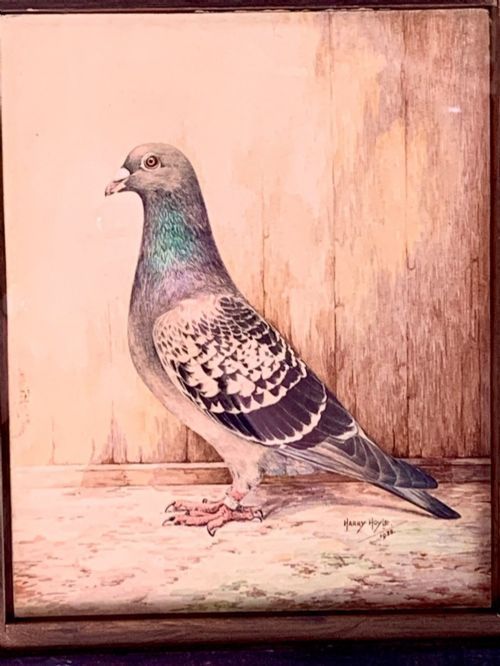
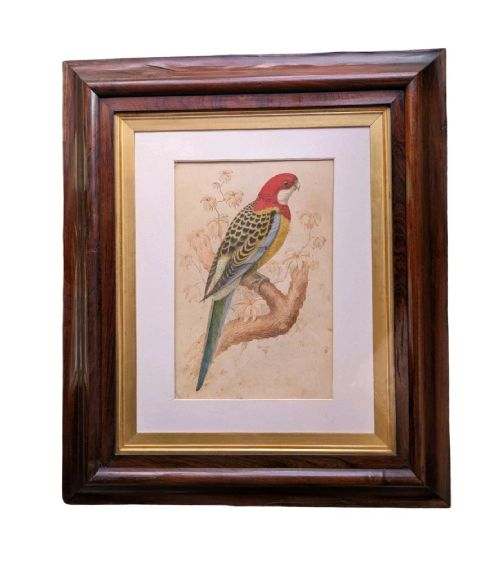
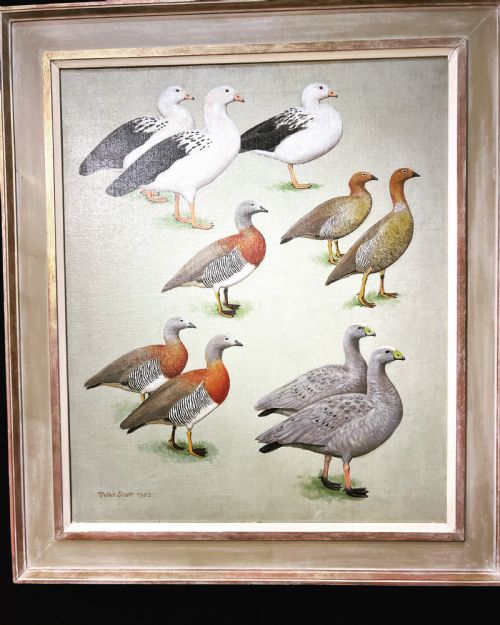
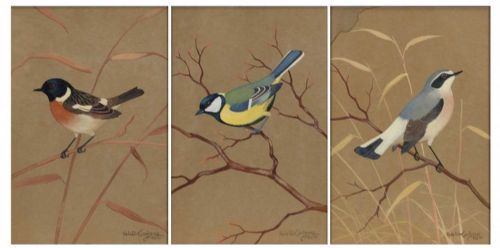
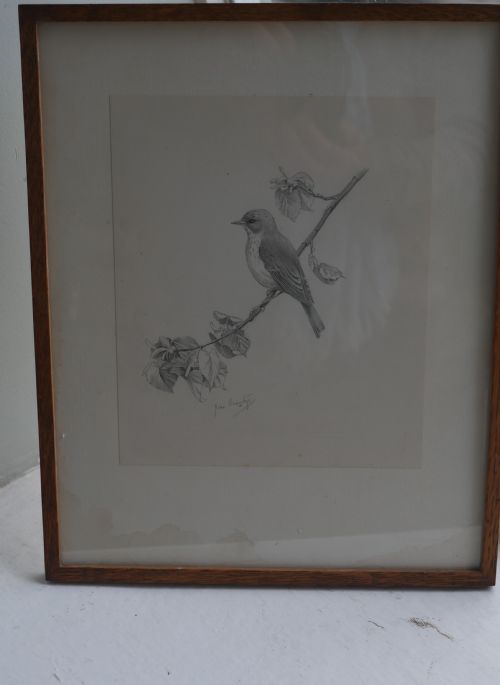
Ornithological artwork brings together centuries of observation, rendering birds in watercolours, pencil drawings and hand-coloured lithographs across periods from the early nineteenth century through to the mid-twentieth century. Buyers encounter detailed studies of garden birds, tropical parrots, pigeons and waterfowl, created as both scientific records and decorative wall art.
The selection ranges from Victorian natural history watercolours to mid-century British realism and tropical bird prints. Common formats include framed watercolours, engravings and pencil drawings on paper, often preserved behind glass in period wood frames.
Works appear from named artists and naturalists such as Harry Bright, Ralston Gudgeon, Charles F. Tunnicliffe and Edward Lear. These pieces vary from intimate single sheets to sets of lithographs and multi-part watercolours.
Materials and Techniques
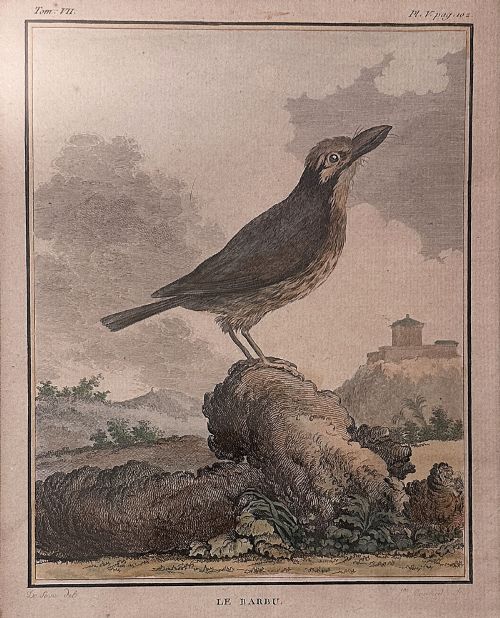
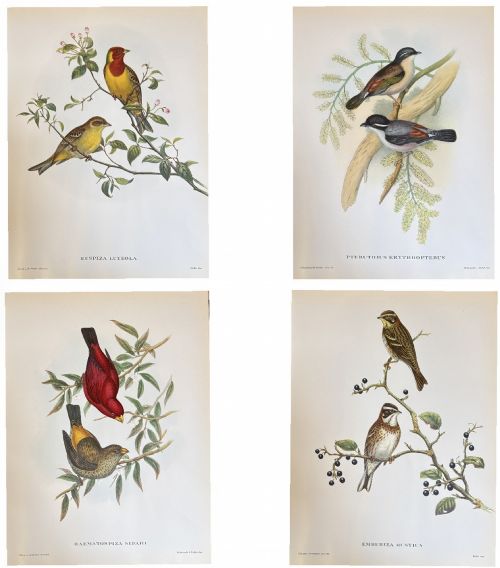
Artists relied primarily on watercolour paint, ink and pencil on paper to capture the delicate plumage and anatomical detail of their subjects. Many nineteenth-century prints utilised lithography enhanced by hand-colouring to achieve vibrant natural tones.
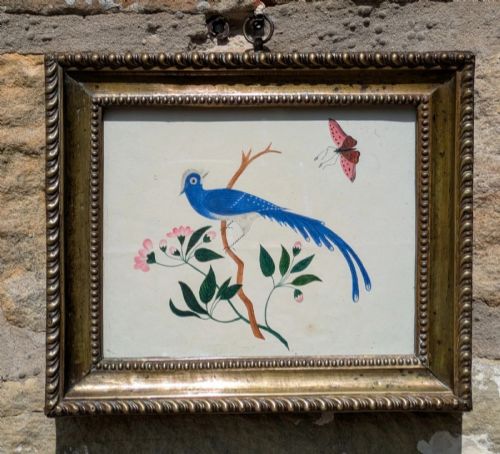
Framed pieces frequently incorporate paper, wood and glass, sometimes finished with gilt or gold leaf on the moulding. The combination of meticulous brushwork and quality paper stock ensured these studies survived in stable condition over the decades.
Ornithological Artwork Retail Price Guide 2026
Typical asking prices for ornithological artwork among the pieces listed under this phrase on Sellingantiques today, from the lower quarter to the upper quarter. They describe what is for sale here now, not the wider market.
Listings feature paper, wood, glass, watercolour, ink, gilt, watercolour paint and gold leaf.
Evaluating Quality
Quality rests upon the precision of the draughtsmanship and the artist's ability to render the subject's anatomy and feather texture with life-like accuracy. Stronger examples display confident brushwork or sharp engraving lines, whereas weaker works can appear stiff or formulaic in composition.
The choice of medium and the preservation of the paper also dictate distinction. Works executed in original watercolour paint retain a directness and depth superior to standard reproductions, while clean paper margins and original period framing elevate the piece.
Harry Bright·Ralston Gudgeon·Charles F Tunnicliffe·Edward Lear·Thomas Blinks·Arthur Wardle·Donald Watson·Paul-Louis Barruel
The Ornithological Artwork Glossary
- Lithography
- A planographic printing process using a stone or metal plate to produce multiple impressions. This technique allowed nineteenth-century publishers to issue mass quantities of detailed bird illustrations.
- Watercolour
- A painting method where the pigments are suspended in a water-based solution. It remains the principal medium for detailed natural history studies on paper.
- Engraving
- A printmaking technique where an image is incised into a metal plate using a sharp tool. The resulting lines hold ink to create crisp, linear illustrations of birds.
- Gilt
- A thin layer of gold applied to wood frame mouldings for decoration. It provides a traditional border for framed works on paper.
Ornithological Artwork: Frequently Asked Questions
How should I display ornithological artwork?
Hang these pieces away from direct sunlight to protect the watercolour pigments and paper from fading over time. Pairing them with simple mounts allows the intricate details of the birds to remain the central focus on the wall.
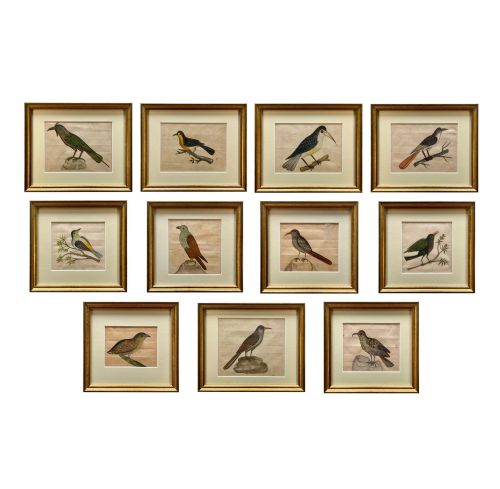
Group related sets together, such as series of garden birds or tropical prints, to create a cohesive display that mirrors historical natural history cabinets.
What is the difference between a watercolour and an engraving?
A watercolour is a unique, hand-painted work created directly by the artist using pigment on paper. Each brushstroke is singular and possesses distinct texture and tonal variation.
An engraving is a printed reproduction created from an incised plate, which could then be hand-coloured afterwards. While multiple copies of an engraving exist, watercolours are one-of-a-kind pieces.
How do I identify the period of a bird print?
Examine the paper quality, the printing technique and any framing materials present on the piece. Nineteenth-century examples often feature heavier rag paper and hand-colouring, whereas mid-century works reflect different aesthetic movements and printing technologies.
Signatures, dates written in pencil, and historical inscriptions on the reverse of the paper also provide clear indicators of when the artwork was produced.
Can I find complete sets of bird prints?
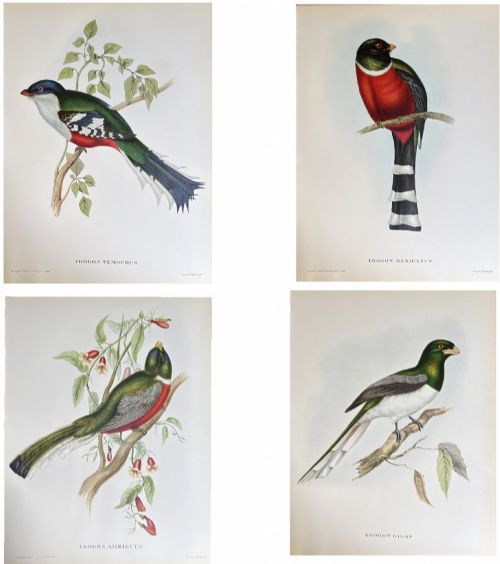
Yes, artists and publishers frequently issued illustrations in series, such as sets of four or eight plates documenting specific species. These grouped items offer a unified aesthetic for interior decoration.
Sets often share matching framing styles and uniform paper dimensions, making them straightforward to hang together in a hallway or study.