

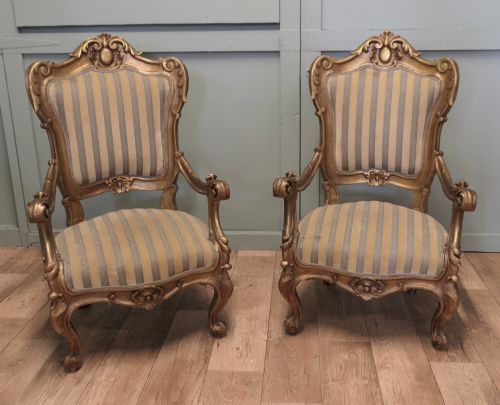
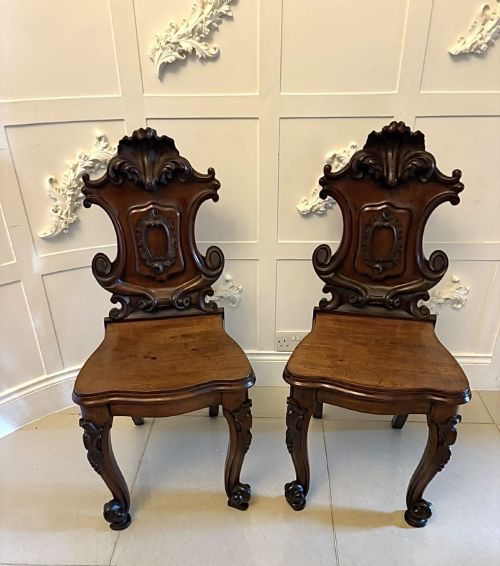
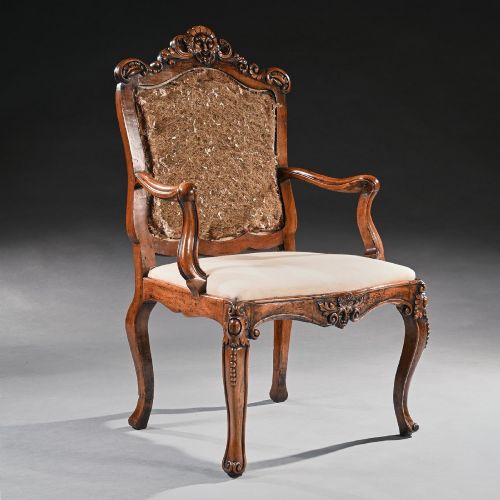
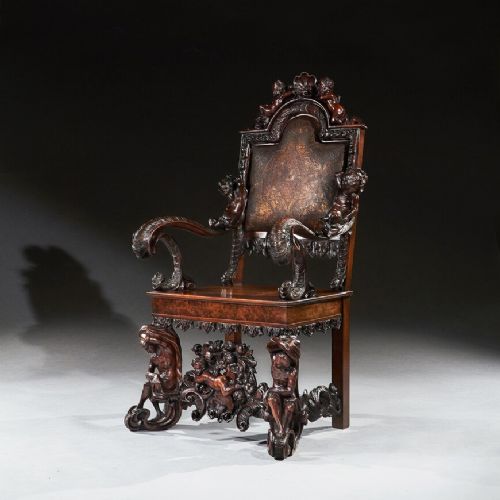


Ornate Wood Seating
Ornate wood seating brings heavy carving and dense timber together in formal chairs, benches, and settees.
Ornate Wood Seating
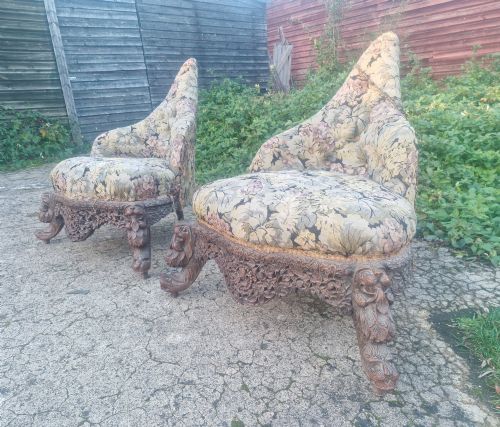
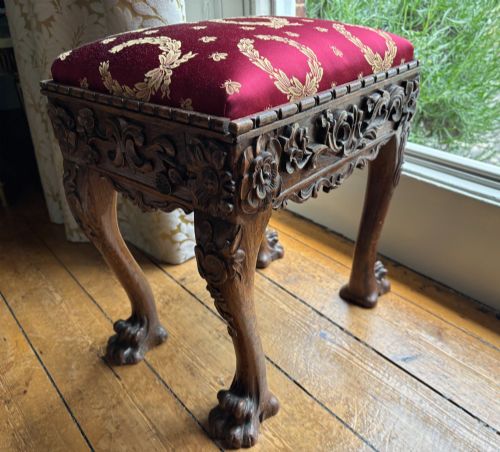
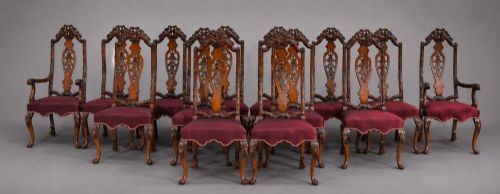
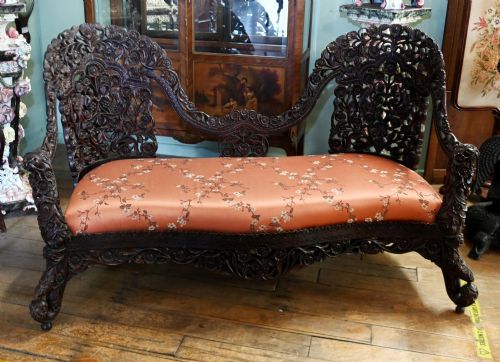
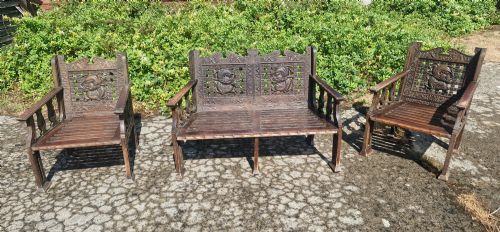
When you search for ornate wood seating, you enter a field dominated by heavy Victorian production alongside regional revival pieces from the eighteenth and nineteenth centuries. The examples on this page span robust dining chairs, hall chairs, armchairs, and substantial benches or settees.
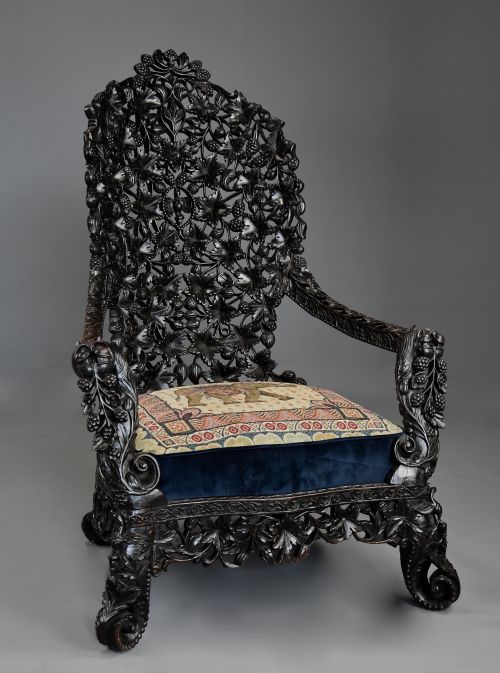
Most pieces you meet here rely on dense hardwoods like walnut, oak, mahogany, and teak to hold deep sculptural relief. Forms range from Italian Rococo armchairs to Anglo-Indian veranda chairs and French revival seating.
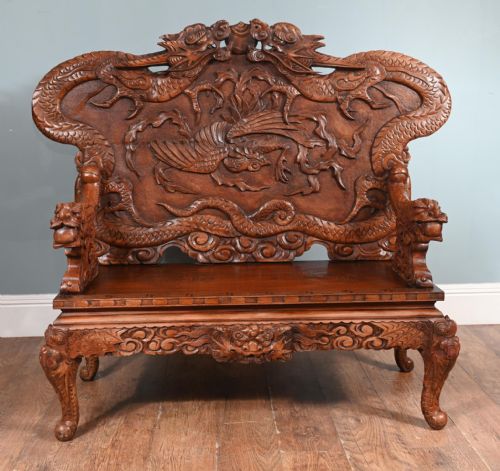
Origins stretch across Europe and beyond, taking in English oak, Italian walnut, Ceylonese teak, and Chinese lacquer work. Every piece shares a focus on decorative timber work rather than plain utility.
How they were made
Makers shaped these chairs and benches from solid timbers, employing walnut, oak, mahogany, teak, and blackwood to build structural frames. These hardwoods possessed the density required to support deep hand carving without losing integrity.
Carvers worked directly into the timber, producing elaborate scrollwork, figurative elements, and pierced fret backs. Some surfaces received giltwood treatment, marquetry inlay, or brass elements to heighten the visual impact.
Ornate Wood Seating Retail Price Guide 2026
Typical asking prices for ornate wood seating among the pieces listed under this phrase on Sellingantiques today, from the lower quarter to the upper quarter. They describe what is for sale here now, not the wider market.
One exceptional nineteenth-century Swiss chair includes a musical mechanism hidden within its marquetry-inlaid walnut frame.
What varies in quality
Quality rests in the depth and crispness of the carving, distinguishing casual production from exhibition standard work. Pieces attributed to specific carvers or made for exhibition show greater attention to proportion and finer execution in the timber.
The choice of material also dictates distinction, moving from standard utility timber to highly figured walnut, imported teak, or specialist hardwoods. Structural integrity beneath the ornament separates chairs that survived heavy use intact from those requiring extensive intervention.
Andrea Brustolon
The Ornate Wood Seating Glossary
- Sgabello
- A Renaissance chair type featuring a wooden seat supported by shaped board legs rather than traditional four-legged frames. These narrow chairs stood against walls in grand halls.
- Settee
- A medium-length upholstered or wooden seat designed for multiple occupants with a backrest and arms. They provide wider seating than armchairs while retaining formal decorative frames.
- Marquetry
- The art of applying pieces of veneer to a structure to form decorative patterns and pictures. It appears on smooth wooden panels within ornate furniture.
- Giltwood
- Timber treated with gold leaf or gold paint to produce a brilliant metallic surface finish. This technique highlights carved details on formal chairs and sofas.
Ornate Wood Seating: Frequently Asked Questions
What periods do these chairs come from?
The pieces span the eighteenth, nineteenth, and early twentieth centuries, capturing Georgian, Victorian, and revival periods.
Victorian and later nineteenth-century examples dominate the selection alongside eighteenth-century Italian works.
How do I identify Italian Renaissance revival pieces?
These pieces use heavy walnut and feature classical motifs, architectural framing, and dense sculptural carving.
They reflect nineteenth-century revivals of earlier Italian design traditions found in grand halls.
Are these chairs meant for daily dining?
Many function as occasional seating, hall chairs, or decorative accents rather than standard dining furniture.
Sets of dining chairs do appear, though single armchairs and benches serve better for display.